




Indus Water Treaty in abeyance, India builds first rock check dam in Ladakh
- In Reports
- 07:33 PM, Sep 05, 2026
- Myind Staff
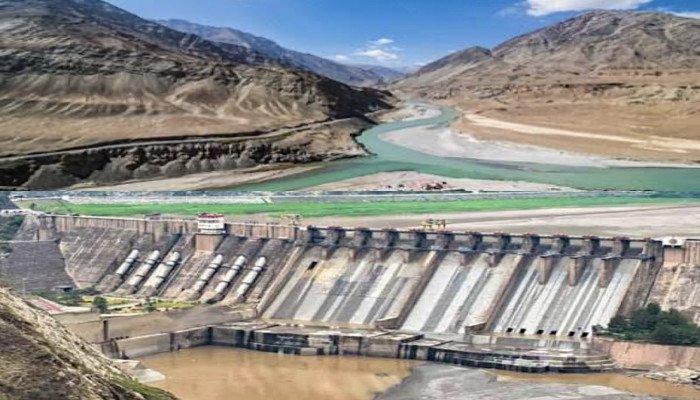
Farmers in parts of Leh are set to receive a more reliable source of irrigation after Ladakh constructed its first rock check dam across the Indus River at Upshi. The project aims to make better use of the river’s water for agriculture in the border region. It also marks a major step in developing small water-retention structures across Ladakh.
The check dam was built using natural boulders placed across the river. The structure does not use cement. It has raised the water level by around 10 feet, allowing officials to divert water towards agricultural fields through the Igoo Phey irrigation canal. The project is expected to improve access to irrigation water for farmers in nearby villages.
Farmers in the area have faced difficulties during the spring sowing season. At that time, the Indus often flows at a level that makes it difficult to lift water using pumps. The problem becomes more serious in areas where the river passes through deep gorges. Low water levels have affected several farming areas and made it difficult for farmers to get enough water for cultivation.
The new rock check dam aims to address this issue by retaining water and raising the level of the river at the site. The structure has a storage capacity of around 40 million litres. The stored water can now be diverted towards village fields, giving farmers a more dependable supply during the sowing period.
The project comes at a significant time for India’s water policy concerning the Indus River system. India has placed the Indus Waters Treaty in abeyance. The construction of water-retention infrastructure in Ladakh underscores a greater focus on using available river water for communities and agriculture in India’s border areas.
The Upshi check dam is also part of a larger plan to develop similar structures across Ladakh. The administration is pursuing more check dams along the Indus. Construction has already started at some locations, while additional projects are in the planning stage.
The Ladakh administration has submitted a proposal to the Union Ministry of Jal Shakti seeking approval for 36 check dams across the Union Territory. The plan includes seven Himalayan Rock Check Dams in Leh. Kargil is proposed to receive 29 reinforced cement concrete (RCC) check dams or weirs.
The proposed projects are estimated to cost more than Rs 56 crore. The planned structures are expected to help retain and manage water locally while improving irrigation access in farming areas. They could also provide a more stable source of water during periods when river levels fall and pumping becomes difficult.
The first rock check dam at Upshi demonstrates how relatively simple structures can improve water availability in the challenging terrain of Ladakh. By using natural boulders and directing retained water towards irrigation channels, the project provides a local solution to a long-standing farming problem.
With more check dams being planned, Ladakh is looking to expand such water-management measures across the region. The focus remains on improving irrigation facilities, supporting agriculture and making better use of water resources available in the Indus River system.



 Loading...please wait
Comments