




Indonesia’s finance minister walks back on Malacca Strait toll charge amid global concerns
- In Reports
- 05:55 PM, Apr 23, 2026
- Myind Staff
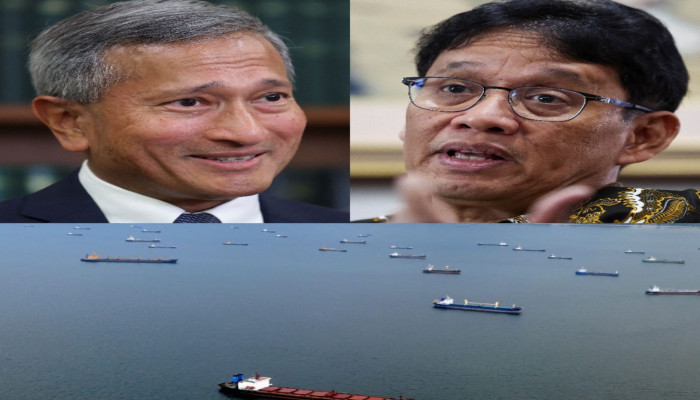
Indonesia’s finance minister briefly stirred international attention after suggesting that ships passing through the Strait of Malacca could be charged a toll, before quickly stepping back from the idea. The comments came at a time of heightened global tension over maritime routes and drew immediate reactions from regional and international stakeholders who stressed the importance of maintaining free navigation in key waterways.
Speaking at a symposium in Jakarta, Finance Minister Purbaya Yudhi Sadewa pointed to Indonesia’s strategic position along one of the world’s busiest shipping routes. The Strait of Malacca connects the Indian and Pacific Oceans and carries more than 40 per cent of global seaborne trade. Highlighting this advantage, he suggested that Indonesia could potentially benefit financially from its location. However, he quickly softened his remarks, adding, "If only it could be like that."
He further said, "As the President (Prabowo) has instructed, Indonesia is not a peripheral country. We sit on a strategic global trade and energy route." Reflecting on the current situation, he added, "Yet ships pass through the Malacca Strait without being charged — I'm not sure whether that's right or wrong." At the beginning of his speech, he also joked that if journalists were present, he could not speak "carelessly," indicating a level of caution around the topic.
The minister referred to recent developments involving Iran, which has moved to control passage and impose tolls on ships using the Strait of Hormuz following US and Israeli strikes. Drawing a comparison, he said, "Iran is now planning to charge ships passing through the Strait of Hormuz." He then suggested a hypothetical scenario involving regional cooperation, stating, "If we split it three ways — Indonesia, Malaysia, and Singapore — it could be quite substantial." However, he again made it clear that this was not a realistic plan, repeating, "If only it could be like that. But it is not like that."
While the idea of imposing a levy on the Malacca Strait is not entirely new and has been discussed in Indonesian political circles before, the timing of these remarks gave them greater weight. The ongoing geopolitical tensions in West Asia, particularly around the Strait of Hormuz, have already disrupted global energy flows and raised concerns about the stability of key maritime routes. Against this backdrop, even a speculative comment about tolls in another major shipping corridor attracted widespread attention.
Singapore responded firmly to the suggestion. Foreign Minister Vivian Balakrishnan dismissed the idea of imposing tolls, reinforcing the principle of free navigation. He stated, "The right of transit passage is guaranteed for everyone." He further added, "We will not participate in any attempts to close or interdict or to impose tolls in our neighbourhood." His remarks underscored Singapore’s clear stance against any move that could restrict or monetise access to international waterways.
Earlier in the month, Balakrishnan had also addressed the issue of Iran’s actions in the Strait of Hormuz. He made it clear that Singapore would not consider paying any tolls, saying the right of passage in international waters "is not a privilege to be granted by the bordering state, it's not a licence to be supplicated for, it is not a toll to be paid." His comments highlighted a broader concern among maritime nations about maintaining established international norms.
Australia also reacted cautiously to the developments. Defence Minister Richard Marles avoided directly commenting on Purbaya’s remarks but emphasised his country’s commitment to international law. He said Australia was "completely committed to the United Nations Convention of the Law of the Sea, freedom of navigation and the broader rules-based order." He further explained, "For Australia, which has a growing proportion of our national income derived from trade, the physical manifestation of that — that is our sea lines of communication, our sea lanes — is profoundly important for us."
Reinforcing this position, he added, "Freedom of navigation on the high seas is a fundamental principle contained in the UN Convention on the Law of the Sea (UNCLOS), and Australia very much stands for that."
The issue also comes at a time of active diplomatic engagement in the region. Australian Prime Minister Anthony Albanese had spoken with Indonesian President Prabowo Subianto just a day before the remarks were made. However, it remains unclear whether the topic of a potential toll or maritime access was discussed during their conversation.
Despite the strong reactions, Indonesian officials have privately downplayed the significance of the minister’s comments. They indicated that there is no serious plan within Jakarta to pursue such a policy. Still, analysts believe the idea cannot be entirely dismissed. Euan Graham from the Australian Strategic Policy Institute suggested that the remarks might have been a way to test international reactions rather than a concrete proposal.
He explained, "This is not a typical Indonesian administration. Prabowo has demonstrated in the South China Sea that he's willing to run counter to his own foreign ministry's advice in pursuit of a deal." He added, "This is perhaps a trial balloon, not policy — but it's obviously been put out there to test the waters, literally, of regional reaction."
Graham also pointed out a deeper concern behind the comments. He said, "The 'worrying aspect' was that Indonesia was willing to toy with the idea of monetising its geographical position despite the fact it 'owes its territorial integrity' to UNCLOS." According to him, such thinking could set a risky precedent. "It shows instability in one region can spread to another, even just by precedent. Bad behaviour can be copied," he said.
He further noted differences in how countries view regional priorities. "It shows the risk of basing our approach to the region and Indonesia on wishful thinking — the idea we share values and that we can compensate for the dysfunction of the current US administration's policy making by deepening relations with regional countries," he said. While acknowledging the value of stronger ties, he added a note of caution, stating, "That's fine in principle, but this is a clear warning shot that Indonesia does not necessarily share the same vital interests as Australia." He concluded by stressing the need for a clear response from allies, saying, "Really, it's up to countries like Australia to raise this and make it clear this is something that would not be accepted, including by its closest security partners."
Overall, while the Indonesian minister’s suggestion was quickly withdrawn, it has highlighted growing sensitivities around control of major maritime routes. It also reflects how developments in one part of the world can influence discussions in another, especially when global trade and energy security are involved.



 Loading...please wait
Comments