



India–US trade pact put on hold until new tariff system is in place
- In Reports
- 06:45 PM, Mar 16, 2026
- Myind Staff
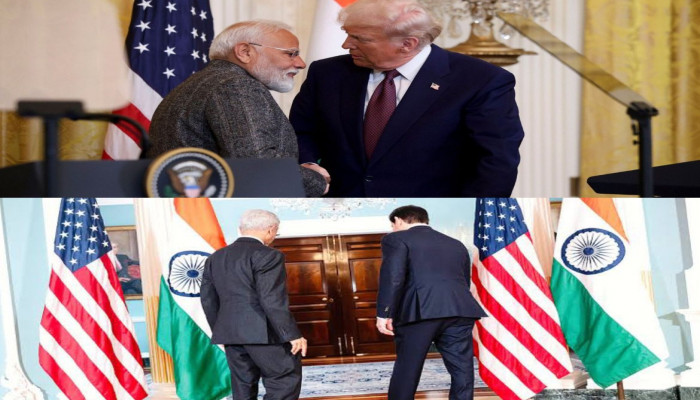
The signing of the proposed trade agreement between India and the United States has been put on hold until the new tariff structure comes into effect. India’s Commerce Secretary Rajesh Agrawal stated on Monday that the agreement will only be signed after the revised global tariff framework is restored. In a briefing on India’s latest trade data, he stated that the timeline of the deal is closely linked to policy developments in Washington.
According to Agrawal, discussions between New Delhi and Washington are still underway, but the finalisation of the agreement will depend on the tariff situation in the United States. The issue emerged after a recent ruling by the Supreme Court of the United States last month struck down reciprocal tariffs introduced earlier by the Trump administration. These tariffs, which are a part of the US government’s broader trade strategy, have affected several countries, including India.
Following the court’s decision, the US administration made immediate policy adjustments. Within hours of the ruling, Trump issued an executive order ending what he referred to as “certain tariff actions.” At the same time, he introduced a temporary import surcharge of 10 per cent on goods entering the United States. This surcharge was applied as an ad valorem duty, meaning it was calculated as a percentage of the value of imported goods. Shortly after announcing the measure, Trump further increased the levy to 15 per cent through a statement shared on social media, adding another layer of uncertainty to the global tariff structure.
Because of these developments, India has decided to wait until the US government establishes a clearer and stable tariff system before signing the trade deal. Agrawal noted that the two countries are currently in discussions to work out the details of the proposed agreement. These talks are ongoing, and officials from both sides are examining different aspects of trade cooperation to ensure that the final arrangement benefits both economies. The update was also reported by news agency PTI, which highlighted that negotiations remain active despite the delay in signing.
Meanwhile, the US government has also taken additional steps to increase pressure on its trading partners after the Supreme Court ruling. The Office of the United States Trade Representative recently announced the launch of a new investigation into trade practices followed by India and 15 other major economies. The probe will examine whether these countries are engaging in unfair manufacturing practices that could harm American industries.
This investigation has been launched under Section 301 of the Trade Act of 1974, a provision that allows the US government to respond to what it considers unfair trade policies by other countries. Under this process, the US authorities have the power to impose new tariffs, restrict imports, or suspend trade concessions if a country is found to be violating fair trade principles. Such actions are often used as a tool to push trading partners toward policy changes or negotiations.
Despite the uncertainty surrounding tariffs and the India–US trade agreement, the Indian government continues to work on expanding its trade partnerships globally. Officials said that India is currently negotiating six separate Free Trade Agreements (FTAs) with different countries and regional groups. These negotiations are part of New Delhi’s broader strategy to strengthen international trade relations and create more opportunities for exports and investment.
At present, India is engaged in FTA discussions with several partners, including Australia, Sri Lanka, Peru, Chile, the Eurasian Economic Union, and Israel. These negotiations aim to reduce trade barriers, improve market access, and encourage stronger economic cooperation between India and its partners.
Overall, while the India–US trade deal remains an important step in strengthening bilateral economic ties, its signing will depend on how the US tariff framework evolves in the coming months. Until the new tariff system becomes clear and stable, both countries are expected to continue negotiations and work toward resolving outstanding issues in the agreement.



 Loading...please wait
Comments