



India’s strategic withdrawal from Iran’s Chabahar Port as U.S. sanctions loom
- In Reports
- 02:45 PM, Jan 16, 2026
- Myind Staff
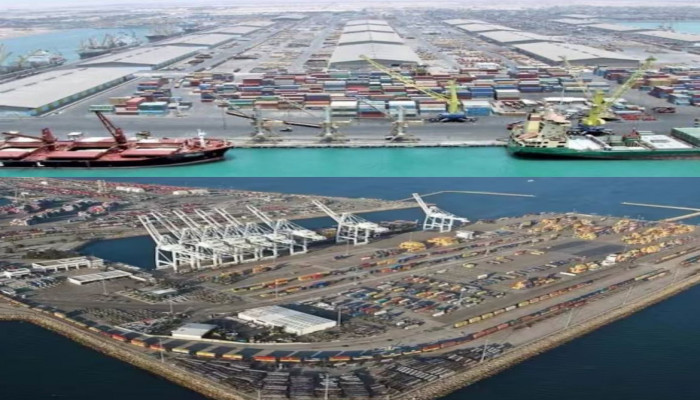
India’s decade-long effort to help develop Iran’s Chabahar Port has essentially come to a close amid renewed United States sanctions and geopolitical pressures, according to a report by ETInfra.
New Delhi had already transferred about $120 million to Iran to fully settle its financial commitment for developing the port before the U.S. reinstated sanctions on Chabahar in September 2025, a government source said. Around the time India approved funds ahead of a long-term, 10-year agreement signed in March 2014 to operate the Shahid Beheshti terminal at Chabahar, it was known that sanctions could be reimposed.
The source explained the logic behind the early payout, “When the sanctions are reimposed, transfer of funds would have become difficult. So, before the sanctions came, all the funds were transferred to Iran. India now has no liability in its commitment given to Iran on Chabahar port.”
The official also clarified that Iran is now free to decide what to do with the money under the long-term agreement. “The Iranian government is free to do whatever they want with the money transferred by the Indian government per the long-term agreement,” the source said, adding that “if Iran wants to buy cranes and other gears for Chabahar port, they can independently do that and they can carry on operations at the port independently without any involvement from India.”
India Ports Global Ltd (IPGL), the state-owned company responsible for developing and operating the India-funded portion of the port, was wholly owned by Sagarmala Development Corporation Ltd (now Sagarmala Finance Corporation Ltd after its conversion into a maritime-focused non-banking finance company).
Following the renewal of sanctions, all government directors on the board of IPGL resigned, and the entity’s website was taken down in an effort to protect those associated with the port from potential sanctions exposure.
A second government source made it clear that India sees no option but to pull back. “India has no choice but to exit the Chabahar port,” he said. “Fortunately, we don’t have any assets there; we were only running the port with manpower from Iran; that was the main activity of IPGL,” he added. “We have to exit unless the sanctions are eased by the U.S. again.”
The U.S. Treasury Department’s Office of Foreign Assets Control (OFAC) has granted India a six-month exemption from the sanctions — effective from October 29, 2025, until April 26, 2026 — based on India’s plan to “wind down all activities at the Port of Chabahar, including at the Shahid Beheshti terminal or any other related facilities.”
However, the sanctions reimposed from September 29, 2025, have significantly constrained India’s ability to participate in port development, effectively forcing New Delhi to consider stepping back from its strategic role.
The developments come as Iran experiences widespread anti-government protests, with reports of significant casualties in recent weeks.
India’s continued engagement at Chabahar now hinges on broader geopolitical changes, including any future shift in Iran’s government and its approach to the nuclear programme — the primary reason for the sanctions.
Located in Iran’s southeastern Sistan-Baluchistan Province on the Gulf of Oman, Chabahar Port was considered a crucial strategic asset for India, providing a sea-land link to Afghanistan and Central Asia through Iran’s eastern borders. The port was also to serve as part of the International North-South Transport Corridor (INSTC) — a multimodal network aimed to facilitate freight movement between India, Iran, Afghanistan, Azerbaijan, Russia, Central Asia, and Europe.
For India, Chabahar had represented a way to strengthen regional maritime transit, enhance trade connectivity, and bypass Pakistan’s land routes to reach Afghanistan and beyond.



 Loading...please wait
Comments