



India’s quiet role in Taiwan’s indigenous submarine project comes to light
- In Reports
- 08:50 PM, Apr 25, 2026
- Myind Staff
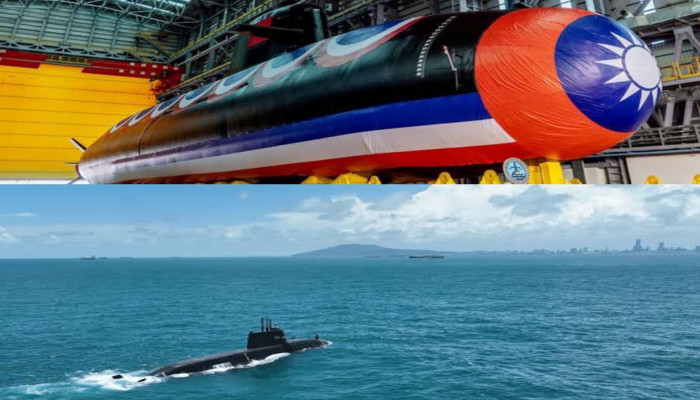
Taiwan has officially recognised India’s contribution to its Hai Kun-class Indigenous Defence Submarine programme, marking an important development in regional defence cooperation. This acknowledgement highlights India’s growing presence as a technical and industrial partner in the Indo-Pacific. While the cooperation has remained low-profile due to geopolitical sensitivities, Taiwan’s statement brings attention to the role New Delhi has played in supporting this ambitious project.
The Hai Kun-class programme is Taiwan’s first serious attempt to design and build submarines domestically. It is a significant step in strengthening its naval capabilities and reducing dependence on foreign suppliers. The project has attracted global attention because of its strategic importance in a region marked by rising maritime tensions. For Taiwan, building its own submarines is not just about defence preparedness but also about technological self-reliance.
According to a report by Global Taiwan published in February 2026, India has not directly participated in Taiwan’s submarine production. However, the report suggests that there are strong possibilities for informal collaboration between the two sides. Both countries face similar challenges in submarine construction, especially in areas such as hull fabrication, subsystem integration, and long-term maintenance. This creates space for knowledge sharing without formal agreements.
The report also points out that India could benefit from Taiwan’s expertise in lithium-ion battery technology, which is important for Air Independent Propulsion (AIP) systems. At the same time, Taiwan could gain from India’s experience in maintaining and upgrading older diesel-electric submarines such as the Kilo-class and Type-209. This exchange of expertise could take place under existing commercial frameworks like the Bilateral Investment Agreement signed in 2018, avoiding the need for a formal defence partnership. This is important because India does not officially recognise Taiwan, and both sides must manage their engagement carefully.
India’s involvement in the Hai Kun-class programme has been subtle but impactful. It has gone beyond supplying components and has included support in structural and subsystem manufacturing. These contributions have helped Taiwan overcome key industrial challenges and maintain the quality of its submarine construction. The ability to produce reliable and advanced components for such a complex platform reflects India’s improving industrial strength in the defence sector.
In addition to material support, India has also shared operational knowledge. Retired naval personnel with experience in handling Kalvari-class and Kilo-class submarines have provided advisory assistance. Their expertise has helped Taiwan’s engineers and planners understand practical aspects of submarine operations. This guidance has been useful in adapting proven methods to suit Taiwan’s indigenous design.
The sharing of knowledge has played a role in improving Taiwan’s ability to integrate advanced systems into the Hai Kun-class submarines. It has also helped refine operational strategies, ensuring that the submarines are not only technically capable but also effective in real-world scenarios. This kind of support adds depth to the collaboration, going beyond hardware to include practical experience.
Taiwan’s recognition of India’s role shows how New Delhi is emerging as a reliable defence partner in Asia. India is not only producing critical components but is also offering strategic support based on years of operational experience. This positions India as a country that can contribute meaningfully to regional security without always being in the spotlight.
For Taiwan, the Hai Kun-class programme is central to its efforts to modernise its navy. Strengthening its underwater capabilities is essential for maintaining deterrence in a challenging security environment. India’s support has added credibility to the project and has shown that indigenous defence efforts can succeed with the right kind of external cooperation.
At the same time, this collaboration reflects a larger trend in the Indo-Pacific. Countries are increasingly working together in flexible and informal ways to address shared security concerns. India’s involvement in Taiwan’s programme signals its willingness to play a broader role in maintaining balance in the region.
By publicly acknowledging India’s contribution, Taiwan has strengthened its ties with New Delhi. It has also sent a message about the importance of cooperation among partners facing similar challenges. The development shows that even without formal agreements, countries can work together effectively through shared expertise and mutual interests.
Overall, the Hai Kun-class submarine programme stands as an example of how technical collaboration and strategic alignment can support defence self-reliance. India’s role, though understated, has been significant in helping Taiwan move forward with its ambitious goals. This partnership highlights the growing importance of industrial and knowledge-based cooperation in shaping the future of regional security.



 Loading...please wait
Comments