




India’s Pralay missile nears induction after successful trial, set to strengthen Rocket Force
- In Reports
- 06:45 PM, Nov 06, 2026
- Myind Staff
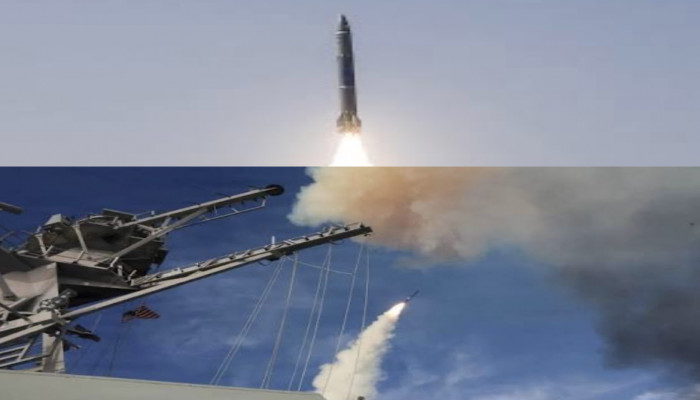
India’s indigenous Pralay missile has moved closer to induction into the armed forces after the Defence Research and Development Organisation (DRDO) completed its latest user evaluation trial off the Odisha coast on November 5. The quasi-ballistic missile is designed to carry out precision conventional strikes at ranges of up to 500 km. It is also expected to become a key component of India’s proposed Rocket Force, alongside the BrahMos missile.
The Defence Ministry said the missile was test-fired from Dr APJ Abdul Kalam Island at around 11.10 am and met all stipulated objectives. The ministry added that its induction into the armed forces has become imminent.
Pralay will give the Army and Air Force another option to strike high-value military targets, including airbases, command centres, radar installations and logistics infrastructure. Its high speed, manoeuvrability and conventional warhead are designed to make interception difficult for enemy air defence systems.
Open-source estimates suggest Pralay can reach speeds of Mach 5 to Mach 6, nearly twice the BrahMos cruise missile's maximum speed of around Mach 2.8. However, the two missiles have different flight profiles and operational roles.
BrahMos uses a solid-fuel booster and a liquid-fuel ramjet engine to maintain supersonic speed. Pralay, on the other hand, uses a solid-propellant rocket motor and follows a quasi-ballistic trajectory. Unlike BrahMos, which can fly at low altitudes and follow sea-skimming profiles, Pralay can change its flight path during its journey.
Pralay has a reported range of 150 to 500 km and can carry conventional warheads weighing between 500 kg and 1,000 kg. With a heavier 1,000 kg warhead, its range is around 350 km. A lighter 500 kg payload can extend its reach to 500 km.
The missile can carry different warheads, including high-explosive fragmentation, penetration-cum-blast and runway-denial variants. Its manoeuvrable re-entry vehicle and advanced guidance systems allow it to make mid-course adjustments, making its trajectory less predictable. It can also be launched from mobile platforms.
India plans to develop a dedicated Rocket Force to strengthen its conventional missile-based strike capabilities. The concept draws comparisons with China's Rocket Force, although India's proposed formation will have its own organisational structure.
Reports indicate that the armed forces have approved the procurement of around 370 Pralay missiles. This includes 120 missiles for the Indian Air Force and 250 for the Army, which is expected to raise dedicated missile regiments.
DRDO's Research Centre Imarat (RCI) in Hyderabad developed the missile in collaboration with other DRDO laboratories. Bharat Dynamics Limited (BDL), a development-cum-production partner, has manufactured the system.
Senior DRDO officials, defence industry representatives and armed forces personnel attended the November 5 trial. The Defence Ministry said data collected by the Integrated Test Range at Chandipur confirmed that the missile met all test objectives.
Defence Minister Rajnath Singh congratulated DRDO, the armed forces and industry partners on the successful trial, calling it another milestone in strengthening India's indigenous defence capabilities.
The user evaluation trials assess whether a weapon meets the armed forces' operational requirements before induction. With the latest trial successfully completed, Pralay is now closer to joining India's operational missile inventory.



 Loading...please wait
Comments