




India’s Positive Prospects for Improving Its Share in Global Food Exports
- In Economics
- 01:05 PM, Jun 29, 2026
- Mukul Asher
According to the Food and Agriculture Organisation (FAO) of the United Nations, agricultural exports are defined as the monetary value or physical volume of primary and processed agricultural and livestock products that are produced in one country and sold to international markets.
These exports include:
- Basic Agricultural Products: Unprocessed or minimally processed commodities like grains (wheat, rice, corn), raw sugar, seeds, tobacco, cotton, and live animals.
- Processed Agricultural Products: Items that have undergone manufacturing or refinement, such as vegetable oils, prepared meats, and dairy products.
- Food Products: Products specifically intended for human consumption, which can encompass both basic and highly processed/packaged goods.
Thus, food exports and imports are more narrowly defined than the agricultural exports and imports1.
Global agricultural trade is heavily weighted toward high-value, consumer-oriented products. While bulk commodities (like wheat, corn, and bulk grains) maintain foundational importance, processed foods, high-value proteins (meats and dairy), and specialised oilseeds constitute the majority of global trade value2.
This column argues that India has solid prospects for improving its ranking among global food exporters and improving the food trade balance. This, in turn, would enable the food sector to play a more prominent role in achieving India’s ambitious medium-term export goal of USD 2 trillion. In 2025-26, India’s exports of goods and services were USD 0.86 trillion, while total international trade was USD 1.84 trillion. India thus has the scale, but for Viksit Bharat goals, this scale needs to increase substantially. In 2026, India is estimated to contribute 17 per cent to global GDP growth, roughly the same as its share in the global population.
In 2024, agricultural trade is estimated by the FAO to exceed USD 2 trillion. China, India, the United States, and Brazil have fairly large agricultural production bases. The ongoing war in the Gulf, with major disruptions in energy markets and traditional supply routes, has resulted in food security challenges acquiring much greater prominence among the policy priorities in many countries. Countries which have exportable food surpluses at scale are likely to enhance their strategic leverage in this scenario.
Figure 1 provides data on global food exports for 2024 for the top 30 exporters, on the basis of which the following observations may be made.
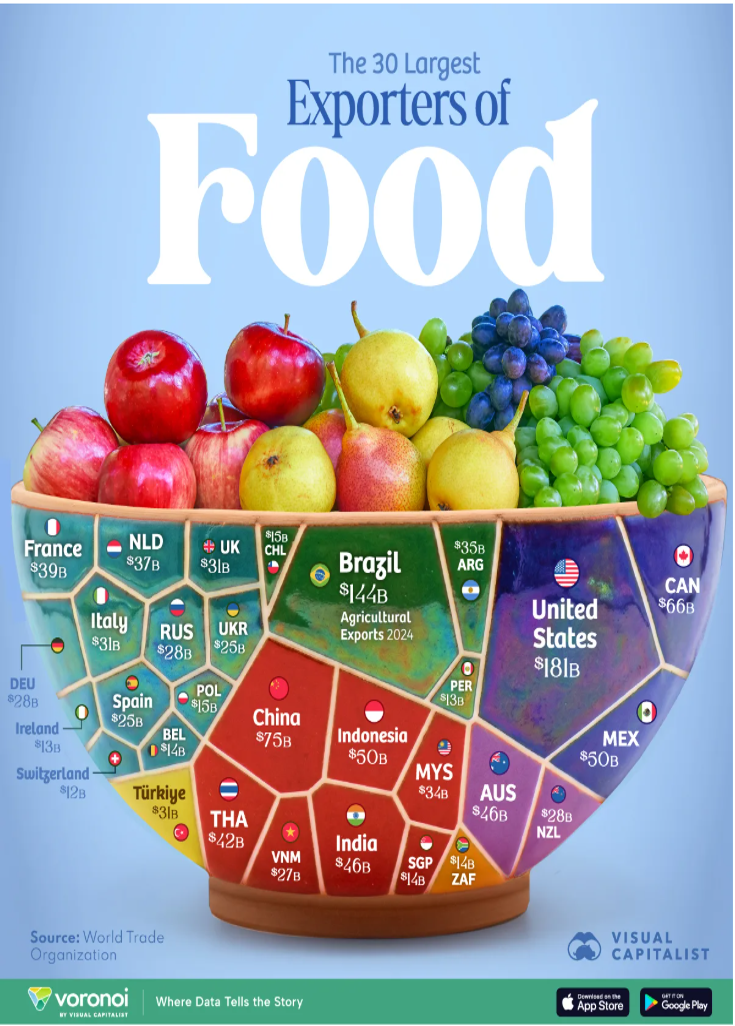
Figure 1: India’s Position Among Top 30 Food Exporters Globally in 2024
- USA (USD 181 billion) and Brazil (USD 144 billion), are by far the largest food exporters, accounting for about one-sixth of global exports. Food imports by the USA in 2024 were USD 233 billion, leading to a food trade deficit of USD 52 billion.
- China (USD 75 billion), Canada (USD 66 billion), and Mexico and Indonesia (USD 50 billion each), comprise the second tier. Food imports by China in 2024 were USD 199 billion, leading to a deficit of USD 124 billion.
- In the third tier are India and Australia (USD 46 billion each), and Thailand (USD 42 billion). In 2024, India had a modest surplus in food trade of about USD 11 billion, and in the agriculture sector trade, a small surplus of USD 5 billion.
- Countries from Europe form the fourth tier. France (USD 39 billion), the Netherlands (37 billion), and the United Kingdom, Italy, and Turkiye (USD 31 billion each) are the major contributors to exports from Europe.
Why Positive Prospects for India’s Food Exports?
There have been both broad structural developments and specific policy initiatives related to food exports, which provide optimism for accelerating India’s food exports.
Two broad structural factors may be noted. First, after several decades, India’s demographic profile in terms of geographical weight of the population (majority of India’s population lives in the Ganga River Valley), and the state governments in this plane are now aligned with the Central governments vision of attaining Viksit Bharat (essentially a society with is well governed, with high quality institutions, and technologically advanced to navigate global developments with confidence). In India’s public policy conversations, the need for Bharat (India) to become Atmanirbhar in critical sectors and technologies to sustain strategic autonomy against global developments and adversaries has become a national obsession.
This alignment between the central government and the state governments in the Ganga River Valley missing earlier, is expected to accelerate not just overall growth, but also of the agriculture sector in the Valley.
Second, India is now embarking on transforming its agriculture, and therefore food-producing capabilities, through technological adaptation, diversification, and focus on commercial orientation, factors that received insufficient attention earlier. There is not only political commitment, but the necessary resources are also being made available. India is expected to attain a much larger scale in the food and agriculture sector, including in value addition to the food products.
As Aashish Chandorkar on X platform (June 7, 2026) has noted, “India has a great golden opportunity in the next 10 years. Food value chains are being realigned, and buyers are seeking to diversify their food sources. India is on the path of scaling, diversification and entrepreneurship. The future of agricultural exports will not be decided just at farms, it will be determined at the warehouses, logistics corridors, the cold chains and the technology platforms.”
An example illustrating the above is provided by the agricultural sector plans of the state of Uttar Pradesh, comprising around 17 per cent of India’s population. If its plans succeed, it will greatly enhance India’s scale and sophistication in this sector and enhance food exports. It has been reported that:
“The government of Uttar Pradesh is accelerating efforts to transform the state into a national and global model for agricultural growth through smart farming, modern technology adoption and export-oriented agricultural policies. The long-term strategy focuses on increasing farm productivity, strengthening agricultural exports, promoting crop diversification and integrating advanced technologies into farming systems… the government has also announced targets to significantly raise productivity of food grains, pulses and oilseeds while reducing post-harvest losses to below 4 per cent... the state is simultaneously expanding the scope of organic farming and encouraging farmers to adopt modern agricultural practices, including drone-based applications, digital agriculture services, smart farming systems and agriculture focused startups… One of the most aggressive goals outlined by the state is to increase cropping intensity beyond 250 per cent by 2047, signalling a major push toward intensive and efficient land use. The government also aims to increase Uttar Pradesh’s contribution to India’s agricultural exports to more than 15 per cent over the coming decades 3.
Many other states are also likely to pursue similar policies to those of the state of Uttar Pradesh. It is worth noting that India is included in the list of countries that can export aquaculture products, eggs, honey, and related products to the European Union (EU) beyond September 2026.
Aquaculture products are commercial or consumable goods derived from the farming and cultivation of aquatic organisms like fish, molluscs, crustaceans, and aquatic plants. Unlike wild-caught seafood, these products are raised, bred, and harvested in controlled aquatic environments such as oceans, ponds, and recirculation tanks. India’s fisheries sector is expected to gain significantly from this development.
It is estimated that “in FY26, India’s export diversification generated nearly USD 202 million in additional exports through new product-entry combinations, with sectors like marine products, pulses, and agri-processing contributing significantly”4.
A select list of specific initiatives in the food sector designed to diversify markets, broaden geographical spread within India from which food exports occur, and new food products with improved technological and marketing inputs is provided below.
- APEDA (Agricultural and Processed Food Export Development Authority) has facilitated the first export of dried egg powder from Odisha state to Austria.
- India’s first export of litchi to Uttarakhand to the European market. GI -tagged Tezpur litchis have recently been exported to Singapore from Assam.
- A 10,000-tons organic spice processing plant has been set up in Meghalaya or value addition to spices exports.
- Nagaland is cultivating premium arabica beans and building brands, with new young entrepreneurs entering the field. This should increase its role not only in India’s overall coffee sector but also facilitate exports.
- For the first time, India exported 40 tons of biscuits from Varanasi to Oman.
- India is exploring technology to ship mangoes by sea. If successful, India’s mango exports will have much wider global access. Currently, India exports mangoes to over 40 countries.
- India is encouraging a nascent "blue gold" agave spirits industry by utilising wild and semi-wild Agave americana growing on the Deccan Plateau. Instead of massive, centralised plantations, distillers are currently harvesting from rural property boundaries. While currently, the cultivation is for the domestic market, increased demand for tequila and mezcal in recent years has fueled consumer and brand-owner interest in alternative agave-based spirits from wider suppliers 5.
- India has the potential to more than double its maize production to 86 million tons by 2047, up from the current 42.3 million tons. The government is encouraging states like Punjab and Haryana to shift from water-intensive paddy cultivation to maize, aligning with the government’s ethanol blending target of 20% by 2026. India’s North East region also has good potential to expand maize cultivation 6.
- According to the FAO, in 2024, global maize production reached approximately 1.22 billion tons, while global exports were around USD 45 billion, with the United States, Brazil, Argentina, and Ukraine being the major contributors.
To conclude, as India progresses towards the goal of Viksit Barat by 2047, foundations have been laid for the food and agricultural sector to make a significant contribution. These foundations, in turn, augur well to enhance ranking among the global food exporters and increase their contribution to managing India’s external sector.
References
- https://www.fao.org/4/y4252e/y4252e11.htm (Accessed on 7 June 2026)
- https://www.wto.org/english/tratop_e/agric_e/ag_imp_exp_charts_e.htm (Accessed on 7 June 2026)
- https://www.global-agriculture.com/india-region/uttar-pradesh-targets-250-crop-intensity-as-world-bank-backed-up-agrees-project-drives-farm-transformation/#google_vignette (Accessed on June 26, 2026)
- https://www.thehindubusinessline.com/economy/agri-business/india-entered-1821-new-markets-in-fy26-an-agri-exports-keep-pace-without-supply-chain-reform/article71066501.ece#google_vignette (Accessed on 26 June 2026)
- https://www.theiwsr.com/insight/the-rise-of-alternative-agave-based-spirits/ (Accessed on 27 June 2026)
- https://www.ibef.org/news/india-aims-to-double-maize-output-to-86-million-tonnes-by-2047-union-minister-for-agriculture-and-farmers-welfare-and-rural-development-mr-shivraj-singh-chouhan (Accessed on 26 June 2026)
Disclaimer: The opinions expressed within this article are the personal opinions of the author. MyIndMakers is not responsible for the accuracy, completeness, suitability, or validity of any information on this article. All information is provided on an as-is basis. The information, facts or opinions appearing in the article do not reflect the views of MyindMakers and it does not assume any responsibility or liability for the same.



 Loading...please wait
Comments