




India's Outward Remittances and Foreign Capital Repatriations: Draining Forex or Reflecting Global Aspirations
- In Economics
- 12:21 PM, May 26, 2026
- Viren S Doshi
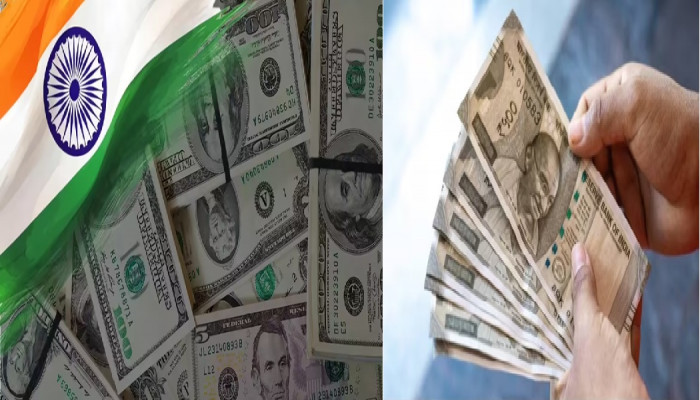
Harnessing Domestic Savings in a Forex-Conscious Era
Overview
India is the world’s largest recipient of inward remittances, with inflows reaching record levels of approximately USD 129 billion in 2024, over USD 135-136 billion in FY25, and continuing strong momentum. These stable private transfers bolster the current account, support the rupee, and help finance imports.
However, outward remittances by residents and large-scale repatriations by foreign investors represent significant counterflows that warrant attention for Balance of Payments (BoP) management and foreign exchange (forex) conservation.
Liberalised Remittance Scheme (LRS): Individual Outward Flows
The Reserve Bank of India (RBI) introduced the Liberalised Remittance Scheme (LRS) in 2004. It permits resident individuals (including minors) to remit up to USD 250,000 per financial year (April-March) for permissible current and capital account transactions, such as foreign travel, education, medical treatment, family maintenance, gifts, donations, and overseas investments (equity, debt, property).
Recent Trends (USD billion):
FY23: ~USD 27 billion (record at the time).
FY24: Peaked at ~USD 31.74 billion.
FY25: Declined 6.85% to USD 29.56 billion.
FY26: Further moderation to ~USD 28.9 billion (full year estimates), with April-December down 4.1%.
FY25 Key Breakdowns (approximate):
Foreign Travel (tourism, business): USD 16.96 billion (~57% share), the dominant component despite a marginal decline.
Overseas Education (student fees and related): USD 2.92 billion (down 16% YoY from USD 3.48 billion).
Maintenance of Close Relatives / Family Support: ~USD 3.72 billion.
Gifts: ~USD 2.93 billion.
Investments (equity/debt, property): Growing but variable, with monthly figures in hundreds of millions.
Travel consistently accounts for over 55-60% of LRS outflows, while education has moderated with the improvement of domestic opportunities.
FDI and FPI/FII Repatriations: Major Capital Account Pressures
Beyond individual LRS flows, significant outward pressures arise from foreign investors repatriating profits, dividends, and capital.
Foreign Direct Investment (FDI): Gross FDI inflows remained robust at ~USD 81 billion in FY25 (up 13-14% from the prior year), led by services, manufacturing, and energy.
Net FDI plummeted 96% to just USD 0.4 billion (or ~USD 353 million) in FY25 from USD 10.1 billion in FY24. This reflects higher repatriations/disinvestments and increased outward FDI by Indian companies.
Repatriation and Disinvestment: Surged to a decade-high USD 51.5 billion in FY25 (up from USD 44.5 billion in FY24). This indicates a maturing market offering smooth exits but draining forex.
Foreign Portfolio Investment (FPI, formerly often referred to as Foreign Institutional Investors - FII): Highly volatile "hot money."
Recent years have witnessed large net outflows or profit-booking amid global uncertainties.
FPIs repatriate capital gains, dividends, and interest after applicable taxes, amplifying rupee volatility during risk-off periods.
These repatriations, combined with LRS and other outflows, contribute to pressure on the current account and forex reserves (which stood robustly around USD 690-700 billion in recent periods, providing comfortable import cover).
Economic Impacts
Positive Aspects: Outward flows enable global mobility, skill acquisition through education abroad, business expansion, and portfolio diversification.
FDI/FPI inflows historically bring technology, best practices, market depth, and liquidity. Repatriations signal an open, mature economy attractive to long-term investors.
Challenges:
Forex Drain and Rupee Pressure: Increased demand for foreign currency (primarily USD) can contribute to depreciation, raising the costs of imports like oil and electronics.
Current Account Strain: Exacerbates deficits alongside India's merchandise trade gap.
Opportunity Cost: In a high domestic savings-based economy, these funds could alternatively fuel local investments in stocks, companies, infrastructure, or mutual funds, leveraging India's strong growth potential and generating compounded domestic returns. Rapid profit repatriation reduces the multiplier effect of foreign capital.
Strategies to Control or Moderate Outflows
In an era of prioritising forex conservation for critical needs (imports, debt servicing, defence, infrastructure), balanced approaches are essential: Strengthen monitoring via PAN/Aadhaar linkage and purpose-based reporting.
Incentivise domestic alternatives: Enhance "Study in India" and quality higher education, promote domestic tourism, and create attractive local investment avenues with tax benefits.
Encourage rupee-based trade and stable long-term FDI over volatile FPI.
Use macro-prudential tools selectively during stress periods, avoiding blunt capital controls.
Leverage high household savings by deepening equity culture and corporate bond markets.
Targeted nudges toward retention are preferable to outright restrictions, which could drive flows underground.
Taxes on Outward Remittances and Repatriations: Current and Potential Enhancements
Current Framework (LRS): Tax Collected at Source (TCS) under Section 206C(1G) of the Income Tax Act acts as provisional collection, adjustable against final tax liability.
Threshold: Nil TCS up to INR 10 lakh per financial year (per PAN) for most purposes (updated in recent budgets).
Education (non-loan) and Medical: Often 2% above threshold (reductions applied in 2026 updates).
Other purposes (travel, investments, tours): Up to 20% above threshold; overseas tour packages sometimes at a flat 2%. Education loans from specified institutions are exempt.
On FDI/FPI Repatriations, Dividends, and Gains:
Dividends: Withholding tax ~20% (plus surcharge/cess; mitigated by Double Taxation Avoidance Agreements - DTAAs).
Interest on Debt: Concessional rates in many cases (e.g., 5% for certain bonds) to 20%.
Capital Gains (for FPIs): Short-term and long-term rates apply (e.g., long-term equity often 12.5% without indexation in recent rules); self-assessed before repatriation.
Feasible Selective Tax Hikes and Revenue Potential:
Tiered higher TCS on non-essential/luxury LRS outflows (travel, large investments) while protecting education and medical.
Additional surcharge or levy on short-term FPI exits or large profit repatriations.
Modest increases in withholding on portfolio dividends/interest, with safeguards for long-term FDI.
Exit taxes or lock-in incentives to encourage longer investment tenures.
Revenue Estimates:
With LRS outflows at ~USD 25-30 billion annually (~INR 2-2.5 lakh crore) and FDI/FPI repatriations in the USD 40-50+ billion range, effective collections at 5-10%+ on high-value portions could generate INR 5,000-20,000+ crore from LRS alone. Selective hikes on repatriations could add thousands of crores more. These revenues, though modest relative to India's overall tax base, could be ring-fenced for domestic education infrastructure, skill development, or forex stabilisation funds—aligning with a savings-led growth model.
Trade-offs: Higher taxes risk deterring fresh inflows, reducing market liquidity, or encouraging avoidance. Evidence from past TCS adjustments shows improved compliance with moderate outflow moderation. Calibration is key to maintaining "ease of doing business."
Conclusion: Prudent Management for Sustainable, Self-Reliant Growth
Outward remittances under LRS and repatriations of FDI/FPI returns reflect India's integration into the global economy and rising middle-class aspirations.
Yet, in a savings-rich economy with immense domestic growth potential, moderating non-essential drains through incentives, monitoring, and smart, selective taxation can generate revenues, conserve forex, and channel capital toward local opportunities.
Policymakers must balance individual freedoms and openness with national priorities like rupee stability and external sector resilience. As India pursues developed-nation status, wise management of these flows will strengthen its economic sovereignty while sustaining its global footprint.
Disclaimer: The opinions expressed within this article are the personal opinions of the author. MyIndMakers is not responsible for the accuracy, completeness, suitability, or validity of any information on this article. All information is provided on an as-is basis. The information, facts or opinions appearing in the article do not reflect the views of MyindMakers and it does not assume any responsibility or liability for the same.



 Loading...please wait
Comments