



Indian Navy set to commission record 19 warships in 2026
- In Reports
- 05:54 PM, Jan 08, 2026
- Myind Staff
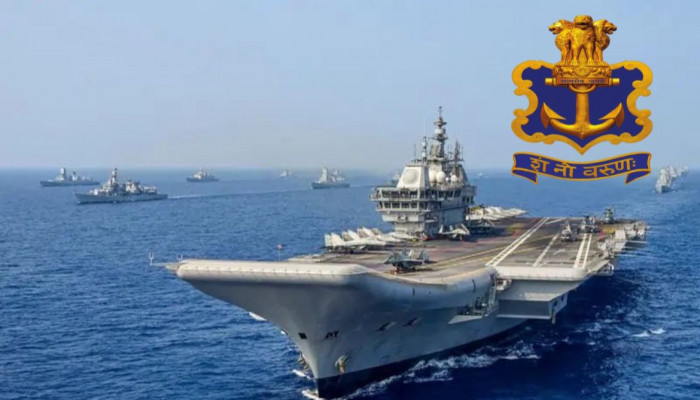
The Indian Navy is preparing to commission a record 19 warships in 2026, marking the largest single-year expansion of its fleet so far. Officials say this major milestone reflects the growing strength of India’s domestic shipbuilding industry and years of sustained investment in modern naval construction.
This planned induction is higher than last year’s addition of 14 vessels, which included a submarine. According to sources familiar with the developments, the current pace of naval production is being described as “extraordinary”, with 2026 expected to become the “pinnacle year” for warship commissioning in recent times.
Officials have attributed this surge to improved design processes, advanced construction techniques, and closer coordination between public and private shipyards across the country. Together, these efforts have significantly boosted India’s ability to build complex naval platforms domestically.
Among the most important platforms scheduled for commissioning are the Nilgiri-class multi-role stealth frigates. The first ship of this class was commissioned in January 2025, followed by INS Himgiri and INS Udaygiri in August 2025. Officials confirmed that at least two more Nilgiri-class frigates are expected to be inducted into the Navy in 2026.
In addition to combat ships, the Navy will also commission a survey vessel from the Ikshak class and a diving support vessel from the Nistar class. These vessels will enhance India’s capabilities in hydrographic surveys, deep-sea operations, and fleet support, strengthening operational readiness across maritime domains.
Officials say the record number of commissions has been made possible due to integrated construction, a modular shipbuilding strategy introduced by the Ministry of Defence nearly a decade ago. Under this method, ships are constructed in around 250-tonne blocks, including hull sections, superstructures, and internal systems.
These blocks are later assembled with high precision, allowing cabling, piping, and other systems to be pre-installed and aligned efficiently. Sources explained that this approach has greatly reduced errors and delays during final assembly.
Shipyards are also increasingly using advanced design software and artificial intelligence to improve efficiency. According to officials, AI tools are now being used to optimise assembly sequences, manage material sourcing, predict timelines, and simulate machinery layouts and fluid dynamics.
As a result, construction timelines for warships have been reduced to around six years, compared to the earlier eight to nine years required for similar platforms.
Officials noted that the accelerated commissioning aligns closely with India’s broader maritime strategy. The expansion is aimed at countering regional naval growth, ensuring freedom of navigation along critical sea lanes, strengthening cooperation with Quad and ASEAN partners, and enhancing India’s ability to project power across the Indo-Pacific region.
While this growth significantly boosts India’s naval strength, officials also acknowledged that the country still trails China in overall shipbuilding scale. Public estimates suggest that the People’s Liberation Army Navy could operate around 395 ships and submarines by the end of 2025, with the number potentially rising to 435 by 2030.
Despite this gap, officials stressed that commissioning 19 warships in a single year represents a major leap for India’s naval capacity and industrial capability. With faster construction timelines, higher indigenous content, and a steady pipeline of advanced platforms, the Indian Navy’s modernisation drive is entering a crucial phase.
Officials said this progress will play a vital role in strengthening maritime security and deterrence across India’s extended maritime neighbourhood.



 Loading...please wait
Comments