




Indian Milky Jewel Bhagalpuri Dudhiya Langra Mango Shipments to US Face Racist Backlash
- In Current Affairs
- 12:18 PM, Jun 18, 2026
- Rudra Dubey
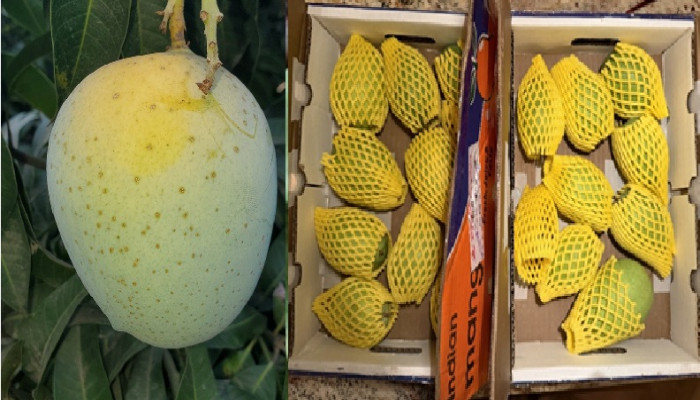
India has long been celebrated as the birthplace of the mango (Mangifera indica), a fruit revered across civilisations as the "King of Fruits." With more than a thousand recognised cultivars spread across diverse agro-climatic regions, India produces nearly half of the world's mangoes. Yet, within this extraordinary diversity, certain regional varieties stand apart, distinguished by their flavour, aroma, cultural significance, and unique ecological origins.
Among these treasured cultivars is the Bhagalpuri Dudhiya Langra, a distinctive variant of the renowned Langra mango grown in the fertile plains of Bhagalpur district in Bihar. While the Langra mango of Varanasi is widely recognised across India, connoisseurs of eastern India often regard the Bhagalpuri Dudhiya Langra as a category unto itself—a mango defined by its creamy sweetness, lingering milky aroma, low-fibre texture, and remarkable sensory appeal.
The story of this mango is not merely one of taste. It is a story of terroir, biodiversity, traditional farming wisdom, scientific complexity, and emerging economic opportunity. As India seeks to strengthen its agricultural exports and promote region-specific products globally, Bhagalpuri Dudhiya Langra represents an exceptional example of how local agricultural heritage can become an engine of rural prosperity and international recognition.
The Unique Identity of Bhagalpuri Dudhiya Langra
The Bhagalpuri Dudhiya Langra possesses several characteristics that distinguish it from conventional Langra varieties cultivated elsewhere.
Perhaps its most striking feature is that the fruit retains its green exterior even after ripening, making visual assessment of maturity difficult for those unfamiliar with the variety. However, beneath this green skin lies a rich golden pulp characterised by exceptional juiciness and sweetness.
The term "Dudhiya," meaning "milky," refers to one of the most fascinating attributes of this mango. When the skin of a ripe fruit is gently scratched or nicked, a whitish, milk-like exudate may appear, accompanied by a distinctive creamy aroma. This characteristic has contributed to its legendary status among local consumers and has given rise to its popular name.
Unlike many commercial mango varieties that contain noticeable fibre, Dudhiya Langra is valued for its smooth, nearly fibreless texture, enhancing its luxurious mouthfeel. Its sweetness is balanced by subtle acidity, creating a flavour profile that is simultaneously rich, refreshing, and complex.
These attributes distinguish it from Banarasi Langra, which tends to exhibit greater fibre content and a more pronounced tangy character. They also differentiate it from other regional cultivars such as Maldah or Malda mangoes, which possess distinct appearances and flavour characteristics.
The Science Behind the Irresistible Sweetness: Genetics Meets Geography
The extraordinary eating quality of Bhagalpuri Dudhiya Langra results from an intricate interaction between genetics and environment.
Dudhiya Langra represents a superior local clone within the broader Langra family, selected over generations by farmers for its desirable characteristics. Research on mango cultivars has shown that variations among clones significantly influence sugar accumulation, acidity levels, pulp quality, and aroma profiles.
One important indicator of sweetness is Total Soluble Solids (TSS), commonly measured in degrees Brix. Superior Dudhiya clones are believed to exhibit elevated TSS values, reflecting enhanced sugar concentration. Simultaneously, relatively lower acidity contributes to a balanced flavour that accentuates the perception of sweetness.
Equally important is the fruit's reduced fibre content, which allows consumers to experience its creamy texture without interference from coarse structural elements. This combination of high sugar concentration, low fibre, and balanced acidity creates the remarkable sensory experience associated with authentic Dudhiya Langra.
The Gangetic Terroir: Nature's Contribution to Excellence
The concept of terroir, often associated with fine wines, applies equally to exceptional fruits. Bhagalpur's unique environmental conditions play a decisive role in shaping the identity of Dudhiya Langra.
Located within the fertile Gangetic basin, Bhagalpur benefits from deep alluvial soils deposited over centuries by the Ganga River and its tributaries. These soils possess several characteristics favourable to mango cultivation: High organic matter content, rich mineral composition, excellent moisture retention capacity, Adequate drainage properties, and favourable pH conditions.
Particularly significant is the availability of potassium, a nutrient strongly associated with fruit quality, sugar accumulation, and flavour development.
Bhagalpur's humid subtropical climate further complements these soil conditions. Distinct dry periods support flowering, while warm summers encourage fruit development and sugar synthesis. Seasonal temperature variations and adequate sunlight facilitate the formation of aroma compounds responsible for the fruit's distinctive character.
Farmers and horticultural experts frequently observe that the same variety cultivated outside this ecological niche often fails to reproduce the signature qualities found in Bhagalpur. Such observations underscore the importance of regional terroir in determining fruit excellence.
People Who Never Tasted This Exotic Variety Find its Flavour Surreal
Let’s Decode the Milky Aroma and Mystifying Flavour: The Chemistry of Sensory Excellence
The famous "milky" aroma of Dudhiya Langra that has intrigued consumers for generations holds unique chemistry underlying this sensory phenomenon.
Mango aroma arises from a highly sophisticated mixture of volatile organic compounds (VOCs). More than 300 aroma-related compounds have been identified across mango cultivars. Major classes include:
- Terpenes, contributing piney and mango-specific notes
- Esters, imparting fruity sweetness
- Lactones, responsible for creamy, peach-like characteristics
- Aldehydes and alcohols, influencing freshness and complexity
In Dudhiya Langra, the interplay between these compounds appears particularly favourable toward the development of creamy, sweet, and mildly milky perceptions.
The presence of the characteristic white exudate further strengthens this association. Although mango latex is common across varieties, the exudate observed in Dudhiya Langra appears to contribute positively to its sensory identity rather than producing harsh or irritating effects often associated with sap in other cultivars.
The result is an aroma profile frequently described as rich, creamy, sweet, and unforgettable—a feature that distinguishes Dudhiya Langra from more resinous or turpentine-like mango varieties.
Dudhiya Langra Mangoes are Nutritional Powerhouses
Beyond their sensory appeal, mangoes are important contributors to human nutrition.
Mango pulp provides substantial quantities of Vitamin C, supporting immune function and antioxidant defence. It also serves as an excellent source of Vitamin A precursors, particularly beta-carotene, essential for vision and skin health.
Additional nutrients include: Folate, Vitamin B6, Potassium, Copper, Dietary fibres, and Polyphenolic antioxidants.
Emerging research suggests that regular mango consumption may contribute positively to overall dietary quality, support digestive health, and provide beneficial phytochemicals associated with anti-inflammatory activity.
Thus, mangoes occupy a unique position among fruits by combining indulgent sensory characteristics with meaningful nutritional benefits.
India's Mango Heritage Garnering Government Support
Recognising the cultural and economic significance of mangoes, the Government of India has increasingly prioritised horticultural development and export promotion.
Through organisations such as the Agricultural and Processed Food Products Export Development Authority (APEDA), efforts have focused on strengthening post-harvest infrastructure, developing export-oriented packhouses, improving farmer training, and expanding international market access.
Initiatives under the National Horticulture Mission, Pradhan Mantri Kisan Sampada Yojana, and other agricultural programs have supported investments in cold-chain infrastructure, processing facilities, and quality enhancement.
Prime Minister Narendra Modi has frequently highlighted India's diverse mango heritage in public addresses, emphasising the importance of regional specialities and celebrating mango farmers' contributions to the national economy.
Bihar has emerged as an active participant in these efforts, with increasing attention directed toward premium regional cultivars originating from districts such as Bhagalpur.
Export and Other Challenges and Opportunities
Despite India's position as the world's largest mango producer, exports represent only a small fraction of total production.
Fresh mango exports encounter several obstacles, particularly in high-value markets such as the United States.
These include mandatory phytosanitary treatments such as irradiation, rigorous inspection and certification requirements, high air freight costs, limited shelf life, and competition from geographically advantaged suppliers.
However, successful shipments of Bihar-grown mangoes to international destinations demonstrate that these barriers are not insurmountable. Improved logistics, enhanced quality systems, and coordinated institutional support continue to expand opportunities for Indian exporters.
From the Orchards of Bhagalpur to the World: Mangoes, Viksit Bharat, and India's Soft Power
Those who have been to these mango farms and savoured this exotic delicacy, these pictures from the farms of Bhagalpur itself are enough to make them nostalgic.


Prime Minister Narendra Modi's Vision: Farmers, Heritage and Viksit Bharat
India's mango is no longer viewed merely as a seasonal fruit. Under the leadership of Prime Minister Narendra Modi, it has increasingly become a symbol of India's agricultural excellence, cultural heritage, rural entrepreneurship, and global soft power. This aligns closely with the national vision of Viksit Bharat @2047, which seeks to transform India into a developed nation by empowering farmers, promoting value addition, expanding agricultural exports, and creating globally competitive rural enterprises.
In the 134th episode of Mann Ki Baat, Prime Minister Modi highlighted the importance of India's mango heritage and paid special tribute to mango growers across the country.
He observed:
"As soon as summer arrives, another topic of discussion starts in every household—and that is mangoes. There is hardly a home in India where mangoes are not talked about during summer."
Recognising the contribution of India's horticultural community, the Prime Minister further said:
"Today, through Mann Ki Baat, I praise my farmer brothers and sisters involved in mango cultivation. You are not just ordinary farmers—you are very special for the agricultural economy of the country. May you keep shining like this."
He emphasised that India's mangoes are now travelling from village orchards to international markets and credited farmers for transforming mango cultivation into an important contributor to India's agricultural exports. The message reflects the broader objectives of Viksit Bharat—increasing farmers' incomes, promoting One District One Product (ODOP), strengthening food processing, encouraging exports, and showcasing India's unique biodiversity to the world.
India's Mango Diplomacy: Taking Indian Mangoes to Global Consumers
The Government of India, through APEDA, Indian embassies, state governments, farmer producer organisations, and exporters, has significantly expanded international promotion of premium Indian mangoes.
One notable initiative was "Mango Magic" in Seattle, Washington, organised in collaboration with the Consulate General of India and APEDA. The event introduced American consumers, chefs, retailers, and food professionals to India's extraordinary diversity of mango varieties while highlighting India's rich horticultural heritage.
Similarly, APEDA partnered with retailers and distributors to organise "Mango Mania" promotions in the United States and the United Arab Emirates. Premium Indian mangoes—including Alphonso, Kesar, Langra and other regional varieties—have increasingly appeared in mainstream retail outlets such as Costco, allowing Indian mangoes to reach consumers well beyond the South Asian diaspora.
These initiatives represent more than export promotion—they demonstrate India's growing confidence in presenting premium agricultural products as part of the nation's global identity and soft power.
Bhagalpur's Opportunity in India's Export Story and Road Ahead
Designed to connect farmers with markets, financial institutions, and agricultural services, the ecosystem operates a direct-to-consumer online grocery store and a futuristic crop management system.
Agri-Tech & Farming: Provides farmers with AI-powered scientific advisory, soil health analysis, and an integrated supply chain that ensures end-to-end food traceability.
Direct-to-Consumer Grocery: Allows consumers to purchase farm-fresh organic produce, cereals, and exotic fruits (such as Bihar's Dudhiya Maldah mangoes) directly from farms. The online storefront features interactive tools, such as the ability to bargain and unlock bulk discounts.
Awards & Recognition: Incubated at the STPI APIARY (Centre of Excellence in Blockchain) under the Government of India and is a recognised leader in the agritech space.
Global Expansion: Actively working with agricultural agencies like APEDA to export biofortified and commercial crops to international markets, including the US.
The recent export of mangoes from Bhagalpur, Bihar, including Langra and Maldah varieties, to international destinations marks an important milestone. Combined with the district's internationally recognised GI-tagged Jardalu mango and the distinctive Dudhiya Langra, Bhagalpur possesses the potential to become one of India's premium mango export clusters.
With continued investment in modern packhouses, irradiation facilities, cold-chain logistics, geographical indication branding, quality certification, and value-added processing, Bhagalpur could emerge as an important contributor to India's vision of becoming a global supplier of premium horticultural products.
As India advances toward Viksit Bharat @2047, mangoes represent far more than a fruit. They embody biodiversity, rural livelihoods, scientific agriculture, food processing, entrepreneurship, export competitiveness, and cultural diplomacy.
Responding with Pride: Science Over Stereotypes
The growing international popularity of Indian mangoes has also attracted occasional criticism.
Recently, Texas-based conservative commentator Sara Gonzalez generated widespread controversy after describing Indian mangoes as "disgusting" and referring to them as "biohazards" while mocking the enthusiasm of Indian consumers for the fruit. The remarks triggered strong criticism across social media, with many commentators describing them as uninformed and culturally insensitive rather than evidence-based.
The most effective response to such comments is not outrage, but scientific evidence and consumer experience.
Indian mangoes undergo some of the world's most stringent export protocols before entering premium international markets such as the United States. Export consignments are produced under Good Agricultural Practices (GAP), inspected by the Plant Protection, Quarantine and Storage (PPQS) authorities, certified by APEDA, and subjected to USDA-approved phytosanitary treatments, including mandatory irradiation, before being cleared for entry.
A Milky Jewel with Global Potential
In the vast landscape of Indian mango diversity, Bhagalpuri Dudhiya Langra occupies a truly special place. Its exceptional sweetness, creamy aroma, smooth texture, and distinctive identity embody the powerful influence of genetics, terroir, and human stewardship.
At a time when India seeks to expand agricultural exports and enhance farmer prosperity through value addition, such regional treasures deserve greater recognition, scientific documentation, and strategic promotion.
From the orchards of Bhagalpur to dining tables around the world, the journey of Dudhiya Langra represents the promise of Indian horticulture itself: rooted in tradition, enriched by science, and destined for global appreciation.
For those fortunate enough to experience its unforgettable milky sweetness, Bhagalpuri Dudhiya Langra is not simply another mango—it is a taste of place, history, and excellence.



 Loading...please wait
Comments