




Indian chip startups move closer to large scale production despite supply chain bottlenecks
- In Reports
- 07:03 PM, Jun 01, 2026
- Myind Staff
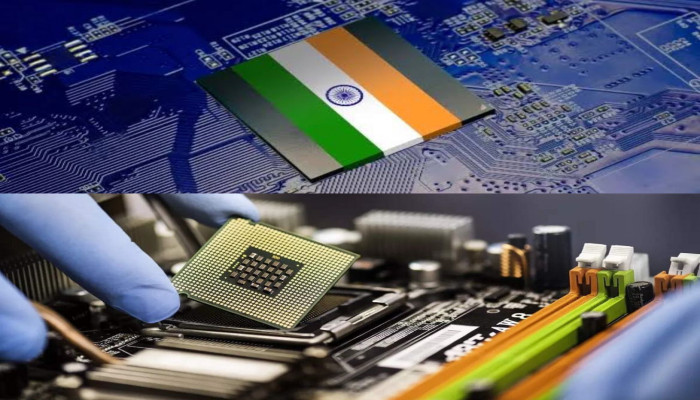
India’s emerging semiconductor startups are moving steadily towards commercialisation, with companies such as Netrasemi, Mindgrove Technologies and Agnit Semiconductors entering customer pilot stages and preparing for large-scale production. While the sector is witnessing strong growth and government support, ongoing supply chain disruptions continue to pose challenges for manufacturers.
These homegrown semiconductor firms are targeting full-scale commercial production by the end of 2027, while some expect to reach the market much earlier. Their progress highlights the rapid development of India’s semiconductor ecosystem, which has gained momentum over the past few years through government-backed initiatives and increasing investor interest.
Netrasemi has already taken a major step by moving its flagship chip into production. The company has supplied chip samples to three customers who are currently conducting pilot projects. Commercial-scale production is expected to begin by mid-2027.
PeakXV-backed Mindgrove Technologies is also nearing commercial rollout. The company develops chips used in applications such as biometrics, motor controllers and industrial electronics. According to cofounder Shashwath TR, Mindgrove plans to launch commercially by the end of this year. The startup already works with more than a dozen customers in the microcontroller segment and expects to ship hundreds of thousands of chips during the year.
Bengaluru-based Agnit Semiconductors, which specialises in gallium nitride chips mainly used in defence and strategic applications, is also making progress. The company currently has three pilot projects underway. Its customer base includes defence public sector units as well as private defence companies. Agnit expects production volumes to reach between 5,000 and 10,000 chips over the next six to nine months.
"We have received encouraging feedback from two pilots, and both products will be ramping up to volumes soon," said founder Hareesh Chandrasekar.
India’s semiconductor industry has grown rapidly in recent years. According to a report by market research firm IMARC, the industry was valued at more than $60 billion in 2025 and is expected to expand to nearly $180 billion by 2034. This growth is being driven largely by government incentive programmes designed to strengthen domestic chip design and manufacturing capabilities.
The journey from prototype development to commercial production generally takes three to four years. However, industry players say this timeline has shortened significantly because of government support and increased venture capital funding. The India Semiconductor Mission, launched in December 2021, played a key role in accelerating growth across the sector.
Since the launch of the mission, many startups have advanced from the prototyping stage to customer sampling, chip tape-outs and production ramp-ups. Industry leaders credit much of this progress to government-backed schemes aimed at supporting both chip design and manufacturing.
"We saw momentum when the India Semiconductor Mission started. Now we can see companies prototyping, sampling customers, ramping up volumes—all of this has been largely led by the DLI and PLI schemes," said Chandrasekar.
The Design-Linked Incentive (DLI) scheme supports semiconductor design activities, while the Production Linked Incentive (PLI) scheme provides financial assistance for manufacturing investments. Together, these initiatives have helped create a stronger foundation for India’s semiconductor ambitions.
Despite these developments, most Indian electronics manufacturers continue to source chips from Taiwan and China. Industry leaders believe government intervention can help create stronger demand for domestically designed chips, similar to how policy measures supported Indian manufacturers in other sectors.
Earlier this year, the government imposed restrictions on uncertified internet-connected CCTV cameras. The move effectively reduced the presence of Chinese brands such as Hikvision and Dahua in the market, creating opportunities for Indian manufacturers. Semiconductor startups hope similar measures could encourage the adoption of Indian-made chips.
"Two years ago, there was no reason to buy (CCTV cameras) from an Indian OEM because so much was coming from Taiwan or China at far lower prices. But suddenly we are seeing Indian OEMs come to the forefront. The government has a big role to play in creating that same market for chips," said Netrasemi cofounder and chief executive Jyothis Indirabhai.
While demand and policy support remain positive, semiconductor companies are facing growing pressure from supply chain disruptions. A significant portion of the components required for chip production is still imported, particularly from China. Following the Gulf conflict, shipments from China have reportedly fallen by 21%, leading to tighter availability of critical materials and components.
Industry executives say supply chain issues were already a challenge before the conflict. Manufacturers often had to replace preferred materials with alternatives that were easier to obtain. Since the conflict, uncertainty has increased further, making planning and production more difficult.
"Pre-Gulf it was insane, but post that it has become unpredictable-so many different factors are coming in," said Chandrasekar.
Delays are also affecting the supply of printed circuit boards. According to Chandrasekar, turnaround times that previously took around seven days have now stretched to nearly 25 days. These delays are slowing production schedules and increasing operational pressure on manufacturers.
The challenge extends beyond circuit boards. Semiconductor manufacturing depends on a range of specialised chemicals, all of which are currently imported. Any disruption in supply affects multiple stages of production and creates additional uncertainty for companies attempting to scale operations.
Rising costs are adding to the pressure. Industry founders note that a single tape-out, the process of sending a chip design to a foundry for manufacturing, can cost more than $3 million. Achieving production-grade quality and commercial-scale manufacturing requires even greater investment.
Despite these hurdles, India’s semiconductor startups continue to move forward. Backed by government incentives, growing customer interest and expanding market opportunities, companies are steadily progressing from development stages to commercial production. However, resolving supply chain bottlenecks and reducing dependence on imports will remain critical for sustaining the sector’s growth in the years ahead.



 Loading...please wait
Comments