



Indian Army moves to eliminate Chinese parts in military drones under zero-tolerance framework
- In Reports
- 04:42 PM, Jan 17, 2026
- Myind Staff
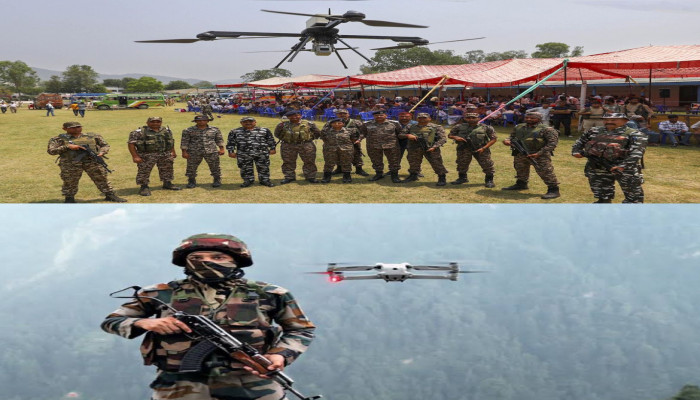
The Indian Army’s Army Design Bureau (ADB) has finalised a strict new framework aimed at completely removing Chinese components from military drones. The move comes after serious security concerns were raised during recent operations, where unauthorised foreign hardware and software were found in drones procured from Indian vendors.
According to intelligence inputs and technical audits, several unmanned aerial vehicles (UAVs) used by the Army were found to contain Chinese-origin parts, posing major risks to national security. To address this, the ADB has created a comprehensive detection and elimination mechanism that follows a “zero-tolerance” approach.
Major General CS Mann, Additional Director General of the Army Design Bureau, has repeatedly stressed the Army’s firm stand on this issue. He stated that there would be “zero tolerance for Chinese components in military drones” and confirmed that the framework is now in its final stages of approval within the Ministry of Defence.
The new framework requires complete traceability of every component used in a drone. This includes hardware, embedded software, third-party firmware, and critical systems such as communication modules, sensors, GPS units, and autopilots. Vendors will now be required to submit detailed certification reports for all components used in their systems.
Earlier, many suppliers were allowed to rely on self-certification, but this practice has now been discontinued. Independent verification will be mandatory to ensure that no unauthorised or foreign components are present. This change follows audits that revealed Chinese parts in nearly 400 logistics and surveillance drones supplied by Indian firms.
As a result of these findings, the Army cancelled contracts worth more than ₹230 crore. Several manufacturers were also blacklisted for non-compliance, including Daksha Unmanned Systems and Garuda Aerospace. These actions sent a strong signal to the defence industry about the seriousness of the issue.
Operational risks became even more evident during Operation Sindoor in May 2025. During the operation, Chinese components in drones allegedly enabled data breaches. Intelligence reports suggested that China shared sensitive Indian troop movement data with Pakistan during cross-border hostilities. This incident significantly accelerated the push for stricter rules.
Another alarming incident involved a drone hijacking near India’s northern borders, which was reportedly linked to Chinese-made autopilot systems. These events highlighted the dangers of using untrusted foreign technology in sensitive military platforms.
In response, the ADB has formed special audit teams under the Ministry of Defence. These teams will inspect both existing drone inventories and future procurement proposals. The goal is to ensure that no foreign infiltration compromises operational security.
As of mid-January 2026, the framework has already received approval from the Director General (Acquisition). It is now awaiting final endorsement from Defence Secretary RK Singh. Once cleared, it is expected to receive formal approval from the Defence Acquisition Council (DAC) in the near future.
After implementation, the framework will be mandatory for all three services—the Army, Navy, and Air Force. It will enforce strict pre-procurement testing and compliance checks across the board. Industry bodies such as FICCI, CII, and ASSOCHAM have been formally warned to advise their members against sourcing Chinese components.
This policy also aligns closely with the government’s Atmanirbhar Bharat initiative, which focuses on strengthening indigenous defence manufacturing. The rules also cover software-related risks, including remote hacking and unauthorised data transfers. Vendors will be required to use secure and trusted software alternatives.
Non-compliance with the framework will lead to immediate disqualification from defence tenders, possible blacklisting, and legal action. Defence analysts see this as a major step towards securing India’s drone supply chain, though challenges remain. More than 840 drone integrators in India currently depend on imported sub-systems.
The policy aims to push companies towards genuine manufacturing rather than simple assembly. It may also encourage investment in local electronics and avionics production. There are discussions about extending similar rules to central armed police forces and even civilian sectors such as agriculture.
With the framework nearing final clearance, India has signalled its strong resolve to protect its drone fleet and reduce dependence on potentially hostile technologies. Implementation is expected within weeks, strengthening operational security for future conflicts.



 Loading...please wait
Comments