




Indian agencies extradite drug kingpin Virender Singh Basoya from UAE
- In Reports
- 06:37 PM, Aug 14, 2026
- Myind Staff
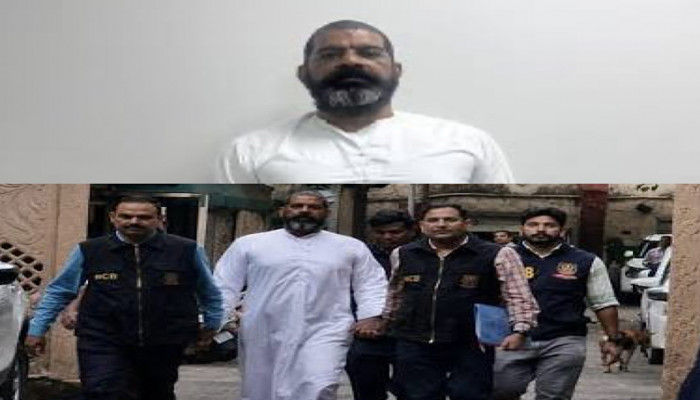
India has brought back alleged drug kingpin Virender Singh ‘Basoya’ from the United Arab Emirates after nearly two-and-a-half years on the run. Basoya, wanted in several major narcotics cases, was arrested after landing at Delhi’s Indira Gandhi International Airport. His return followed sustained coordination between Indian and UAE authorities and an INTERPOL Red Notice issued against him in November 2025.
The Narcotics Control Bureau (NCB) has described Basoya as a key operator and prime accused in multiple high-value drug cases. He had allegedly been operating from different locations in Dubai after fleeing India soon after a major drug seizure in Pune. His return is now being seen as an important development in the investigation into an international narcotics network linked to Delhi and other parts of India.
NCB Deputy Director General Neeraj Kumar Gupta said Basoya is the prime accused in the seizure of 1,837 kg of mephedrone in Pune in 2024. The drugs were estimated to be worth around Rs 6,000 crore. According to Gupta, Basoya fled to Dubai the day after the Pune case was registered in February 2024. He then stayed at different locations across the UAE to avoid Indian agencies.
"A key operator, Virendra Singh Basoya, was brought back today," Gupta said. He added that Basoya was also wanted in a Delhi Police case registered in October 2024. That case involved the seizure of more than 1,300 kg of mephedrone, cocaine and hydroponic weed. Sources said investigators have already filed a chargesheet against Basoya in the Pune case.
Indian agencies intensified their efforts to locate Basoya after receiving information that he was operating from the UAE. The NCB requested an INTERPOL Red Notice against him. The notice was issued in November 2025. A Red Notice does not serve as an international arrest warrant. Instead, it asks law enforcement agencies in different countries to locate a person and provisionally arrest them while extradition or other legal proceedings are considered.
The notice helped authorities in the UAE act against Basoya. UAE authorities arrested him in June 2026 in connection with the Red Notice. Indian authorities then worked with their UAE counterparts to secure his return to India. The process involved several agencies, including the Ministry of Home Affairs, the NCB, the Ministry of External Affairs and the Indian Embassy in Abu Dhabi.
Indian and UAE authorities initiated extradition and deportation proceedings under the India-UAE Extradition Treaty. The sustained cooperation between the two countries eventually led to Basoya’s return to India. He was arrested upon his arrival at Delhi’s Indira Gandhi International Airport.
The NCB is now seeking Basoya’s transit remand. Once the remand process is completed, officials are expected to take him to Pune. The Pune case remains a key part of the investigation into his alleged role in the drug network. Investigators are expected to question him further and examine his links with other people involved in the alleged narcotics operations.
Basoya’s alleged involvement in drug trafficking also dates back to an older case. Gupta said interrogation after his return brought up a 2009 Directorate of Revenue Intelligence (DRI) case related to ketamine smuggling. Basoya had earlier been jailed in connection with that case. The matter is currently sub judice.
His alleged involvement in several cases has placed him on the radar of agencies investigating transnational drug networks. These networks are believed to operate across India, West Asia and Southeast Asia. Investigators are now expected to examine Basoya’s role across the different cases and his possible links with other members of these networks.
Basoya’s return also highlights the growing cooperation between India and the UAE in cases involving wanted fugitives. India and the UAE signed an Extradition Treaty in 1999. The agreement has increasingly been used in cases involving economic offenders, gangsters and drug traffickers. Indian agencies have also been using international mechanisms such as INTERPOL notices along with bilateral cooperation to trace suspects who leave the country.
The case sends a clear message to fugitives accused of serious crimes that moving abroad may not keep them beyond the reach of Indian agencies. Investigators are increasingly combining international cooperation with intelligence and financial trails to locate suspects and bring them back for legal proceedings in India.
Union Home Minister Amit Shah on Friday described Basoya’s return as a "new milestone" in the government’s zero-tolerance approach to narcotics.
"Modi government is relentlessly tracking down drug traffickers hiding abroad and destroying their entire ecosystem with a ruthless approach," Shah said in a post on X.
Basoya’s arrival in India now marks the next stage of the investigation. The NCB will take the legal steps required to secure his transit remand and move him to Pune. His questioning could provide investigators with further information about the alleged drug network and the cases in which he has been named. The development also underlines the role of international cooperation in tracking fugitives who operate outside India.



 Loading...please wait
Comments