




India widens LNG sourcing network to 15 countries to reduce supply risks
- In Reports
- 06:47 PM, Aug 10, 2026
- Myind Staff
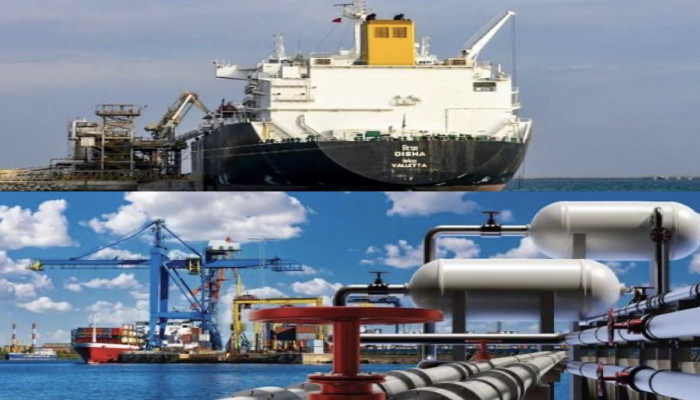
India has significantly widened its liquefied natural gas (LNG) sourcing network to reduce the risks posed by geopolitical tensions and disruptions along major shipping routes. The country now imports LNG from 15 countries, up from six earlier. The government informed the Rajya Sabha about the expansion on Monday.
India has also increased the number of countries from which it sources crude oil. Crude imports now come from 41 countries, compared with 27 earlier. The Ministry of Petroleum and Natural Gas said the broader supplier network is aimed at strengthening the country's energy security and reducing its dependence on any single source.
Minister of State for Petroleum and Natural Gas Suresh Gopi said the government is focusing on a wider sourcing network to reduce the impact of disruptions involving individual suppliers, regions or transit routes. “This diversification has reduced dependence on any particular country, region or transit route and enhanced India's ability to manage supply disruptions and market volatility,” Gopi said.
The expansion of LNG sourcing is part of India's wider effort to diversify its energy supplies. The government had earlier disclosed that the country had expanded its crude oil supplier base to 41 nations. The move has gained greater importance amid disruptions affecting energy shipments through West Asia and uncertainty in global energy markets.
The Ministry of Petroleum and Natural Gas said it regularly monitors risks linked to energy supplies. It also tracks global market conditions in coordination with public-sector oil and gas companies and other stakeholders. The government said it is taking necessary measures to maintain the uninterrupted availability of crude oil, LNG and petroleum products.
India remains highly dependent on imports to meet its energy needs. A wider supplier base gives the country more options when global supply chains face disruptions. It also helps reduce the risks linked to sudden changes in international energy markets. Multiple sources can provide greater flexibility during geopolitical tensions and interruptions along important maritime routes.
Along with expanding its supplier network, India is also increasing its strategic petroleum storage capacity. These reserves are intended to strengthen the country's ability to respond to sudden disruptions in crude oil supplies. The Indian Strategic Petroleum Reserve Ltd (ISPRL) has established three strategic petroleum reserve facilities in Andhra Pradesh and Karnataka.
These three facilities have a combined storage capacity of 5.33 million metric tonnes (MMT). The government has also approved two commercial-cum-strategic petroleum reserve facilities with a combined capacity of 6.5 MMT. These facilities are planned at Chandikhol in Odisha and Padur in Karnataka.
However, the additional 6.5 MMT capacity is not currently available for use. The government approved the two projects in July 2021. The latest reply in Parliament did not provide details on their construction progress. It also did not specify their completion schedules or expected commissioning dates.
Oil and Natural Gas Corporation (ONGC) is separately developing another strategic petroleum reserve facility in Karnataka. The facility will have a total capacity of 1.75 MMT. The government said in a Rajya Sabha reply on August 3 that half of this capacity will be reserved for strategic storage.
The remaining half of the ONGC facility will be available for the company's commercial operations. This arrangement will allow part of the storage to support strategic energy needs while giving ONGC access to the rest for commercial purposes.
The expansion of India's LNG and crude oil supplier networks, along with the development of additional storage facilities, reflects the government's broader effort to strengthen energy security. The measures are aimed at reducing India's exposure to geopolitical shocks, disruptions in maritime transportation and sudden changes in global energy prices.



 Loading...please wait
Comments