



India votes against the UNHRC resolution condemning Iran’s violent crackdown
- In Reports
- 08:09 PM, Jan 24, 2026
- Myind Staff
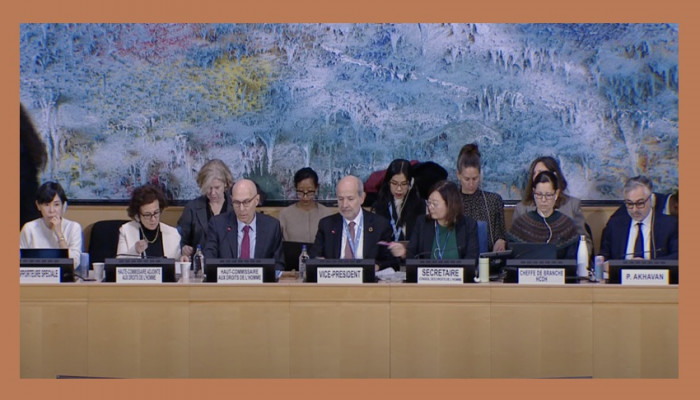
The United Nations Human Rights Council has strongly criticised Iran for its violent response to anti-government protests and has decided to extend an investigation into alleged human rights abuses. The decision came during an emergency session in Geneva, where officials, diplomats, and rights groups discussed the latest unrest and its consequences.
On Friday, the U.N. rights body condemned Iran’s actions, calling the crackdown a case of “brutal repression.” U.N. High Commissioner for Human Rights Volker Turk addressed the council and urged Iranian authorities to change their approach. “I call on the Iranian authorities to reconsider, to pull back, and to end their brutal repression,” he said. He also expressed serious concerns about the safety and treatment of people detained during the protests.
The council passed a motion to extend a previous inquiry that was set up in 2022. This extension will allow U.N. investigators to document the recent unrest as well. The collected evidence could be used “for potential future legal proceedings,” according to the resolution.
Human rights organisations have reported that many people, including bystanders, were killed during what they described as the biggest crackdown since Shi’ite Muslim clerics came to power in Iran after the 1979 revolution. Iranian authorities, however, have rejected these accusations and described the protesters as “terrorists and rioters.” They also claimed that the unrest was backed by exiled opponents and foreign enemies, including the United States and Israel.
Iran’s mission to the United Nations criticised the Human Rights Council’s decision and accused it of being politically motivated. In a statement, Iran’s mission said the council’s resolution was “politicised” and rejected what it called external interference in its internal affairs. The statement further said that Iran already has “independent and robust accountability mechanisms” to investigate “the root causes of recent events.”
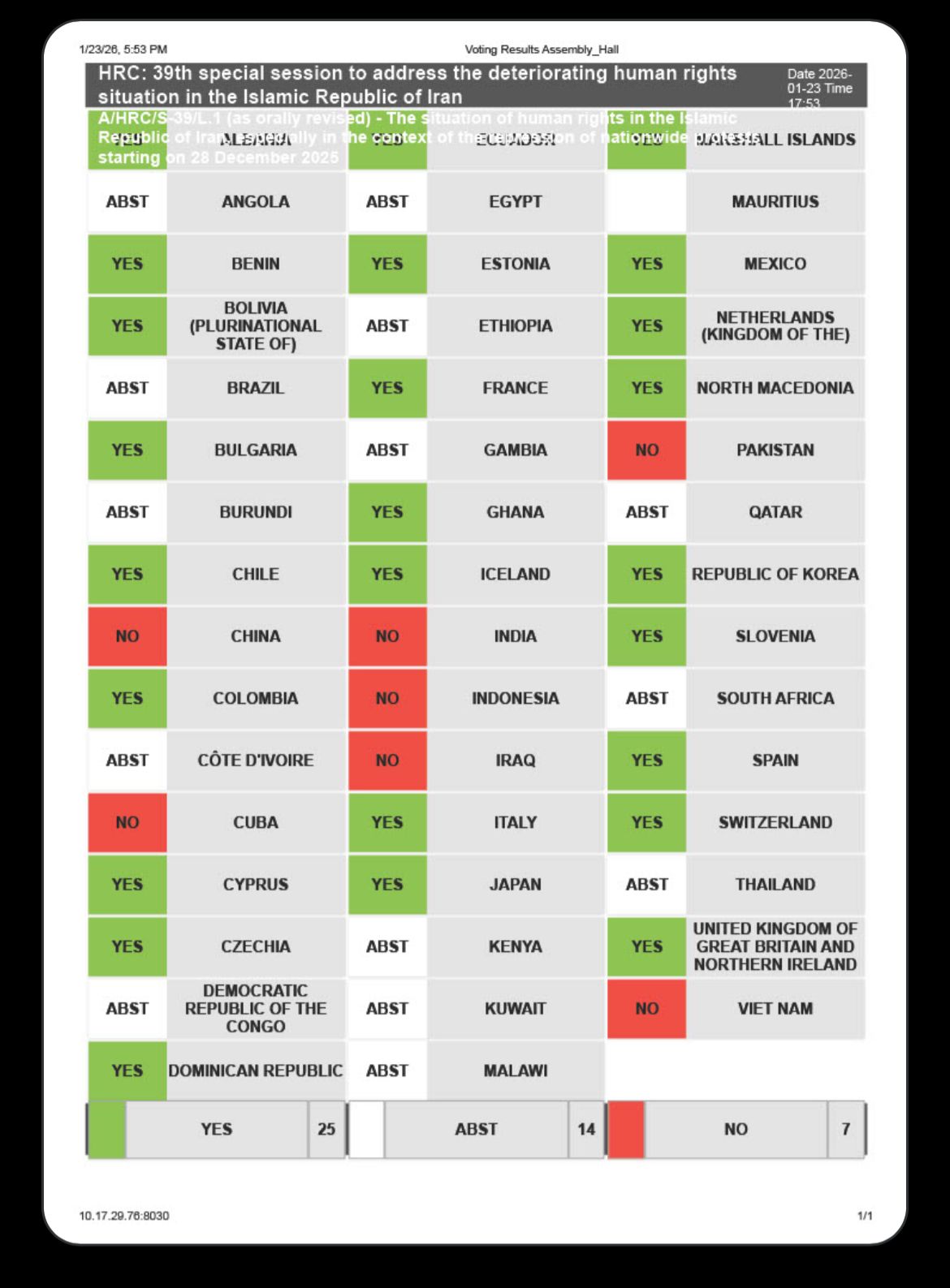
The voting on the resolution revealed sharp divisions among countries. Twenty-five states, including France, Mexico, and South Korea, voted in favour of the motion. Seven countries, including China and India, voted against it, while fourteen countries abstained from voting.
India’s position was highlighted as it voted “NO” on the West-backed resolution. The resolution had expressed concerns over the protests and the alleged human rights violations in Iran. By voting against it, India aligned with other countries that opposed the resolution and questioned the approach taken by the Human Rights Council.
During the session, strong statements were also made by legal experts. Payam Akhavan, a former U.N. prosecutor of Iranian-Canadian nationality, described the situation in severe terms. “This is the worst mass murder in the contemporary history of Iran,” he told the council. He also called for a “Nuremberg moment,” referring to the international criminal trials of Nazi leaders after World War Two.
Iran’s ambassador to the United Nations in Geneva, Ali Bahreini, rejected the council’s actions and questioned the legitimacy of the emergency session. He said the session was invalid and presented Iran’s own figures regarding the death toll. According to him, about 3,000 people were killed during the unrest.
However, other sources have given different figures. One Iranian official told Reuters that at least 5,000 people had been killed, including around 500 members of the security forces. The U.S.-based HRANA rights group also provided its own assessment, saying it had verified 4,519 deaths linked to the unrest and was reviewing 9,049 additional deaths.
Several countries also expressed doubts about the usefulness of the Human Rights Council session. China, Pakistan, Cuba, and Ethiopia questioned the value of the discussion. China’s ambassador Jia Guide described the unrest in Iran as “a matter of internal affairs,” suggesting that it should not be handled by international bodies.
Another issue raised during the session was funding. It remains unclear who will pay for the extended U.N. investigation at a time when financial problems have already slowed other international probes.
Overall, the emergency session reflected deep disagreements among nations over how to respond to Iran’s handling of protests. While some countries supported stronger international scrutiny, others opposed it, calling it interference in Iran’s domestic matters. The extended inquiry is expected to continue documenting events, while debates over accountability, sovereignty, and human rights remain unresolved at the global level.



 Loading...please wait
Comments