




India, UK set to build electric propulsion tech for four large Indian Naval platforms
- In Reports
- 04:19 PM, Aug 27, 2026
- Myind Staff
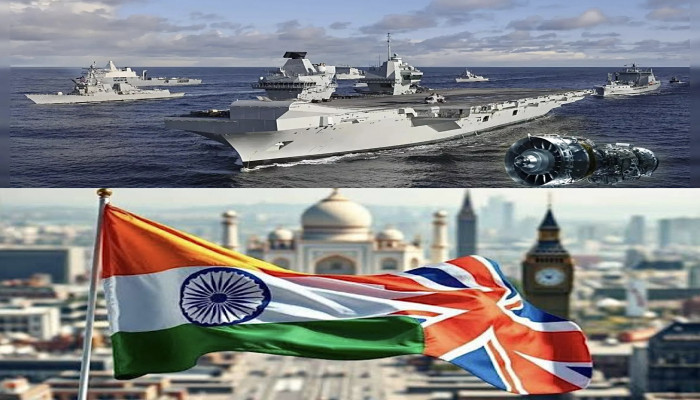
India and the United Kingdom are set to sign an Inter-Governmental Agreement (IGA) to jointly develop Integrated Full Electric Propulsion (IFEP) systems for four Landing Platform Docks (LPDs) of the Indian Navy. The agreement will mark a major step in India’s naval modernisation and its growing defence cooperation with the UK, The Print reported.
The four LPDs will be built at an Indian shipyard and will use a full-electric propulsion system. This will be the first time the Indian Navy adopts such a propulsion architecture for its warships. The project will combine British expertise with Indian manufacturing and engineering capabilities. Bharat Heavy Electricals Limited (BHEL) and GE Vernova will work together on the programme.
The agreement is expected to be signed soon. It will support India’s effort to develop advanced propulsion technology within the country. The partnership is also expected to help build expertise in designing, testing and producing electric propulsion systems for future naval platforms.
British officials have confirmed that GE Vernova will partner with BHEL to establish India’s first maritime land-based testing facility for IFEP technology. The facility will allow the two companies to develop and test the integrated propulsion system on land before installing it on naval ships. This approach will help assess the system’s performance and reliability. It will also support its future use on larger and more advanced platforms.
IFEP is not simply an upgrade to a ship’s propulsion system. Under this architecture, the electricity produced by the ship’s power-generation system can be distributed between propulsion and other major electrical systems. This gives naval designers greater flexibility in managing the vessel’s power requirements.
The system can become particularly important as modern warships use more advanced equipment. Future naval platforms are expected to carry powerful sensors, electronic warfare systems and advanced combat equipment. These systems require large amounts of electrical power. An integrated electric architecture can help warships manage these growing demands more efficiently.
The proposed agreement builds on a Statement of Intent signed in Portsmouth on November 28, 2024. The document was signed during the third meeting of the Joint Working Group on Electric Propulsion Capability Partnership. It created a framework for India and the UK to work together on the co-design, co-creation and co-production of electric propulsion systems for future Indian naval ships.
British officials have also pointed to the UK’s experience in developing advanced electric propulsion systems for its naval platforms. This includes systems used on Type-23 frigates and Queen Elizabeth-class aircraft carriers. The UK’s experience is expected to play an important role in helping India develop its own capabilities in this field.
The partnership reflects a wider change in India-UK defence ties. The relationship is moving beyond the traditional model of buying defence equipment. Both countries are now focusing more on technology transfer, industrial partnerships, joint development and local manufacturing. The latest propulsion project is another example of this changing approach.
India’s growing naval ambitions are also creating new opportunities for British companies. The Indian Navy aims to expand towards a 200-ship fleet by 2047. This could create a major market for companies such as GE Vernova and Rolls-Royce in the field of naval propulsion and related technologies.
For India, the project also fits into the broader Atmanirbhar Bharat initiative. The aim is to use foreign expertise while developing greater technological and manufacturing capabilities within the country. The IFEP programme could support domestic innovation, strengthen local defence supply chains and reduce India’s dependence on imported propulsion systems.
The cooperation could extend beyond the four new LPDs. India and the UK have also discussed the possibility of retrofitting electric propulsion systems onto some older Indian naval ships. Such upgrades could become part of wider naval modernisation efforts and show that the partnership has potential beyond the current project.
The electric propulsion agreement is also part of a larger India-UK defence partnership. The two countries are working together on fighter engine technology for India’s Advanced Medium Combat Aircraft (AMCA) programme. India is also looking at British Lightweight Multirole Missiles (LMMs) for the Indian Army.
The partnership is increasingly focusing on joint manufacturing and co-development. It also aims to bring Indian start-ups into defence supply chains. This approach could give domestic companies greater opportunities to contribute to advanced defence technologies.
By adopting IFEP technology, India would join a select group of navies using advanced electric propulsion systems. The technology can improve operational efficiency and lower the acoustic signature of naval platforms. It can also make it easier to integrate future combat systems and other high-power technologies.
The proposed India-UK agreement therefore carries significance beyond the construction of four LPDs. It combines British technological experience with India’s growing shipbuilding and engineering capabilities. The project could strengthen India’s ability to develop advanced naval systems while supporting its long-term goal of building a more self-reliant defence industry.



 Loading...please wait
Comments