



India to join international consortium to develop sixth-generation fighter
- In Reports
- 06:24 PM, Mar 19, 2026
- Myind Staff
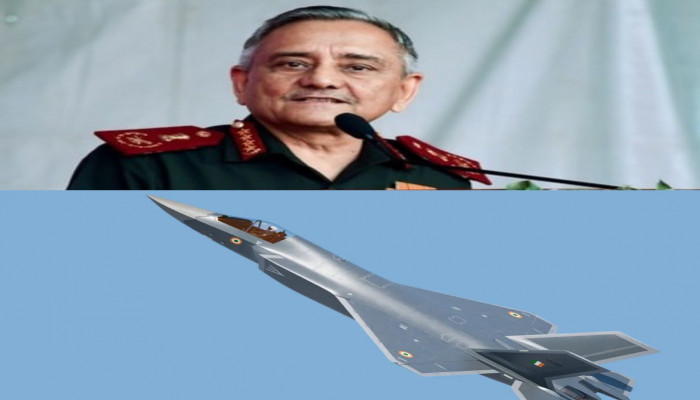
India is planning to join an international consortium to develop a sixth-generation fighter aircraft, one of the most advanced military technologies in the world. The move is aimed at strengthening the country’s air combat capabilities and ensuring that the Indian Air Force (IAF) is prepared for future threats. Chief of Defence Staff General Anil Chauhan shared this update with a Parliamentary panel, highlighting the importance of staying ahead in modern warfare.
The IAF, which is the fourth largest air force globally, does not want to fall behind in deploying next-generation combat systems. According to General Chauhan, the force has identified two major global consortia currently working on sixth-generation fighter aircraft. The first includes the United Kingdom, Italy, and Japan, while the second involves France, Germany, and Spain. India is considering partnering with one of these groups to begin work on this advanced capability at an early stage.
“Two consortia are working on the sixth-generation aircraft. One is a consortium of the UK, Italy, and Japan, and the other is a consortium of France and Germany. Both are developing (sixth-generation) aircraft. To ensure we don’t lag behind, we will try to partner with one of the consortia and start considering the sixth-generation fighter right now,” the CDS told the Parliamentary standing committee on defence.
The UK, Italy, and Japan are working together under the Global Combat Air Programme (GCAP). Meanwhile, France, Germany, and Spain are developing their system under the Future Combat Air System (FCAS). Both programmes aim to build a powerful “system of systems” that will operate across multiple domains such as air, land, sea, cyber, and space. At the centre of these systems will be the sixth-generation fighter aircraft.
These next-generation platforms will not just be advanced fighter jets but part of a larger integrated network. They are expected to include stealth technology, uncrewed systems, and highly advanced weapons such as directed energy weapons. The aircraft will also feature cutting-edge avionics, radar systems, satellite communication, and artificial intelligence. These technologies will allow better intelligence, surveillance, and reconnaissance, making air operations more efficient and effective.
The development of sixth-generation capabilities will happen gradually and is expected to reach operational deployment by around 2040. Recognising the importance of this timeline, the Parliamentary panel has urged the defence ministry to speed up planning and decision-making. The panel believes that early action will help India strengthen its position in modern, air-centric warfare.
At the same time, India is already working on its own fifth-generation stealth fighter programme known as the Advanced Medium Combat Aircraft (AMCA). This project is seen as a critical step before moving to sixth-generation systems. Several Indian companies have shown interest in building prototypes for the AMCA. Out of seven initial bidders, three have qualified for the next stage. These include Tata Advanced Systems Limited, Larsen & Toubro in partnership with Bharat Electronics Limited, and a consortium led by Bharat Forge.
The selected companies will now submit cost bids for developing five AMCA prototypes and one structural test model. The final contract is expected to be awarded soon, most likely to the lowest bidder. Progress in the AMCA programme is considered essential, especially as China has already deployed its J-20 fifth-generation fighters and is developing more advanced systems. Reports also suggest that China is testing sixth-generation platforms like the J-36 and J-50. Additionally, Pakistan is considering acquiring the J-35 stealth fighter, which adds to the urgency for India.
While fifth-generation aircraft focus mainly on stealth and sensor fusion, sixth-generation fighters will go a step further. They will operate as part of a network where manned and unmanned systems work together. This approach is expected to redefine aerial combat in the coming decades.
India’s AMCA programme is progressing steadily. The first prototype is expected to make its maiden flight by 2029. The development phase should be completed by 2034, followed by production starting around 2035. In 2024, the Cabinet Committee on Security approved the design and prototype development of the AMCA at a cost of about ₹15,000 crore.
The IAF’s long-term modernisation plan includes deploying around 120 stealth fighters, which will be organised into six squadrons from 2035 onwards. The first two squadrons will use the Mk-1 version of the aircraft, powered by American F-414 engines. The remaining squadrons will feature the more advanced Mk-2 version, which will have a more powerful engine developed in India with French collaboration.
India’s plan to join a global consortium for sixth-generation fighters reflects its focus on future readiness and technological advancement. By combining domestic efforts like the AMCA with international partnerships, the country aims to build a strong and modern air force capable of handling emerging challenges.



 Loading...please wait
Comments