



India to establish world’s first autonomous maritime shipbuilding centre in Andhra Pradesh
- In Reports
- 05:58 PM, Mar 13, 2026
- Myind Staff
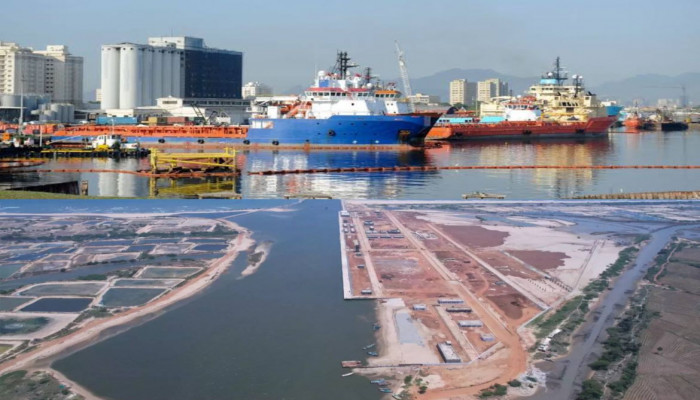
A Mumbai-based defence firm has taken a significant step toward strengthening India’s maritime and defence technology sector. On Thursday, Sagar Defence Engineering held the foundation-laying ceremony for what is being described as the world’s first Autonomous Maritime Shipbuilding and Systems Centre. The facility will be built at the Juvvaladinne fishing harbour in Andhra Pradesh’s Nellore district and is expected to play an important role in advancing India’s capabilities in maritime technology and indigenous defence manufacturing.
The Andhra Pradesh government has supported the project by allocating 29.58 acres of land at the fishing harbour for the construction of the centre. The location offers direct access to the sea, which will allow the company to build, launch, test and deploy vessels directly from the facility. This access is expected to make the development and testing process more efficient. The initiative is also in line with the state government’s broader vision to strengthen India’s marine technology ecosystem and develop advanced manufacturing infrastructure along the coastline.
The upcoming centre will focus on the development of several advanced maritime platforms and systems. These include unmanned surface vessels (USVs), autonomous underwater vehicles (AUVs), intelligent navigation systems, maritime sensors, communication networks and command-and-control platforms designed for autonomous maritime operations. Such technologies are increasingly becoming important in modern maritime security and commercial operations.
These advanced systems are designed to function with minimal human involvement. By using autonomous technologies, maritime operations can become more efficient, safer and capable of handling complex tasks in challenging ocean environments. The development of these systems will also strengthen India’s maritime security capabilities while supporting innovation in naval and marine technologies.
Another important feature of the shipyard will be the use of digital twin technology. This technology creates a virtual version of ships and shipyard infrastructure, allowing engineers and designers to simulate performance, test upgrades and analyse designs before implementing them in real-world operations. By using these digital simulations, developers can identify problems early, improve vessel designs and reduce risks before actual construction and deployment take place.
Captain Nikunj Parashar, founder and chief executive officer of Sagar Defence Engineering, said that the new facility reflects the company’s long-term goal of transforming the way maritime systems are developed and operated. According to him, the centre will help India design and produce advanced unmanned maritime platforms domestically as global maritime operations increasingly move toward automation. He added that the support from the Andhra Pradesh government has made it possible to build a platform that encourages homegrown innovation, improves maritime security and helps position India as a leading global hub for autonomous maritime technology.
The shipyard will also make use of smart manufacturing technologies to improve efficiency and productivity. Robotic fabrication systems will be used for automated processes such as welding, cutting, painting and assembling vessel components. These technologies are expected to reduce manual labour while ensuring greater accuracy and faster production timelines. The use of automation will also help maintain consistent quality during manufacturing.
In addition to robotic fabrication, the facility will introduce autonomous material-handling systems. Robots and automated guided vehicles (AGVs) will be used to transport heavy components and materials across the shipyard. These machines will move parts between different stages of construction, helping streamline operations and reduce delays in the manufacturing process.
The centre will also adopt additive manufacturing, commonly known as 3D printing, for producing specialised parts and spare components. This approach allows manufacturers to quickly create complex parts whenever required, reducing dependency on external suppliers and shortening production time. The use of 3D printing technology will also make it easier to produce customised components needed for advanced maritime systems.
Beyond defence and shipbuilding, the project is expected to support developments in the fishing sector as well. The technology created at the centre could contribute to the development of smart fishing fleet networks. Through these systems, fishing vessels will be able to connect with satellite and cloud-based platforms to receive real-time information such as fish location maps, weather alerts and fleet coordination tools. These technologies can help fishermen plan their operations more efficiently while improving safety at sea.
Additionally, the smart networks will include mechanisms to monitor and detect illegal fishing activities. This will allow authorities and fishing communities to track suspicious movements and ensure that marine resources are protected. By combining advanced maritime technology with fishing operations, the initiative could support both economic growth and sustainable marine practices.
Overall, the establishment of the Autonomous Maritime Shipbuilding and Systems Centre represents an important milestone for India’s defence and maritime technology sector. By combining automation, digital simulation and advanced manufacturing, the project aims to strengthen indigenous innovation, improve maritime security and build India’s presence in the rapidly evolving field of autonomous maritime systems.



 Loading...please wait
Comments