




India successfully tests long-range surface-to-air missile Kusha
- In Reports
- 04:40 PM, Jul 24, 2026
- Myind Staff
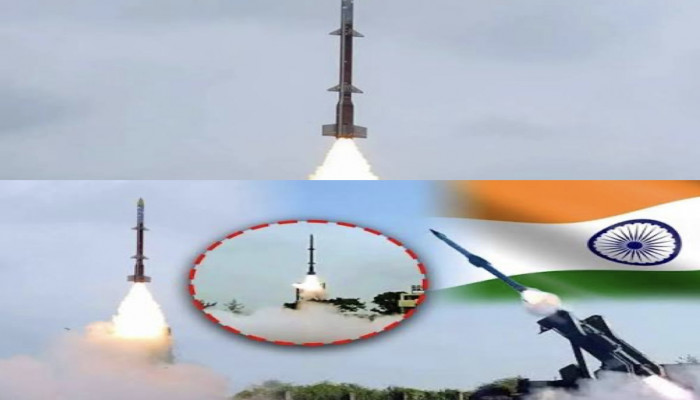
The Defence Research and Development Organisation (DRDO) successfully carried out the maiden flight test of the Long-Range Surface-to-Air Missile (LR-SAM) Kusha on Thursday from APJ Abdul Kalam Island off the coast of Odisha. The successful trial marks a significant milestone in India's efforts to build an indigenous long-range air defence system. The test also moves Project Kusha closer to becoming a key part of India's future defence network.
According to DRDO, the Kusha missile system can destroy a wide range of aerial threats over long distances and at different altitudes. The system is designed to engage fighter aircraft, cruise missiles, unmanned aerial vehicles (UAVs) and large enemy aircraft. The successful maiden flight validates the progress of India's indigenous long-range air defence programme, which aims to match the capabilities of advanced systems such as Russia's S-400 Triumf and the United States' MIM-104 Patriot.
Project Kusha will serve as the backbone of India's long-range air defence network. DRDO has planned the system with a three-tier interceptor architecture. It will include the M1, M2 and M3 interceptor missiles. These interceptors will have engagement ranges of around 150 km, 250 km and up to 350-400 km, respectively. This layered design will allow the system to tackle threats at different distances before they reach their targets.
Once the system becomes operational, it will provide protection against several types of aerial threats. It will intercept fighter aircraft, stealth platforms, drones, cruise missiles, precision-guided munitions and certain classes of ballistic missile threats. The interceptor missiles are expected to travel at speeds of nearly Mach 5.5. Advanced radar systems, fire-control systems and network-centric command infrastructure will support the missile shield. These technologies will help detect, track and engage multiple targets with greater accuracy.
The Defence Acquisition Council approved the Acceptance of Necessity (AoN) in September 2023 for the procurement of five squadrons of Project Kusha for the Indian Air Force. This approval marked an important step in bringing the indigenous missile system into operational service. Bharat Electronics Limited (BEL) will play a major role in the programme as the principal industry partner. The company will develop the radar systems and handle the overall integration of the missile system.
The indigenous air defence system will integrate with the Indian Air Force's Integrated Air Command and Control System (IACCS). This integration will strengthen the country's ability to detect and respond to multiple aerial threats in real time. The system will improve coordination between sensors, command centres and interceptor missiles. It will also reduce India's dependence on imported strategic air defence systems by providing an advanced indigenous alternative.
Project Kusha will also become an important part of Mission Sudarshan Chakra, India's proposed plan to establish a multi-layered national air and missile defence shield by 2035. The mission aims to create a comprehensive defence network that can protect the country from a wide range of airborne threats. The shield will combine long-range interceptor missiles with quick reaction surface-to-air missile systems, very short-range air defence systems, directed energy weapons and indigenous ballistic missile defence capabilities.
The successful maiden flight test represents more than the development of a new missile. It highlights India's growing capability to design and produce advanced defence technology within the country. The programme reflects DRDO's continued efforts to strengthen national security through indigenous innovation. As Project Kusha progresses through further trials and development, it is expected to play a central role in India's future air defence strategy.
The successful test also demonstrates the country's focus on building a self-reliant defence ecosystem. With support from DRDO, BEL and the Indian Air Force, Project Kusha is expected to enhance India's operational readiness and provide a modern air defence shield capable of responding to evolving security challenges. As development continues, the system is set to become one of the most important indigenous defence projects aimed at protecting the country's airspace in the coming years.



 Loading...please wait
Comments