




India successfully tests 3,500-km Range K-4 SLBM from INS Arihant
- In Reports
- 05:18 PM, Dec 24, 2025
- Myind Staff
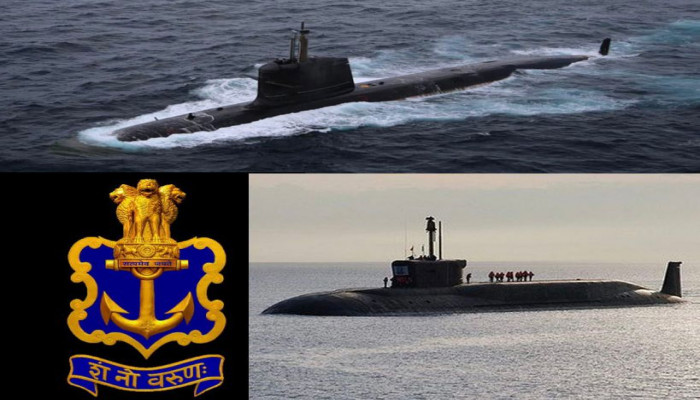
India has successfully conducted a user trial of the K-4 submarine-launched ballistic missile (SLBM) from its nuclear-powered submarine INS Arihant. The test was carried out in the Bay of Bengal on 23 December 2025 and achieved a range of about 3,500 kilometres. This marks a significant step in strengthening the sea-based leg of India’s nuclear triad.
Defence journalist Shiv Aroor confirmed the missile launch through a social media post. Following this, several defence observers and open-source platforms also shared details of the test. However, as of 24 December 2025, the Ministry of Defence has not issued any official statement confirming the launch.
The K-4 missile has been developed by the Defence Research and Development Organisation (DRDO). It is an intermediate-range submarine-launched ballistic missile designed mainly for deployment on Arihant-class submarines. The 12-metre-longd missile weighing 17 tonnes has a two-stage solid-fuel system. One of its key features is its ability to be cold-launched from underwater, which allows the missile to be ejected from the submarine before the engine ignites.
According to available information, the missile is guided by an advanced inertial navigation system supported by GPS and India’s NavIC system. This combination ensures high accuracy, with a reported circular error probable of less than 10 metres. The missile is also equipped with manoeuvring features that help it evade missile defence systems.
The successful trial of the K-4 significantly extends India’s sea-based strike range. Earlier, India relied on the K-15 Sagarika missile, which has a range of around 750 kilometres. With the K-4’s much longer range, Indian nuclear submarines can operate from safer distances without needing to move close to an adversary’s coastline. This greatly improves the survivability of the submarines during patrols.
These defence capabilities support India’s nuclear doctrine, which is based on “No First Use” and credible minimum deterrence. The sea-based component of the nuclear triad is considered crucial because it provides a reliable second-strike option. Regular user trials from operational submarines indicate that the system is moving beyond testing and towards full operational readiness. Such launches also help crews gain experience and ensure that systems perform reliably under real conditions.
INS Arihant is India’s first Arihant-class nuclear-powered ballistic missile submarine (SSBN). It was built under the Advanced Technology Vessel (ATV) programme at Visakhapatnam. The submarine is equipped with four vertical launch tubes, which can carry either multiple K-15 missiles or a smaller number of the larger K-4 missiles. The Bay of Bengal continues to serve as the main test area for long-range missile trials. In mid-December, notices to airmen (NOTAMs) and maritime exclusion zones had already indicated possible missile activity between 21 and 30 December, matching the timeline of this test.
India is also expanding its Ship Submersible Ballistic Nuclear (SSBN) fleet to ensure continuous at-sea deterrence. INS Arighaat, the second Arihant-class submarine, was commissioned in August 2024 and already supports K-4 missile operations. The third submarine, INS Aridhaman, features a longer hull and eight launch tubes. It is undergoing advanced trials and is expected to be commissioned in early 2026.
In December, senior Navy leadership highlighted the importance of these developments. According to Navy Chief statements, the growing SSBN fleet “enhances patrol availability and strengthens deterrence capability,” especially at a time of rising regional tensions. These remarks underline the Navy’s focus on maintaining a credible and survivable nuclear force at sea.
The regional context adds to the importance of the K-4 test. Analysts have noted that such missile activities can draw attention from other regional powers. A study by Chatham House pointed out that long-range SLBM tests could increase escalation risks, as Chinese maritime surveillance systems are likely to monitor movements in the Indian Ocean. The 3,500 km range of the K-4 allows India to target strategic depths while keeping its submarines hidden in secure ocean areas.
Looking ahead, India is also working on more advanced submarine-launched missiles. The future K-5 and K-6 missiles are planned for deployment on larger S5-class submarines in the coming years, further strengthening the sea-based deterrent.
If the government officially acknowledges the latest K-4 test, attention may turn to whether the launch was part of routine crew training, system validation, or preparation for a larger operational fleet. Defence analysts are expected to closely study details such as the missile’s flight profile and overall performance. For now, the trial is widely seen as a sign that India’s sea-based nuclear capability is steadily moving towards full operational maturity.



 Loading...please wait
Comments