




India strengthens submarine maintenance capabilities with new testing facility in Karwar
- In Reports
- 06:13 PM, Mar 16, 2026
- Myind Staff
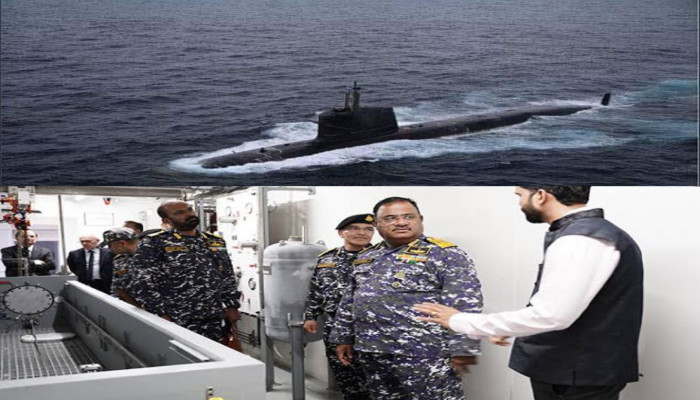
India has taken a major step in strengthening its naval infrastructure with the commissioning of a modern Pneumatic RAM Test Facility at the Naval Group India technical workshop in Karwar, Karnataka. The facility was inaugurated on March 13, 2026, marking an important development in the country’s ability to maintain and support its submarine fleet. With this new addition, India has enhanced its technical capabilities related to submarine maintenance and support systems.
The RAM in this facility stands for Reducer and Actuator Mechanism. It is designed specifically for testing and maintaining essential components of the Pneumatic Mast Raising System used in Scorpène-class submarines, which are known in India as the Kalvari-class submarines. These systems play a crucial role in operating the submarine’s masts. Masts such as periscopes, radar systems, and communication antennas are deployed and withdrawn through mechanisms powered by high-pressure compressed air. Ensuring the smooth functioning of these systems is vital for the submarine’s operational performance.
The facility was formally inaugurated by Vice Admiral B. Sivakumar, who serves as the Chief of Materiel of the Indian Navy. Its main role is to assist in the maintenance, repair, and overhaul of the Indian Navy’s Kalvari-class submarines. These submarines are built in India based on the Scorpène-class design and form an important part of the Navy’s underwater combat fleet. By enabling local testing and servicing of key components, the new facility will improve the long-term reliability and operational readiness of these submarines.
The location of the facility in Karwar has strategic importance. Karwar is one of India’s major naval bases situated along the country’s western coastline. Placing the test facility at this location allows faster and more efficient servicing of submarine components. It reduces the time required to transport equipment for maintenance and helps ensure quicker turnaround during repairs or overhauls. As a result, submarines deployed in the region will be able to return to service more quickly.
With the establishment of this test facility, India has joined a small group of countries that possess such advanced infrastructure. Similar Pneumatic RAM Test Facilities currently exist only in France and Brazil. France developed the Scorpène submarine technology, while Brazil also operates submarines of this class. By setting up this capability within the country, India has now entered this exclusive group with the ability to independently test and calibrate the ram ejection mechanisms used in submarines.
The Kalvari-class submarines are part of India’s Project P-75 programme, which includes six submarines. These vessels represent a significant upgrade in India’s underwater defence capabilities. Designed with advanced stealth technology, the submarines are equipped with torpedoes and anti-ship missiles. To operate effectively, they rely on precise pneumatic systems that manage the launch and operation of various onboard equipment. The new facility will play an important role in ensuring that these complex systems continue to function efficiently.
This development also supports the government’s Atmanirbhar Bharat initiative, which aims to strengthen India’s self-reliance in defence production and maintenance. By creating the ability to test and maintain these critical components within the country, India can reduce its dependence on foreign facilities. Earlier, certain specialised components often required support from overseas centres, which could lead to delays. The new infrastructure allows India to handle such tasks domestically.
From an operational perspective, the facility will improve the availability of submarines in the fleet. Faster maintenance and testing will reduce downtime, ensuring that submarines remain ready for deployment when required. This becomes particularly important as maritime activity and strategic competition continue to grow across the Indian Ocean Region. Maintaining a high level of readiness will allow the Indian Navy to respond more effectively to evolving security challenges.
The Pneumatic RAM Test Facility is designed to recreate real operational conditions for submarine ram launchers. These launchers are responsible for deploying certain equipment and systems from the submarine while maintaining the integrity of the vessel’s hull. Testing these systems under simulated conditions ensures that they will function safely and reliably during actual missions. Conducting such testing within India also reduces the risks associated with transporting sensitive components abroad.
India’s association with the Kalvari-class submarines began in 2017 when the first submarine, INS Kalvari, was commissioned into the Indian Navy. Since then, additional submarines, including INS Khanderi, INS Karanj, INS Vela, INS Vagir and INS Vagsheer, have gradually joined the fleet. The newly inaugurated facility will support the long-term maintenance and operational sustainability of these submarines.
The project has also benefited from continued collaboration with the French defence company Naval Group. While the establishment of the Karwar facility demonstrates India’s growing technical expertise, cooperation with French partners will remain important for future upgrades and technological improvements. This may include the integration of advanced features such as air-independent propulsion systems in future submarine projects.
Another important aspect of the initiative is the training of Indian technicians and engineers. Submarine technology involves highly specialised systems, including hydraulics and high-pressure pneumatic equipment. Through dedicated training programmes, Naval Group India aims to build a skilled workforce capable of independently maintaining these advanced systems. This will help create a strong domestic knowledge base in submarine technology.
Beyond technical benefits, the facility also contributes to regional economic development. The project is expected to create skilled employment opportunities in Karnataka and support industries related to precision engineering and advanced manufacturing. Over time, the Karwar facility could also become a centre for submarine maintenance services within the region.
The experience gained from this infrastructure will also support India’s upcoming submarine projects, including the next-generation submarines planned under Project P-75I. Lessons learned from operating the Karwar facility may guide the development of larger maintenance and overhaul centres in other naval locations, such as Visakhapatnam.
Overall, the commissioning of the Pneumatic RAM Test Facility represents an important milestone in India’s naval modernisation. It ensures long-term support for the Kalvari-class submarines, strengthens defence self-reliance, and deepens technological cooperation with France. At the same time, it reinforces India’s strategic presence in the Indian Ocean and reflects the country’s growing capabilities in advanced maritime defence systems.



 Loading...please wait
Comments