




India steps up diplomatic efforts to bring home 11th-century Maa Vagdevi vigraha from UK
- In Reports
- 05:57 PM, Aug 06, 2026
- Myind Staff
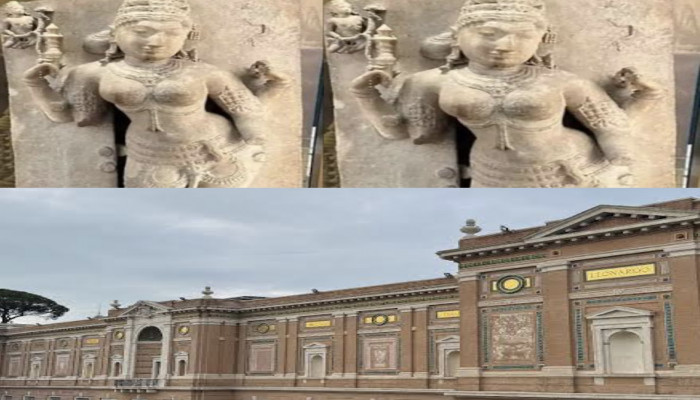
More than a century after the historic vigraha of Maa Vagdevi from Dhar was taken to Britain, India has stepped up its efforts to bring it back. The issue has now moved beyond legal proceedings and the sensitive Bhojshala-Kamal Maula complex to an international diplomatic platform. The possible return of the idol is expected to become one of the key cultural issues during the BRICS Culture Working Group and Culture Ministers' meetings in Bhopal.
India plans to use the four-day BRICS discussions to strengthen cooperation among member countries on the return of cultural property. The focus will remain on idols, sculptures and antiquities that were stolen, smuggled or removed during the colonial period. While the broader discussions will cover global heritage recovery, Madhya Pradesh has a strong local interest in the return of the Maa Vagdevi vigraha from the British Museum in London.
The Centre has already started sustained efforts to secure the vigraha's return after receiving a request from the Madhya Pradesh government. Union Culture Secretary Vivek Aggarwal said, "Immediately after I took over as secretary in the Union Culture Ministry, the Madhya Pradesh government wrote to us seeking the repatriation of the Maa Vagdevi vigraha housed in the British Museum. Since then, we have been continuously working through diplomatic channels as well as at the museum level."
Aggarwal said the government has sent several written communications through India's diplomatic channels in the United Kingdom. Officials have remained in regular contact with both the British authorities and the museum to advance the process of repatriation.
These efforts had started even before the Madhya Pradesh High Court delivered its important judgment on the Bhojshala-Kamal Maula complex on May 15. In its ruling, the court declared the disputed section of the complex as a temple dedicated to Maa Saraswati, also known as Maa Vagdevi. The court also cancelled the Archaeological Survey of India's 2003 arrangement that allowed Muslims to offer Friday prayers at the site. It further directed the government to consider representations seeking the return of the vigraha from London.
The white marble vigraha belongs to the Paramara period and carries an inscription that links it to 11th-century Dhar. The sculpture stands around 1.28 metres tall and weighs nearly 250 kilograms. According to the British Museum's records, the vigraha was acquired from Major-General William Kincaid and officially became part of the museum's collection in 1909.
The BRICS cultural meetings are taking place in Bhopal from August 5 to August 8. The Third BRICS Culture Working Group Meeting is being held on August 5 and 6. It will be followed by the BRICS Cultural Festival on August 6 and 7. The BRICS Culture Ministers' Meeting will conclude the programme on August 7 and 8. Ministers, deputy ministers and delegates from 10 of the 11 full BRICS member countries are expected to attend. Saudi Arabia is the only full member that will not participate.
India will enter these discussions with a strong record of recovering its cultural heritage from foreign countries. According to official figures released in May, the country has repatriated 653 antiquities since 2014. In comparison, only 13 antiquities were brought back before that period. Another government release placed the total number of returned antiquities at 666, including 653 recovered since 2014.
Several important artefacts have returned to India in recent years. The United States has repatriated significant Chola and Vijayanagara bronzes. The Smithsonian's National Museum of Asian Art returned a 12th-century Somaskanda sculpture and a 16th-century image of Saint Sundarar with Paravai. A Chola-period Shiva Nataraja will also return to India after the completion of its temporary display arrangement.
Australia has also agreed to return three important antiquities from Tamil Nadu. These include a stone Nandi, a metal trident carrying the image of Bhadrakali and a six-headed stone Kartikeya. The Indian government welcomed Australia's decision during Prime Minister Narendra Modi's visit to the country in July.
The return of the Maa Vagdevi vigraha now stands at the centre of India's wider campaign to reclaim its cultural heritage. The discussions at the BRICS meetings are expected to strengthen international cooperation on the issue and support India's ongoing diplomatic efforts. For the people of Dhar and Madhya Pradesh, the possible return of the centuries-old idol represents more than the recovery of an artefact. It is closely linked to history, faith and cultural identity, making the outcome of these efforts highly significant.



 Loading...please wait
Comments