



India stands firm on Indus Waters Treaty freeze, links revival to end support for terrorism
- In Reports
- 07:40 PM, Mar 20, 2026
- Myind Staff
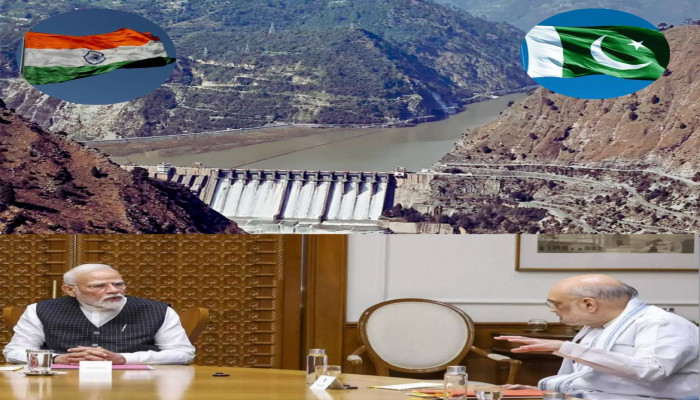
India has once again made it clear that the Indus Waters Treaty will remain in abeyance until Pakistan takes credible and irreversible steps to stop supporting terrorism. The statement was delivered at a United Nations event on World Water Day 2026. India’s Permanent Representative, Harish Parvathaneni, said that the decision was not taken lightly but was necessary due to repeated provocations and the failure of bilateral talks between the two countries.
Addressing the gathering, which focused on the theme “Water and Gender Equality,” Parvathaneni noted that India was compelled to speak on what is usually a bilateral matter. He said, “It was not my intention to comment on a bilateral issue in this forum, but I am compelled to respond as Pakistan has chosen to misuse today’s meeting.” His remarks came after Pakistan raised concerns related to the treaty during the session.
India stressed that the Indus Waters Treaty, signed more than sixty years ago, was based on trust and goodwill. The Indian envoy said that Pakistan has not honoured that spirit. He stated that despite India’s patience and efforts to maintain cooperation, Pakistan continued actions that undermined the agreement. “Our patience and magnanimity did not change Pakistan’s ways. Eventually, we were compelled to announce that the Treaty will be held in abeyance until Pakistan, the global epicentre of terror, credibly and irrevocably ends its support for all forms of terrorism,” he said.
Parvathaneni also highlighted that responsibility in such agreements cannot be one-sided. He remarked that Pakistan must take accountability for its actions and change its approach. “Responsibility is a two-way street,” he said, adding that Pakistan must “unconditionally abjure terrorism as an instrument of state policy” and “uphold the sanctity of human life before talking of upholding the sanctity of treaties.”
India had earlier decided to suspend the treaty following the Pahalgam terror attack, which was attributed to The Resistance Front, a group linked to Lashkar-e-Taiba. The attack was seen as a major trigger that led India to reconsider its commitment to the long-standing water-sharing agreement.
The Indian envoy also pointed out that the treaty needs to be reviewed in light of significant changes over the decades. He mentioned that advancements in dam technology, increasing demands for clean energy, and shifts in climate and population patterns have altered the context in which the treaty operates. According to him, India has repeatedly tried to initiate discussions with Pakistan to update the agreement, but those efforts have not been accepted.
Despite the strong stance on the treaty, India underlined its continued commitment to responsible water management and sustainable development. Parvathaneni said that water plays a crucial role in achieving global development goals. He acknowledged that progress in ensuring access to safe drinking water and sanitation remains uneven across the world and needs urgent attention.
He also spoke about India’s major initiatives in water sector, especially the Jal Jeevan Mission. The programme is one of the largest efforts globally to provide piped drinking water to rural households. It focuses on community participation, with village water committees playing an important role. Many of these committees are led by women, which aligns with the broader theme of gender equality in water management.
India further called for stronger international cooperation in managing water resources. It stressed the need to build national capacities, encourage technological innovation, and promote scientific collaboration, particularly among developing nations. These steps, according to India, are essential to address growing water challenges and ensure sustainable use of resources.
Reaffirming its global engagement, India expressed its willingness to participate in future international platforms focused on water governance. It said it looks forward to contributing to upcoming United Nations forums and working towards inclusive and sustainable solutions in the water sector.



 Loading...please wait
Comments