




India, Southern African Customs Union revive trade talks
- In Reports
- 01:58 PM, Aug 14, 2026
- Myind Staff
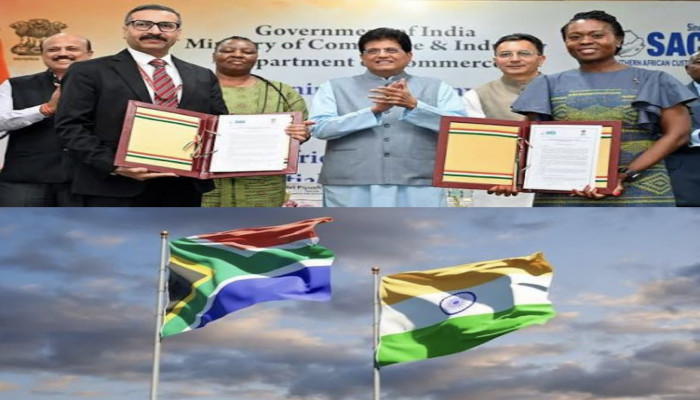
India and the five-member Southern African Customs Union (SACU) have revived efforts to strengthen trade ties by formally starting negotiations for a preferential trade agreement. The two sides signed the terms of reference on Wednesday. The move comes as New Delhi seeks lower tariffs for key exports such as automobiles, pharmaceuticals and industrial machinery.
SACU includes South Africa, Botswana, Namibia, Lesotho and Eswatini. India and the bloc had held five rounds of negotiations between 2002 and 2010, but the talks ended without a final agreement. The latest move brings the proposed trade pact back into focus after more than a decade.
The agreement could become India’s first major trade deal with an African regional bloc. It would give Indian companies preferential access to a market of around 65 million people. SACU members could also gain better access to India, which remains one of the world’s fastest-growing major economies. The pact is expected to support trade on both sides.
The terms of reference define the scope, goals and procedures for the negotiations. The proposed agreement would be narrower than a comprehensive free trade agreement. A preferential trade pact generally reduces import duties on a selected list of products. It is also less likely to include areas such as services, investment and intellectual property.
The talks are taking place at an important time for India’s automobile exports. South Africa is considering increasing duties on automobiles imported from India and China to 50% from the current 25%. Such a move could affect a major Indian export market and increase the importance of securing better tariff access through the trade negotiations.
The agreement will guide both sides towards a “balanced, mutually beneficial and development-oriented agreement,” Ndiitah Nghipondoka Robiati, executive director at Namibia’s Ministry of International Relations and Trade, said after signing the agreement with Yashvir Singh, an additional secretary at India’s trade ministry.
India’s Trade Minister Piyush Goyal said he was confident SACU countries and India would “benefit immensely” from a fair, equitable and balanced agreement that he hoped to finalise in the coming months.
India is expected to push for tariff concessions across several important sectors. These include automobiles and auto parts, pharmaceuticals, machinery, electrical equipment, chemicals and textiles. The focus reflects India’s effort to expand exports and improve its position in the SACU market.
Automobiles and auto parts were India’s second-largest export category to SACU after petroleum products in the fiscal year ended March 2026. Shipments in this category were worth $1.7 billion. Overall, India exported goods worth $7.5 billion to SACU in 2025/26. Imports from the bloc stood at $9.2 billion.
South Africa accounts for most of India’s trade with SACU. Indian exports to South Africa reached $7 billion during the fiscal year, while imports stood at $8.5 billion. The figures highlight the importance of South Africa in India’s trade relationship with the wider customs bloc.
Alongside expanding exports, India is seeking more dependable access to critical minerals from SACU countries. These include platinum-group metals, manganese and copper. These minerals are important for manufacturing, batteries and clean energy technologies. A trade agreement could therefore support India’s efforts to strengthen supply chains while creating greater market opportunities for businesses on both sides.



 Loading...please wait
Comments