




India slams Turkiye at UN, objects to exclusion from OIC resolution talks
- In Reports
- 04:32 PM, Nov 18, 2026
- Myind Staff
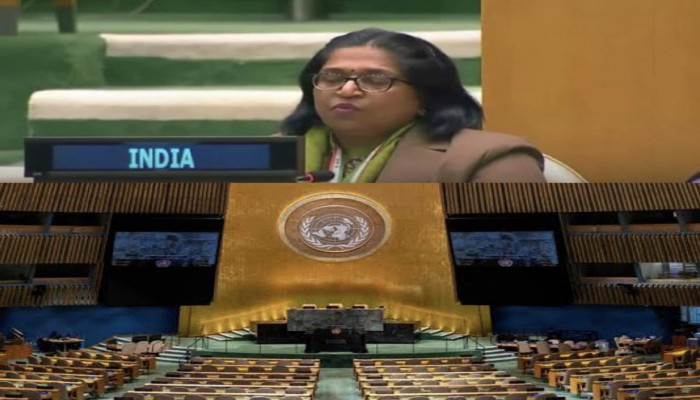
India has strongly objected to Turkiye's "blatant and intentional" exclusion of New Delhi and several other countries from consultations on a resolution concerning cooperation between the United Nations (UN) and the Organisation of Islamic Cooperation (OIC). India voted against the draft at the UN General Assembly (UNGA), calling for an investigation into the negotiation process.
The resolution, titled 'Cooperation between the United Nations and the Organisation of Islamic Cooperation', was introduced by Iraq and facilitated by Turkiye. It was adopted on Monday with 112 votes in favour, six against and 39 abstentions. India, Armenia, Cyprus, Greece, Israel and the United States voted against it.
India's Deputy Permanent Representative to the UN, Ambassador Yojna Patel, said the OIC's Permanent Observer Mission excluded the Indian delegation and several other countries while circulating successive drafts of the resolution.
Explaining India's vote, Patel criticised the facilitator's approach and said, "My delegation has voted against this resolution not only because of its substantive aspects, but also for an even more concerning matter regarding the working methods adopted by the facilitator who convened negotiations on the same,"
Expressing "deep dismay" over the lack of inclusive consultations, she said the OIC mission had "chosen to exclude not only my delegation but several other countries when circulating successive drafts of the resolution."
She added, "This is not only shocking but also sets a bad precedent of delegations excluding specific member states to enable their agendas."
Patel said the facilitator continued to exclude selected countries despite objections from several delegations. She also pointed out that basic procedures, including acknowledging inputs, were "blatantly disregarded, indicating that it was done by design rather than by mistake."
She stressed that differences among member states cannot justify their exclusion from General Assembly consultations. India also urged the UNGA President "to investigate this and prevent its recurrence."
Questioning the resolution's scope, Patel said the OIC was not a regional organisation and questioned the rationale behind expanding its role. India also objected to references to Jammu and Kashmir in the declaration adopted at the ninth OIC Ministerial Conference on Women in Islamabad in July.
Patel said India "rejects" the declaration and the omnibus resolution adopted at the conference. She added that the OIC had no authority to comment on India's internal affairs, accusing the organisation of allowing itself to be misused by a member state to target India through false allegations, in an apparent reference to Pakistan.
India also called on the OIC to follow objectivity, constructive dialogue and mutual respect. Patel said sovereign states protect the interests of their citizens regardless of religion and rejected the idea that only people of the same faith could represent their interests.
Cyprus and Greece also criticised Turkiye's handling of the negotiations, citing a lack of transparency and repeated exclusion from communications and draft discussions. Greece said European Union proposals were not meaningfully addressed, and revised drafts were circulated without adequate consultation.
The United States called for future versions of the resolution to remove excessive language and contentious issues. Ireland, speaking on behalf of the European Union, also regretted the exclusion of the bloc and several member states from consultations.



 Loading...please wait
Comments