




India slams Pakistan at UN, calls ‘Fitna al-Hindustan’ label a state-backed disinformation campaign
- In Reports
- 01:13 PM, Jun 09, 2026
- Myind Staff
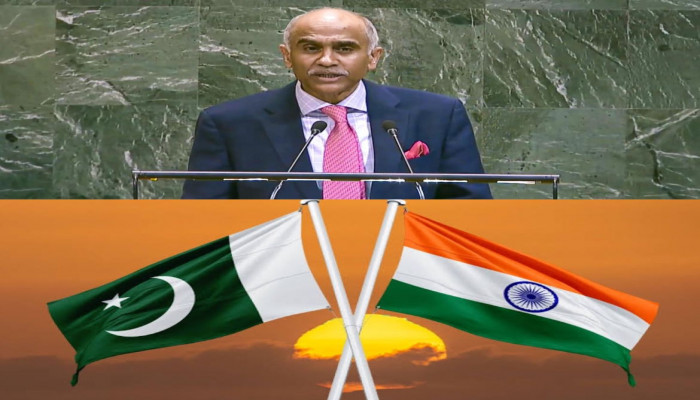
India strongly criticised Pakistan at the United Nations Security Council (UNSC) on Monday over its decision to describe certain groups as “Fitna al-Hindustan”. India said the move was part of a larger effort by Pakistan to spread misinformation and fuel hostility against India.
India’s Permanent Representative to the UN, Ambassador Harish Parvathaneni, delivered a sharp response during the UNSC meeting. He condemned the instructions reportedly issued to Pakistan’s government agencies directing them to refer to some groups using the term “Fitna al-Hindustan”.
Parvathaneni said the designation reflected Pakistan’s attempt to present misinformation and disinformation in religious terms. He rejected the move and accused Pakistan of deliberately creating narratives aimed at misleading people.
“It is an outcome of an organised factory of hate coming from the deep state of Pakistan, which aims to keep their citizens in a state of permanent hostility with India in order to perpetuate their stay in power and control of national resources and distract them from core political and economic problems,” Parvathaneni said.
Pakistan had officially designated all terrorist groups and organisations operating in Balochistan province as ‘Fitna al Hindustan’ in 2025. The Pakistani government claimed that these groups were linked to Indian interests.
India, however, dismissed the designation and called it an attempt to spread false information. Referring to the move, Parvathaneni said it was “nothing but officially sponsored misinformation and disinformation dressed in religious terminology”.
During his remarks, the Indian envoy also raised concerns about the growing role of Pakistan’s military in the country’s governance. He referred to what he described as a “de facto coup” by the military establishment.
According to a PTI report, the comment was linked to the appointment of General Asim Munir as Pakistan’s first Chief of Defence Forces (CDF) for a five-year term last year. His appointment followed the passage of the 27th Constitutional Amendment, which created the new position of CDF. The role was introduced to ensure a unified command structure and speed up decision-making during critical situations.
India also used the UNSC meeting to criticise Pakistan over military airstrikes carried out in Afghanistan. The Indian representative said the strikes resulted in civilian casualties and questioned Pakistan’s justification for the operation.
“Let me reiterate. Dressing up a massacre as a military operation does not absolve the perpetrator. Killing, maiming and orphaning civilians is not counter terrorism,” Parvathaneni said.
He stressed that military actions causing harm to civilians cannot be justified in the name of counter-terrorism. India argued that such operations should be judged by their impact on innocent people rather than the labels attached to them.
Parvathaneni further accused Pakistan of repeatedly shifting blame for its internal problems onto neighbouring countries. He said this pattern had continued for years and suggested that Pakistan was trying to avoid addressing its own political and economic challenges.
According to the Indian envoy, blaming neighbouring nations for domestic failures has become a familiar approach for Pakistan. He added that such efforts would not succeed and would not change the facts on the ground.
The exchange at the UNSC marks another episode in the continuing diplomatic tensions between India and Pakistan. The disagreement centred on Pakistan’s use of the term “Fitna al-Hindustan”, India’s allegations of state-sponsored disinformation, concerns over the growing influence of Pakistan’s military, and criticism of Pakistan’s military operations in Afghanistan.
India maintained that Pakistan’s actions were aimed at creating misleading narratives and diverting attention from its internal issues. Through its remarks at the United Nations, New Delhi sought to challenge Pakistan’s claims and highlight what it described as a pattern of misinformation, regional blame-shifting and policies that contribute to instability.



 Loading...please wait
Comments