




India signs fertiliser pact with Jordan
- In Reports
- 05:45 PM, May 18, 2022
- Myind Staff
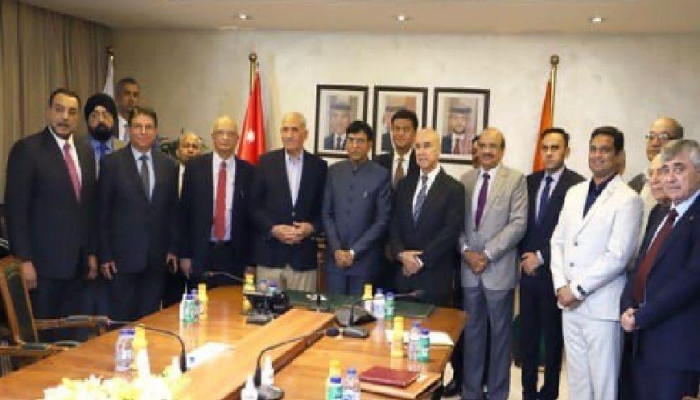
Assuring that there will not be any shortage of key fertilisers during the upcoming kharif season, Chemicals and Fertilisers Minister Mansukh Mandaviya on Tuesday said the government has secured in advance enough DAP supplies and has also entered into a long term pact with Jordan for import of potassic and phosphatic soil nutrients.
In a first of its kind initiative, a high-level delegation led by Mandaviya visited Jordan from May 13 to 15, with the objective of securing fertilisers and raw materials, both for short and long term. The visit was made in the backdrop of the ongoing global fertiliser crisis.
Mandaviya said that the Jordan visit proved to be path breaking in terms of ensuring supply of Phosphatic and Potassic fertilisers to India.
"MoUs were signed with Jordan Phosphate Mining Company (JPMC) for supplies of 30 LMT Rock Phosphate, 2.50 LMT DAP, 1 LMT phosphoric acid for the current year with the Indian public, cooperative and private sector companies," said Mandaviya.
India has also signed a long term MoU for 5 years with Jordan for annual supplies of 2.75 LMT which will uniformly increase every year up to 3.25 LMT, he added.
"These supplies will be crucial for assured fertiliser supply for the ensuing cropping seasons in India," the Union Minister highlighted.
During the meetings, Mandaviya mentioned Jordan as India's preferred partner for the fertiliser sector.
JPMC Chairman Mohammed Thneibat signed the agreements in the presence of Indian Minister of Health and Family Welfare and Minister of Chemicals and Fertilisers Mansukh Mandaviya, Investment Minister Khairy Amr, Indian Ambassador to Jordan Anwar Haleem, JPMC CEO Abdulwahab Rawad and representatives of the companies' representatives.
Thneibat said that these agreements and MoUs reflect “the global status of the company and its success stories” in the relations between the JPMC and several Indian companies, noting that other meetings are scheduled to be organised in India to implement these deals.
With India securing 30 per cent Di-Ammonium Phosphate (DAP) required for kharif season much in advance and companies told not to buy at higher rates from global market, the minister claimed there was correction in the international DAP prices which declined to USD 920 per tonne from USD 1,030 per tonne during last week. "There is a global fertiliser crisis. India is the world's largest fertiliser importer and should get supplies at lesser rates... In many countries, fertilisers are rationed. We have not done (that). We made advance purchase of key fertilisers to ensure availability during the kharif season," Mandaviya told reporters here.
Traditionally, fertilizer has been key commodity India imports from Jordan. In fact, India has been the largest buyer of phosphatic and potassic fertilizers from the west Asian country. Jordan is allocating almost 25 per cent of their production of MOP (Muriate of Potash) to India.
In the past, a Joint venture project worth US$ 860 million between the Jordan Phosphate Mines Company (JPMC) and the Indian Farmers Fertilizers Cooperative (IFFCO) for the manufacturing of Phosphoric Acid has been set up in Eshidiya. It was inaugurated during the 2015 visit of the then Indian President Pranab Mukherjee to the country.
During the Jordan visit, the Indian minister visited Jordan Phosphate Mining Company (JPMC) mines and the Phosphoric Acid production facilities set up by Jordan India Fertilizer Company (JIFCO). The Indian delegation also visited Arab Potash headquarters.
Image source: Petra photo



 Loading...please wait
Comments