



India set to fully restore visa services in Bangladesh as relations improve
- In Reports
- 07:58 PM, Feb 19, 2026
- Myind Staff
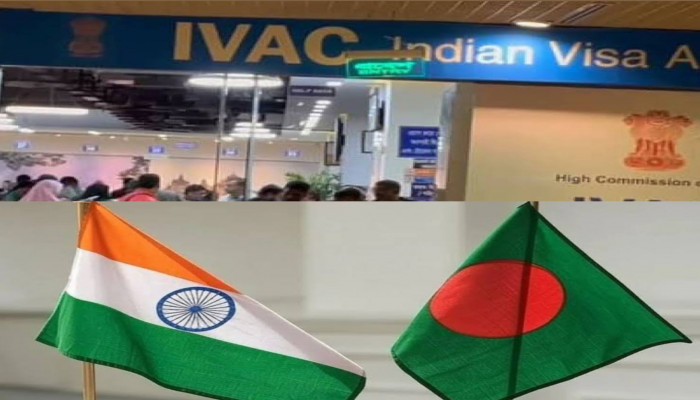
India is likely to resume all visa services in Bangladesh soon, marking a major sign that relations between New Delhi and Dhaka are returning to normal after a long period of tension. A senior Indian diplomat in Bangladesh has confirmed that steps are being taken to restart full visa operations, after India had suspended many services due to security concerns and political unrest.
According to Bangladeshi media reports, Aniruddha Das, India’s senior consular official in Sylhet, said that India has already begun issuing certain categories of visas and is now preparing to restart the remaining ones as well. Speaking at the Sylhet District Press Club on Thursday, Das stated that visa services are gradually being expanded.
He was quoted by BDNews24 as saying, “Medical and double-entry visas are being issued now, and steps are underway to resume other categories, including travel visas.” This indicates that India has started the process of reopening visa access for ordinary Bangladeshi citizens who want to visit India for tourism, education, business, or family reasons.
This development is being seen as a major step in improving ties between the two countries. Relations had gone through a difficult phase after political changes in Bangladesh. However, the situation seems to be stabilising now, especially after BNP leader Tarique Rahman became Prime Minister following the February 12 election, replacing the previous administration led by Muhammad Yunus.
Das also reportedly highlighted the cultural and historical bond between the two nations. He said India–Bangladesh relations are built on mutual respect and honour. He added that the people of both countries are the biggest stakeholders in a peaceful and long-term relationship. Quoting Desh Rupantor, Das said, “Ordinary people of both countries will be the principal stakeholders in this stable, positive, and long-term relationship.”
He further explained that the two countries share a deep connection that goes back centuries. He said that the values, culture, and traditions of India and Bangladesh have remained linked since ancient times.
India and Bangladesh enjoyed one of their strongest phases of bilateral relations from 2009 onwards, when Sheikh Hasina became Prime Minister. During that period, cooperation increased in areas like security, trade, and regional development. India was seen as a close ally of the Hasina government.
However, relations worsened sharply after the July–August 2024 agitation, which led to the fall of the Awami League government. Sheikh Hasina was forced to leave Bangladesh and later took refuge in India. Following this political change, India was viewed by some sections in Bangladesh as having supported the Hasina administration, which had been accused of becoming increasingly authoritarian in its final years.
The situation became more tense under the interim administration led by Muhammad Yunus. During that period, reports suggested that several anti-India groups and radical voices became more active. Some individuals who were known for strong anti-India statements were released from jail, and the overall atmosphere became hostile for Indian interests.
This anti-India sentiment reached a peak during the Yunus administration. As protests increased and threats were reported against Indian establishments, India became concerned about the safety of its diplomatic missions and visa centres in Bangladesh.
India first suspended visa services across Bangladesh on August 8, 2024, shortly after Sheikh Hasina left the country. The suspension affected all Indian Visa Application Centres (IVACs). India cited the unstable situation and security risks as the main reasons. This was the first time that India had imposed such a large-scale suspension of visa operations in Bangladesh.
Later, visa services were partially resumed but remained limited. During this period, India mostly issued visas only for essential purposes such as medical treatment and double-entry travel.
Even when services restarted slowly, the number of visas issued daily remained much lower than before. Before August 2024, India used to issue around 8,000 visas per day in Bangladesh. After the unrest, the number reportedly dropped to around 1,500 per day, based on various media reports quoting Indian diplomatic sources.
The second major suspension took place in November 2025, following strong anti-India protests after the death of radical leader Osman Hadi. During this time, visa centres began shutting down again. The Indian Visa Application Centre in Dhaka closed on November 17, followed by the closure of centres in Chittagong, Khulna, and Rajshahi by November 22.
In response, Bangladesh’s interim government also reduced or suspended visa services at its own missions in India, including in cities such as New Delhi, Kolkata, and Agartala.
With the election of Prime Minister Tarique Rahman, signs have emerged that both countries want to improve relations. The plan to restore full visa services is being viewed as an important confidence-building step.
If India fully resumes all visa categories, it will benefit thousands of Bangladeshi citizens who travel to India every year for education, health care, religious visits, tourism, and business. It will also support people-to-people connections, which are considered an important part of the India–Bangladesh relationship.
The reopening of visa services may also reduce tensions and help rebuild trust after a period of uncertainty and diplomatic strain. Overall, the move is being seen as a strong signal that the worst phase between the two neighbours may finally be ending.



 Loading...please wait
Comments