



India seeks to finalise EU trade deal as uncertainty looms over US Pact
- In Reports
- 02:54 PM, Jan 16, 2026
- Myind Staff
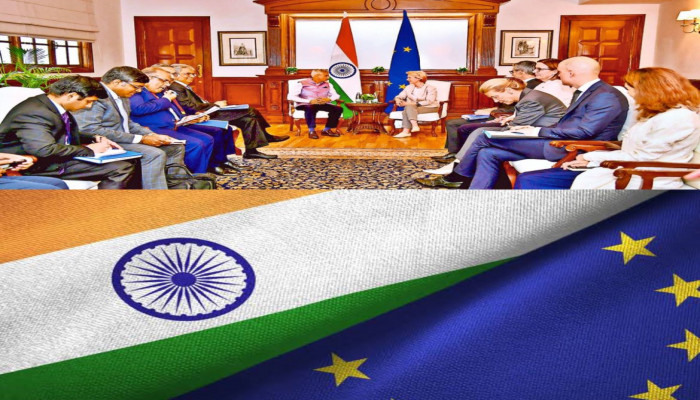
India has made significant progress in its trade negotiations with the European Union (EU) at a time when uncertainty over a proposed trade agreement with the United States continues to affect investment sentiment and export prospects. According to Commerce Secretary Rajesh Agarwal, India and the EU have already concluded talks on most parts of the agreement and are now close to the finish line.
Speaking to reporters on Thursday, Agarwal said that negotiations with the EU are in their final phase. “We were already in the last and most arduous leg of the negotiations with the EU for three months. We are very close now. We have closed 20 out of 24 chapters. There are a few issues on which the negotiations are ongoing. We are virtually engaged on a day-to-day basis. We are trying to see if we can meet the timeline before our leaders meet,” he said.
The push to complete the deal has gained urgency as top EU leaders are scheduled to visit India later this month. The President of the European Council, Antonio Luis Santos da Costa, and the President of the European Commission, Ursula von der Leyen, will be the chief guests at India’s Republic Day celebrations. They will also jointly chair the 16th India-EU Summit on January 27. The Ministry of External Affairs made a formal announcement about the visit on Thursday.
Once signed and implemented, the India-EU trade agreement is expected to be one of the largest trade deals ever entered into by New Delhi. Government officials believe it could help reduce the impact of steep tariffs imposed by the US and open up new opportunities for India’s labour-intensive exports in the European market.
A senior government official clarified that sensitive agricultural issues from both sides are not part of the ongoing negotiations. This statement came in response to reports suggesting that agriculture has been kept outside the scope of the deal. European news website Euractiv reported that Ursula von der Leyen told European parliamentarians in a closed-door meeting that the EU is set to sign a free trade agreement with India this month, excluding agriculture.
Agriculture has long been one of the most sensitive areas for India in trade talks and has also been a major hurdle in negotiations with the US. Washington has been pressing India to allow imports of genetically modified products such as corn and soya, an issue New Delhi has been reluctant to accept.
The EU, too, faces internal pressure on agricultural trade. On Thursday, Reuters reported that French farmers drove tractors into Paris to protest against the EU-Mercosur trade deal. The farmers argued that the agreement would hurt local agriculture by allowing cheaper South American imports into the European market.
Apart from agriculture, India-EU negotiations have faced challenges over issues such as carbon tax, whisky, and automobiles. Germany, the EU’s largest automobile exporter, has been pushing for greater access to the Indian market. However, India has raised concerns, as its domestic automobile sector is rapidly growing and is also a major source of employment.
For India, the carbon tax has emerged as one of the most difficult issues in the negotiations. A higher duty on metal exports could reduce the benefits India hopes to gain from the trade agreement. The EU began implementing the world’s first carbon tax, known as the Carbon Border Adjustment Mechanism (CBAM), on January 1.
Under its current structure, CBAM imposes a carbon-related charge on imports from energy-intensive sectors such as cement, steel, aluminium, oil refining, paper, glass, chemicals, fertilisers, and the power sector. The tax applies to goods coming from countries with lower environmental regulations than the EU. The mechanism also allows EU lawmakers to expand the list of products subject to the levy in the future.
India’s exports to the EU largely include aluminium, iron, and steel, which are expected to be affected by CBAM. Officials have expressed concern that the carbon tax could reverse gains made through tariff reductions under the trade deal.
The urgency to conclude the EU agreement has increased due to the lack of progress on a trade deal with the US. Uncertainty over US trade policy has pushed India to actively look for new markets. In November, the Commerce and Industry Ministry reportedly asked trade lawyers working on negotiations not to take leave, highlighting the pressure to close deals quickly.
Several high-level meetings have taken place in recent months, including discussions between Commerce and Industry Minister Piyush Goyal and EU Trade Commissioner Maroš Šefčovič. These talks come as Indian exporters grow increasingly worried about losing orders due to high US tariffs.
According to reports, negotiations between Indian apparel exporters and US importers for summer orders worth around $2 billion have stalled. Exporters fear that without a trade deal, these orders may shift to competing countries such as Bangladesh, Vietnam, and China, which face lower tariffs compared to the steep 50 per cent tariffs imposed on Indian goods.
Industry sources have also indicated that some orders are already moving out of India, and missing the summer season could have long-term consequences for exporters. Against this backdrop, the India-EU trade deal is being seen as a crucial step to safeguard exports and create new opportunities in a challenging global trade environment.



 Loading...please wait
Comments