




India seeks safe passage of nine tankers in Persian Gulf after ceasefire falters
- In Reports
- 07:12 PM, Jul 08, 2026
- Myind Staff
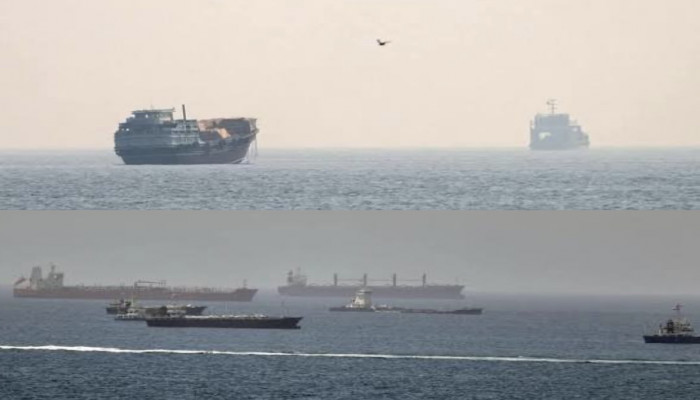
India is exploring diplomatic options to ensure the safe movement of at least nine fully loaded tankers waiting in the Persian Gulf. The government is considering talks with Iran as attacks in the Strait of Hormuz continue to threaten the already fragile interim ceasefire. Officials are closely watching the situation as tensions in the region remain high.
Prime Minister Narendra Modi’s government is monitoring the movement of the nine tankers carrying crude oil and liquefied petroleum gas (LPG), according to people familiar with the matter. These people requested anonymity since the discussions are private. The government wants to protect both the cargo and the Indian crew members on board the vessels.
As part of its efforts, India’s Ministry of External Affairs plans to contact Iranian authorities to discuss the safety of Indian seafarers in the region. Hundreds of Indian sailors have remained stranded for months after the Strait of Hormuz effectively became inaccessible. The nine tankers alone have 198 Indian mariners waiting to pass through the crucial shipping route.
The government has also raised concerns over the safety of its crew members after at least three Indian seafarers lost their lives during US strikes on commercial ships in the Gulf of Oman in June, according to the people familiar with the matter. The incident has increased worries about the risks faced by Indian sailors working in the conflict zone.
Officials from the ministries of foreign affairs, oil, and shipping did not immediately respond to emailed questions seeking comments on the situation.
An interim peace agreement between the United States and Iran in June had briefly improved shipping activity through the Strait of Hormuz. More vessels started using the route during that period. However, the situation changed again after attacks targeted ships on Tuesday. The United States also carried out strikes on targets in Iran overnight in response to those attacks. These developments once again reduced the number of vessels moving through the waterway.
The uncertainty surrounding the temporary agreement has also increased after comments made by US President Donald Trump. Speaking at NATO’s annual summit in Ankara, Trump said peace talks were “a waste of time.” His remarks added to concerns that the current ceasefire may not last.
Despite the security risks, some vessels have continued to cross the Strait of Hormuz. On Wednesday, six ships heading toward destinations that included India attempted the journey only hours after Tuesday’s attacks. Their movement showed that some operators were still willing to use the route despite the growing risks.
At the same time, not every ship continued its planned journey. The India-flagged supertanker Lila Vadinar changed course after reaching the tip of Oman’s Musandam Peninsula. The vessel turned back instead of entering the Strait of Hormuz. Its decision reflected the increasing caution among shipping companies operating in the region.
The conflict, which started in late February, has sharply reduced the number of India-bound vessels passing through the Strait of Hormuz. According to the people familiar with the matter, only around 50 ships heading to India have crossed the waterway since the fighting began. This figure remains much lower than normal.
Indian buyers have also not fully resumed imports of crude oil, liquefied petroleum gas, and liquefied natural gas (LNG) from suppliers in the Middle East. The continued security concerns have affected trade flows and shipping schedules. Importers continue to assess the risks before increasing purchases from the region.
The Strait of Hormuz remains one of the world's most important energy shipping routes. Before the conflict began, nearly 40 per cent of India's crude oil imports passed through the strait. Around 60 per cent of the country's LNG shipments also used this route. In addition, almost 90 per cent of India's LPG imports travelled through the same waterway.
The latest developments have once again highlighted India's dependence on the Strait of Hormuz for its energy supplies. The government continues to explore diplomatic efforts while closely monitoring the movement of ships and the safety of Indian seafarers. Officials hope these measures will help ensure secure passage for the stranded vessels and reduce the risks facing Indian crews operating in the region.



 Loading...please wait
Comments