



India, Saudi Arabia sign mutual short-stay visa exemption agreement for diplomatic travel
- In Reports
- 07:58 PM, Dec 19, 2025
- Myind Staff
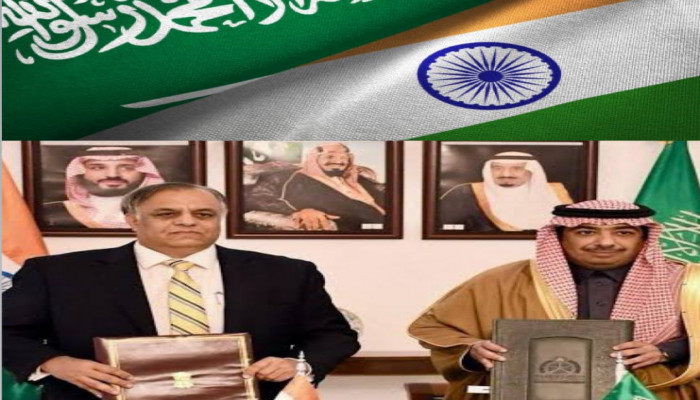
In a landmark step to strengthen diplomatic and official ties, India and Saudi Arabia have signed a mutual agreement exempting holders of specific passports from the requirement of short-stay visas. The deal, aimed at easing official travel between the two countries, was formalised at the Ministry of Foreign Affairs headquarters in Riyadh.
The agreement allows holders of diplomatic, special, and official passports from both nations to travel between Riyadh and New Delhi without applying for a visa in advance. This move is expected to make official visits and government engagements more frequent, seamless, and efficient.
The visa exemption agreement was signed during a formal ceremony in Riyadh. On behalf of Saudi Arabia, Deputy Minister of Foreign Affairs for Protocol Affairs, Abdulmajeed Al-Smari, signed the pact, while Indian Ambassador to Saudi Arabia, Dr. Suhel Ajaz Khan, signed on behalf of India.
Officials from both countries described the agreement as a key milestone in bilateral relations. By eliminating the visa requirement for designated passport holders, the agreement aims to facilitate smoother interactions between governments, encourage regular diplomatic exchanges, and enhance cooperation across multiple sectors.
This exemption specifically applies to:
- Diplomatic passports – for high-level diplomats representing their governments
- Special passports – typically issued to senior government officials
- Official passports – used by civil servants and government personnel travelling for state business
Ordinary tourists and business travellers are not covered under this agreement and will still need to obtain the necessary visas for travel. While the agreement currently covers only diplomatic, special, and official passport holders, it sets an important precedent for future travel facilitation between India and Saudi Arabia. Analysts suggest that mutual trust in official matters often leads to wider visa relaxation measures over time. This could eventually benefit students, business professionals, tourists, and families who travel between the two nations.
The agreement comes at a time when India and Saudi Arabia are deepening their strategic, economic, and diplomatic engagement. Bilateral ties have expanded across trade, defence, cultural exchange, and high-level visits in recent years.
A recent milestone in the relationship is the expansion of the Saudi-Indian Strategic Partnership Council. The council now oversees cooperation on defence, tourism, trade, scientific collaboration, and participation in global forums.
Experts believe the new visa exemption will encourage more frequent high-level discussions, support faster execution of joint projects and programs and demonstrate mutual confidence and shared priorities between the governments
For both countries, easier official travel can accelerate policy coordination on matters impacting trade, defence, culture, and international cooperation. The move is seen as a reflection of growing trust and goodwill in the bilateral relationship.
India is among Saudi Arabia’s fastest-growing trade partners, and the kingdom has been investing in critical sectors like infrastructure and energy in India. Simplifying travel for officials can therefore indirectly support faster implementation of joint projects, enhance economic collaboration, and promote bilateral investment. Additionally, the agreement aligns with broader India-Gulf cooperation trends. With millions of Indians living and working in the Gulf region, stronger diplomatic and official coordination can benefit both governments in addressing the needs of their citizens abroad.
Saudi Deputy Minister Abdulmajeed Al-Smari emphasised the significance of the agreement, describing it as a step toward “more frequent and seamless official interactions” between Riyadh and New Delhi. He highlighted that easing official travel reflects the growing trust and partnership between the two countries.
Indian Ambassador Dr. Suhel Ajaz Khan noted that the pact “officially signifies a step forward in bilateral relations, making official travel easier for government, diplomatic, and special envoys.” He added that the agreement underscores the shared priorities and cooperative spirit between India and Saudi Arabia.
As India-Saudi relations continue to grow, this mutual exemption is expected to facilitate faster coordination in defence, trade, tourism, and cultural exchange. It may also contribute to smoother participation in international forums and collaborative projects, reflecting a deepening strategic partnership.



 Loading...please wait
Comments