




India rejects PoJK elections, calls them an effort to hide illegal occupation, rights violations
- In Reports
- 01:31 PM, Jul 29, 2026
- Myind Staff
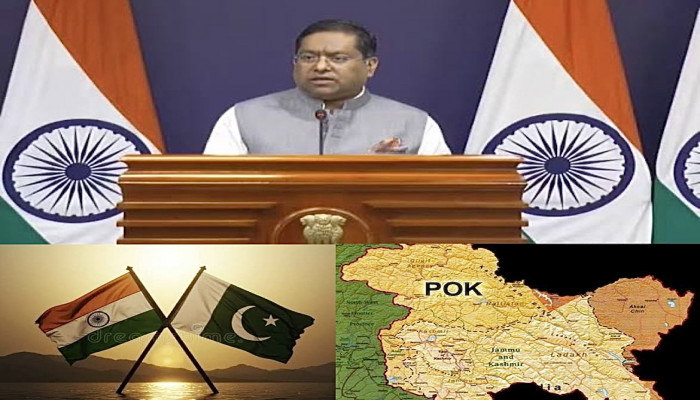
India on Tuesday strongly rejected the legislative assembly elections being held in Pakistan-occupied Jammu and Kashmir (PoJK). The government described the electoral exercise as an attempt by Pakistan to hide its illegal occupation of the region and divert attention from serious human rights violations. India also linked the ongoing protests in PoJK to Pakistan’s economic exploitation, denial of fundamental rights and administrative oppression.
The elections to the legislative assembly in Pakistan-occupied Jammu and Kashmir are taking place in three phases. The first phase concluded on Monday. The polls have attracted attention amid rising unrest in the region. According to reports, around 40 people have died since June during clashes between Pakistani security forces and protesters. The protesters have demanded the removal of seats in the local assembly that are reserved for refugees from the Indian region of Jammu and Kashmir.
Media reports also said Pakistani security forces opened fire and used tear gas on Monday to disperse hundreds of protesters. The demonstrations continued as people expressed anger over political and administrative issues in the region. The unrest has raised fresh concerns over the situation in Pakistan-occupied Jammu and Kashmir during the election process.
Responding to questions during a regular media briefing, External Affairs Ministry spokesperson Randhir Jaiswal said India's stand on the elections has remained unchanged. He referred to the polls as the “so-called legislative assembly elections” and said India's position has always been clear, consistent and well known.
Jaiswal reiterated that the entire Union Territories of Jammu and Kashmir and Ladakh, including the areas under Pakistan’s control, are an integral and inalienable part of India. He said Pakistan continues to occupy those areas illegally and by force. Referring to the elections, he said, “The current cosmetic electoral exercise is nothing but an attempt by Pakistan to camouflage its illegal occupation and hide its grave human rights violations in the region.”
He also addressed the large-scale protests taking place in Pakistan-occupied Jammu and Kashmir. According to Jaiswal, the unrest reflects growing public dissatisfaction with Pakistan’s policies in the region. He said, “The mass protests in Pakistan-occupied Jammu and Kashmir are the direct consequences of its economic exploitation, its denial of fundamental rights to the people and their administrative oppression.”
During the same media briefing, Jaiswal also responded to another question related to the shared legacy of the Indus Valley Civilisation. The question came after some people in Pakistan raised the issue following India's decision to suspend the Indus Waters Treaty. In his response, Jaiswal referred to Pakistan’s long-standing support for cross-border terrorism.
He said, “On the question of a shared legacy, let me put this straight — that a country which has been promoting cross-border terrorism and religious fundamentalism for decades cannot have any claim to any pluralistic cultural legacy.” He further criticised Pakistan's record on minority rights and cultural protection. Referring to the issue, he said Pakistan’s “abysmal track record” on protecting minorities and their cultural rights makes “such desperate attempts look even more phony”.
Jaiswal also answered a question regarding Pakistani Gen Z expressing support for the recent protests led by Indian students over issues in the education sector. In response, he shifted the focus to India's concerns over terrorism. He said India's youth has consistently demanded an end to Pakistan’s support for cross-border terrorism.
Addressing the matter, Jaiswal said, “Pakistan has been sponsoring cross-border terrorism against India for several decades now. The people of India, including Gen Z, have been demanding that the Pakistani state’s sponsorship of cross-border terrorism must come to an end. We hope their counterparts are taking due note.”
The remarks came after several Pakistani youngsters shared videos and messages on social media expressing support for the protests organised by India's Gen Z earlier this month. Queries were made on the online posts during the media briefing.
India maintained that its position on Pakistan-occupied Jammu and Kashmir remains unchanged. The government rejected the ongoing elections and described them as an attempt to create a misleading image of democratic governance in the region. It also stressed that the continuing protests highlight the challenges faced by people living there. Through its latest remarks, India once again underlined its claim over the entire region of Jammu and Kashmir and Ladakh while criticising Pakistan's actions in the territory.



 Loading...please wait
Comments