




India pushes pipeline plan as China expands energy footprint in Sri Lanka
- In Reports
- 06:41 PM, Apr 20, 2026
- Myind Staff
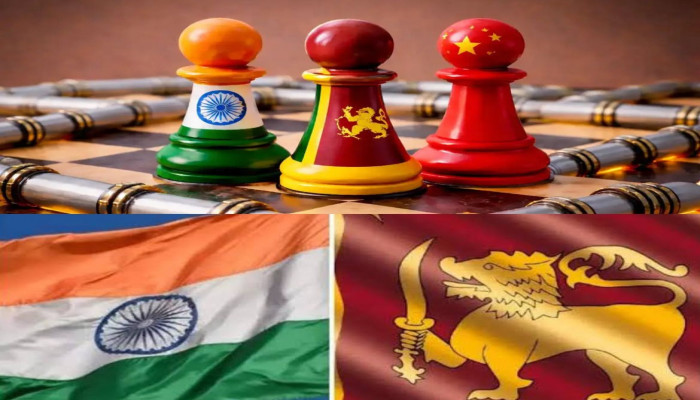
The strategic competition between India and China in Sri Lanka is entering a more serious phase, shifting from ports and infrastructure into the energy sector. What was once about building assets like ports has now become a contest over fuel supply chains, storage systems, and refining capacity. These areas carry deeper strategic importance because they influence how energy moves within a country. China’s recent entry into Sri Lanka’s fuel distribution market, along with its long-term refinery plans, shows that it is no longer focusing only on infrastructure. India, in response, is speeding up efforts to build a trilateral energy framework with Sri Lanka and the UAE, centred on Trincomalee and a proposed cross-border oil pipeline.
During a recent visit, Vice President CP Radhakrishnan and Sri Lankan President Anura Kumara Dissanayake discussed the idea of connecting India and Sri Lanka through an oil pipeline. Foreign Secretary Vikram Misri highlighted the importance of this plan. "Some initiatives that are underway from the Indian side and some proposals that have already been discussed between the two countries, notable amongst them, the project related to the energy hub in Trincomalee and the proposal to link India and Sri Lanka through an oil pipeline. And in fact, the point was made as to the value of such energy connectivity, especially at a time like now, when the entire world and this region, especially, is facing the fallout of an energy crisis generated by the Situation in West Asia," Misri told reporters in Colombo after Radhakrishnan's first day of the visit.
China’s role in Sri Lanka’s energy sector has developed in two clear stages. In the first phase, the focus was on building infrastructure. A key example is the Lakvijaya coal power plant, which was constructed with Chinese funding and support. It continues to play a major role in Sri Lanka’s electricity supply, giving China a lasting presence in the country’s power sector.
The second phase of China’s strategy is now taking shape and is more strategic. China is expanding into downstream energy operations. The proposed refinery at Hambantota, led by Sinopec, is aimed at turning Sri Lanka into a regional refining hub, even though the project has faced delays. More importantly, Sinopec has entered Sri Lanka’s fuel import and retail market. This allows China to influence how fuel is distributed and consumed daily. Sri Lanka expects Sinopec to soon begin work on the refinery while continuing to expand its retail presence. By combining refining and retail operations, China is positioning itself across the entire energy value chain. This approach reduces its dependence on any single project. Even if delays occur in building infrastructure, control over fuel distribution ensures continued influence.
India’s presence in Sri Lanka’s energy sector is less visible but deeply rooted in everyday operations. Through Indian Oil Corporation and its subsidiary Lanka IOC, India is already active in fuel import, storage, and retail. This network became especially important during Sri Lanka’s economic crisis, when India stepped in with fuel supplies and financial support. Unlike China’s focus on large infrastructure projects, India’s strategy is based on supply chains. It focuses on delivering fuel quickly and reliably. This creates immediate dependence, especially during times of crisis. India has used this advantage effectively during global energy disruptions. The proposed pipeline is seen as a natural extension of this approach.
The Trincomalee project is central to India’s broader plan. It involves more than just redeveloping the old oil tank farm built during World War II. The goal is to create a full energy hub that includes storage, possible refining facilities, and regional distribution systems. A key feature of this project is the involvement of the United Arab Emirates. India and the UAE have agreed to jointly develop the Trincomalee hub, which may include a multi-product pipeline, bunkering facilities, and even a refinery in the future.
The UAE’s role adds financial strength, technical expertise, and access to global energy markets. It also changes the nature of the project from a simple bilateral effort to a wider geopolitical partnership. Trincomalee’s location adds to its importance. Situated on Sri Lanka’s eastern coast, it is close to major international shipping routes and has one of the best natural harbours in the region. This makes it an ideal site for an energy hub that can serve both Sri Lanka and nearby markets.
The most crucial part of India’s strategy is the proposed oil pipeline connecting the two countries. This project has been under discussion since 2023 and was formalised in 2025 through a trilateral agreement involving India, Sri Lanka, and the UAE. It has once again become a key focus during recent talks, with both sides agreeing that it must move forward quickly.
The pipeline is expected to carry multiple types of fuel from India to Sri Lanka and link directly to the Trincomalee storage facilities. This could significantly change Sri Lanka’s energy system. At present, the country depends entirely on imported oil delivered by sea, which makes it vulnerable to global disruptions. A direct pipeline would reduce this risk and ensure a steady supply. It would also strengthen India’s position as a long-term energy partner rather than just a backup supplier during crises. By connecting supply, storage, and distribution, India aims to build a complete energy network within Sri Lanka.
The rivalry between India and China in this sector now reflects two different approaches. China is focused on building assets like power plants and refineries and then expanding into distribution. This creates long-term stakes in the system. India, on the other hand, is building networks that link supply routes, storage, and retail. The Trincomalee hub and pipeline are key to this strategy. While China’s Hambantota refinery focuses on processing capacity, India’s pipeline focuses on controlling supply routes.
Sri Lanka is actively managing this competition rather than choosing sides. By allowing Sinopec to enter its fuel market and at the same time, working with India and the UAE on the Trincomalee project, it is trying to balance its partnerships. This approach helps the country secure investment and improve energy security without depending too much on one partner. However, such a balance is not easy to maintain. Energy projects often create long-term dependencies, which can influence strategic decisions.
The growing focus on the Trincomalee hub and the India-Sri Lanka pipeline shows that the competition between India and China is intensifying. It is no longer limited to isolated projects but is now about shaping the overall energy system of Sri Lanka. China is expanding its presence across infrastructure and distribution, while India, supported by the UAE, is building integrated supply networks. The outcome of this contest will not only affect Sri Lanka but also influences the balance of power in the Indian Ocean region, where control over energy flows plays a key role in strategic influence.



 Loading...please wait
Comments