




India-Poland strengthen ties with agreements on cybersecurity, space, critical minerals
- In Reports
- 05:14 PM, Sep 05, 2026
- Myind Staff
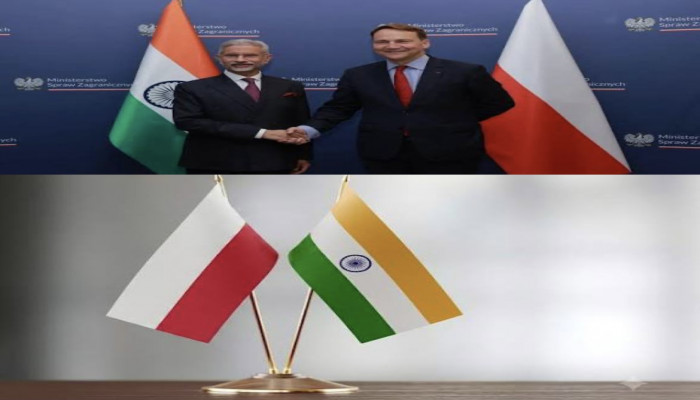
India and Poland are moving ahead with a stronger Strategic Partnership, with new agreements being prepared in areas such as cybersecurity, space, clean coal, classified information and critical minerals. External Affairs Minister S Jaishankar highlighted the progress on Friday during his meeting with Polish Deputy Prime Minister and Foreign Minister Radosław Sikorski in Warsaw.
Jaishankar and Sikorski reviewed the India-Poland Joint Action Plan 2024-28, which Prime Minister Narendra Modi and the Polish leadership agreed upon during Modi’s visit to Poland two years ago. Jaishankar said the progress under the plan has been encouraging. He pointed to increased trade, investments, stronger defence cooperation and greater engagement in traditional sectors such as mining and energy.
"Today, Deputy Prime Minister and Foreign Minister Sikorski and I reviewed the Action Plan that was agreed upon when Prime Minister Modi visited Poland two years ago. The report card that we got was a very solid one, indicating an uptick in trade and investments, deeper defence collaboration, expansion in traditional areas like mining and energy, as well as new possibilities emerging in space, digital, AI and innovation," Jaishankar stated.
The two countries are also looking to expand their cooperation into newer areas. Jaishankar said both sides are working on several inter-governmental agreements. These include cooperation in cybersecurity, space, clean coal, classified information and critical minerals. He said such agreements would give greater depth to the relationship between the two countries.
"Where mechanisms are concerned, our Foreign Office Consultations were held recently, the Joint Commission has met, and as you heard from the Deputy Prime Minister, the defence working group will be doing so soon," Jaishankar said. "We are working on agreements in many other domains including cyber security, space, clean coal, classified information, critical minerals, etc. And I am confident that they will add both texture and substance to our ties."
Jaishankar also stressed Poland’s importance in India’s growing relationship with the European Union. He said India-EU ties have strengthened significantly in recent years, with negotiations for a Free Trade Agreement serving as a major focus. He noted that Polish support and influence within the European Union could help strengthen this process.
"In the last few years, India's ties with the European Union have deepened very visibly," Jaishankar said. "The centrepiece of that is of course the free trade agreement, which President Ursula Von Der Leyen described as the mother of all deals. This will open up immense economic opportunities to both nations. As a key member of the European Union, Poland naturally stands to gain in that process."
The External Affairs Minister highlighted the growing India-EU relationship amid wider changes in global affairs. He said the world is moving towards greater multi-polarity as countries seek to reduce risks and diversify their partnerships. India sees the European Union as an important global pole and considers its expanding relationship with the bloc part of this wider shift.
"The world is moving towards increasing multi-polarity as we focus on de-risking and diversifying," Jaishankar stated. "India considers the European Union to be an important pole and our growing relationship is a notable part of the global restructuring that is underway. We are confident that Poland's voice and Poland's influence within the EU will encourage this trend."
Defence and institutional cooperation also featured prominently in the discussions. Jaishankar said the two countries have already held Foreign Office Consultations and meetings of the Joint Commission. The defence working group is expected to meet soon. These mechanisms are aimed at keeping the Strategic Partnership active across different sectors.
Jaishankar also spoke about strengthening people-to-people and cultural ties. He announced that the second edition of the Jamsaheb Memorial Youth Exchange Programme will take place in October. He also appreciated the continued interest in Indology and Sanskrit programmes at Polish universities.
The ongoing conflict in Eastern Europe also featured in Jaishankar’s discussions in Warsaw. He travelled to Poland after his visit to Kyiv and reiterated India’s position that the war must end through dialogue and diplomacy. He stressed that prolonged conflicts cause deaths, destruction and economic costs that affect not only the countries directly involved but also the wider world.
"India believes that endless war must give way to an end to war. These are wars without winners. Every additional day means more death, more destruction, more loss to the parties themselves, and more cost to the rest of the world. Recently, PM Modi voiced this concern publicly. Our efforts must therefore focus on promoting dialogue and diplomacy. We must each do what we can, in whichever way we believe would be most effective. And support the efforts of others to bring this conflict to an end. This is India's strong conviction, and we are acting on it," Jaishankar said.
The talks also covered developments in the Gulf, West Asia and the Middle East, along with the Indo-Pacific. Jaishankar warned that instability in different regions could affect global supply chains and economic security. He also pointed to concerns over food, fuel and fertiliser availability.
"The world is today grappling not only with multiple wars but also serious challenges of food, fuel and fertiliser availability," Jaishankar noted. "Supply chain resilience is an independent but added concern. As political democracies, market economies and open societies, India and Poland can cooperate to shape the direction of many important global debates."
Earlier, Jaishankar met Polish President Karol Nawrocki and held delegation-level talks with Sikorski in Warsaw. The discussions focused on strengthening the India-Poland Strategic Partnership, implementing the 2024-28 Joint Action Plan and addressing major regional and global challenges. With new cooperation planned across technology, defence, energy and critical sectors, both sides are looking to give greater momentum to their bilateral relationship.



 Loading...please wait
Comments