




India overtakes UAE and Saudi Arabia to become Kenya’s largest petrol supplier
- In Reports
- 01:57 PM, Aug 27, 2026
- Myind Staff
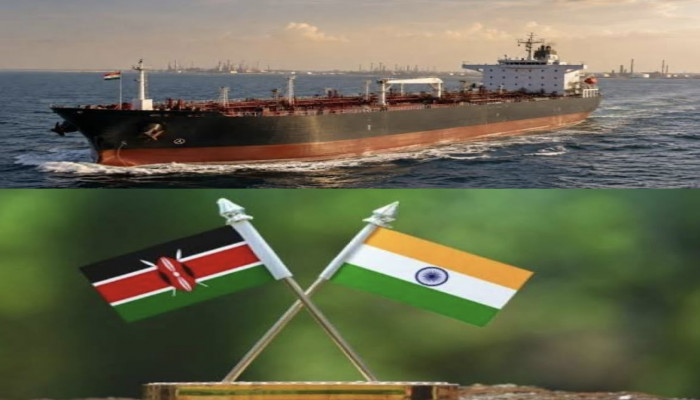
India has become Kenya’s largest supplier of petroleum products, overtaking major Gulf suppliers such as Saudi Arabia and the United Arab Emirates. The shift comes amid the US-Iran War, which has disrupted fuel-trading routes across the Middle East. India imports more than 90% of its crude oil, but its large refining capacity has helped it expand petroleum-product exports to markets across the world.
According to data from Belgian commodity-data company Kpler, Dallas-based energy economist Anas Alhajji said, "India has replaced the UAE and Saudi Arabia as the supplier of gasoline, diesel, jet fuel, and fuel oil to Kenya." Kenya has traditionally depended on government-backed fuel supply agreements with Saudi Aramco, Abu Dhabi National Oil Company (ADNOC) and Emirates National Oil Company. The disruption in Middle Eastern supply routes has now pushed Kenya to seek more fuel from India.
The change is not limited to Kenya. India's petroleum-product exports to Africa reached a record level in July, rising 66% from the same month last year, Alhajji said. Africa has become a major market for Indian fuels after the European Union restricted imports of petroleum products made from Russian crude in third countries. This redirected a larger share of Indian fuel shipments towards African markets.
India's strong refining capacity has played a major role in this shift. The Ministry of Petroleum and Natural Gas identifies India as the world's fourth-largest oil refiner and Asia's second-largest. The country has 22 operational refineries with a combined annual capacity of 258.1 million tonnes. This capacity allows Indian refiners to process large quantities of crude and supply finished products such as petrol, diesel, jet fuel and fuel oil to international markets.
India exported 61.5 million tonnes of petroleum products in 2025-26, even though it imports more than 90% of its crude oil needs. The country is also home to the world's largest oil-refining complex. Reliance Industries operates the facility at Jamnagar in Gujarat. India's refining strength has helped it remain a major exporter of finished petroleum products despite its dependence on imported crude.
The same refining capacity has also created an unusual change in India's trade with Russia. Russia is one of the world's largest crude oil exporters, yet it has started importing Indian petrol. Ukrainian attacks on Russian refineries disrupted domestic fuel production and created a need for supplies from overseas. India has been able to respond to such demand through its large refining network.
Kenya's purchases from the UAE have fallen sharply during this period. According to Kenyan news outlet Kenyans, UAE petroleum-product shipments to Kenya dropped from about 90,000 barrels per day in January to nearly 15,000 barrels per day in August. The decline highlights the impact of the changing supply routes and the growing role of Indian fuel in the Kenyan market.
Signs of India's growing role in Kenya's fuel market had emerged earlier this year. Official documents reviewed by Business Daily Africa showed that 82.38 million litres of kerosene loaded at Sikka port in India reached Mombasa on March 19. Another shipment of 156.75 million litres was scheduled to leave Sikka in April. The shipment included 81.15 million litres of kerosene and 75.6 million litres of diesel.
India's growing petroleum exports to Kenya have also come as overall trade between the two countries expanded sharply. India's exports to Kenya rose 151.41% in value in July 2026 compared with July 2025. The rise placed Kenya among India's five fastest-growing export destinations for that month, according to the Ministry of Commerce and Industry.
The 151.41% increase covers India's total exports to Kenya and does not refer only to petroleum products. However, fuel exports were an important part of India's overall export growth during July. India's petroleum-product exports to global markets rose 67.64% year-on-year, increasing from $4.13 billion in July 2025 to $6.92 billion in July 2026.
Alhajji separately said India's petroleum-product exports to Africa reached a record level in July, with shipments rising 66% year-on-year. He said Africa had become the main destination for Indian fuel after the European Union imposed restrictions on petroleum products made from Russian crude. The change has helped Indian refiners redirect more cargoes towards African markets.
India has also become an important trading partner for Kenya beyond the fuel sector. According to the Indian High Commission in Nairobi, India was Kenya's third-largest trading partner in 2025-26. Bilateral trade stood at $4.31 billion during the year. Indian exports accounted for $4.01 billion, while imports from Kenya stood at $290 million. Petroleum products were among the principal Indian exports listed by the High Commission.
The latest shift shows how changes in global fuel routes are creating new opportunities for Indian refiners. Disruptions in the Middle East have weakened the position of traditional Gulf suppliers in Kenya, while India's refining capacity has allowed it to step in and meet the country's fuel demand. With Africa becoming a key destination for Indian petroleum products, Kenya's move could further strengthen India's position in the region's fuel market.



 Loading...please wait
Comments