




India objects to UNSC reforms paper, demands text-based negotiations
- In Reports
- 06:45 PM, Jun 16, 2026
- Myind Staff
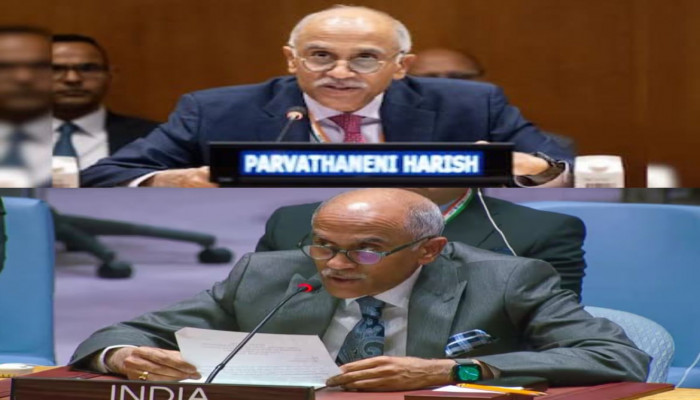
India has once again strongly advocated for reforms in the United Nations Security Council (UNSC), urging member states to move towards structured and text-based negotiations under the Intergovernmental Negotiations (IGN) framework. Speaking during a meeting on Security Council reforms on Monday, India’s Permanent Representative to the United Nations, Parvathaneni Harish, stressed that discussions on one of the UN’s most important reform agendas should be conducted through a formal written text rather than informal exchanges.
Harish said that the current process should follow the same approach used in other multilateral negotiations within the United Nations system. According to him, discussions on Security Council reforms cannot continue without a formal negotiating document that clearly records the positions of member states and helps advance the process.
“The IGN cannot be fundamentally different from other UN processes, wherein negotiations are held based on a text," Harish said.
India also raised objections to certain aspects of the Elements Paper, a document prepared as part of the reform discussions. One of the main concerns was the paper’s treatment of permanent membership in the Security Council. The document suggested that the concept of permanent membership required additional clarification and discussion. India rejected this view and argued that the issue has already been clearly defined in the UN Charter.
Harish stated that there is no ambiguity regarding the distinction between permanent and non-permanent members of the Security Council. He pointed out that the UN Charter itself clearly outlines these categories and leaves no room for differing interpretations.
“The UN Charter is very clear on this question and there is no room for ambiguity. Article 23 clearly categorises the UNSC members into two: permanent and non-permanent," he said.
India further noted that several influential groups within the United Nations have already accepted the concept of permanent membership as defined in the Charter. According to the Indian delegation, groups such as the African Group, the G4 and the L69 Group do not consider the definition of permanent membership to be a disputed issue. Therefore, India argued that reopening this debate would unnecessarily slow down the reform process.
Another major concern highlighted by India was the way the Elements Paper addressed African representation in the Security Council. Harish said the document failed to adequately reflect the broad support expressed by member states for increasing Africa’s presence within the Council. He referred to previous discussions held under the IGN framework and noted that many countries had supported efforts to address the continent’s longstanding underrepresentation.
India maintained that meaningful reform of the Security Council must include stronger representation for Africa. It argued that the concerns raised by African nations have received significant backing from member states and should be properly reflected in official documents related to the reform process.
The Indian envoy also criticised the language used in the Elements Paper regarding the expansion of permanent membership. According to India, the document stated that only “a significant number of delegations” support the expansion of the permanent category. Harish argued that this description does not accurately represent the actual level of support expressed during negotiations.
He pointed out that a majority of UN member states have publicly supported expanding the permanent category through national statements and through participation in groups such as the G4, L69 and CARICOM. India believes that describing this support as merely coming from “a significant number of delegations” understates the true extent of backing for reform.
“The support of a majority for expansion in the permanent category has been reduced to ‘a significant number of delegations’ in the Elements Paper," Harish said, adding that the document does not accurately reflect positions expressed during IGN deliberations.
India has consistently argued that the Security Council’s current structure no longer reflects present-day global realities. New Delhi believes that the Council largely mirrors the geopolitical balance that existed in 1945 when the United Nations was established. According to India, the international system has changed significantly since then, making reforms necessary to improve the Council’s legitimacy, effectiveness and credibility.
India has repeatedly called for greater participation of developing countries, emerging powers and African nations in the Council’s decision-making process. It maintains that a more representative Security Council would strengthen confidence in the United Nations and improve its ability to address modern global challenges.
As a member of the G4 group, which also includes Brazil, Germany and Japan, India has long supported the expansion of both permanent and non-permanent categories of Security Council membership. The country believes that such reforms would create a more balanced and inclusive institution that better reflects the realities of the 21st century.
India’s latest intervention comes as discussions on Security Council reforms continue at the United Nations. Although many member states agree that changes are needed, negotiations have remained ongoing for decades without a final agreement. India has reiterated that meaningful progress will require formal text-based negotiations and a stronger commitment from member states to advance the reform process.



 Loading...please wait
Comments