




India Objects to Pakistan’s June 7 Gilgit-Baltistan Polls, Reaffirms Territorial Claim
- In Reports
- 01:41 PM, Jun 06, 2026
- Myind Staff
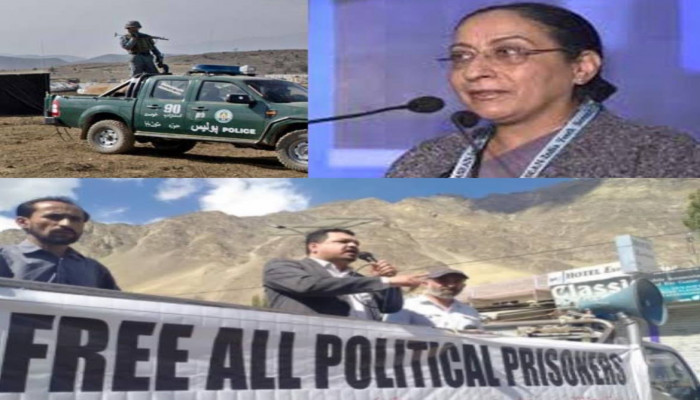
India Objects to Pakistan’s June 7 Gilgit-Baltistan Polls, Reaffirms Territorial Claim
India on Friday strongly objected to Pakistan’s decision to hold elections for the Gilgit-Baltistan Assembly, a region that New Delhi considers an integral part of the former princely state of Jammu and Kashmir. The elections for the 33-member assembly are scheduled to take place on June 7.
The polls were initially planned for January this year. However, they were postponed because of severe weather conditions in the mountainous region.
In response to Pakistan’s move, India lodged a formal protest and reiterated its long-standing position on Gilgit-Baltistan. The Ministry of External Affairs (MEA) stated that India had strongly protested against the holding of “general elections” to the “so-called ‘Gilgit-Baltistan Assembly’ in the Indian territories illegally and forcibly occupied by Pakistan”.
The ministry said that the entire Union Territories of Jammu and Kashmir and Ladakh, “including the so-called ‘Gilgit-Baltistan’”, are an inseparable part of India. According to the statement, this is based on the “complete, legal and irrevocable accession of Jammu and Kashmir to India in 1947”.
India also raised concerns about the situation in the region under Pakistan’s control. The ministry said that “such endeavours by Pakistan cannot mask the underlying issues of grave human rights violations, political repression, economic exploitation and denial of freedom” in territories illegally occupied by Pakistan.
Reiterating its opposition to any administrative or political changes in the region, the MEA said, “The government of India categorically rejects any attempts by Pakistan to bring material change to areas under Pakistan’s illegal occupation, and underlines that such actions cannot hide the fact that Pakistan illegally remains in possession of Indian territories, which it must vacate.”
India has consistently opposed elections conducted by Pakistan in Gilgit-Baltistan. Similar protests have been made in the past whenever Pakistani authorities organised polls in the region.
New Delhi has also repeatedly objected to the inclusion of Gilgit-Baltistan in the China-Pakistan Economic Corridor (CPEC). India maintains that the project passes through territory that legally belongs to India and is under Pakistan’s illegal occupation.
Over the years, Pakistan has introduced several administrative changes in Gilgit-Baltistan. In 2018, the Pakistani government transferred powers from an Islamabad-controlled council to the local assembly. Before that, the Gilgit-Baltistan Empowerment and Self-Governance Order of 2009 renamed the Northern Areas as Gilgit-Baltistan.
The 2009 order also granted the region a status similar to that of a province. However, Gilgit-Baltistan was not given representation in Pakistan’s Parliament despite these changes.
Meanwhile, Pakistan Prime Minister Shehbaz Sharif reviewed security arrangements for the upcoming elections during a meeting on Sunday. The meeting focused on preparations to ensure the smooth conduct of the polls.
More than 5,000 security personnel have been deployed across Gilgit-Baltistan ahead of the elections. During the review meeting, Sharif discussed the arrangements with Interior Minister Mohsin Naqvi.
According to Pakistani authorities, extensive measures have been taken to maintain law and order during the election process. Sharif said the government would take every step to “support the democratic process”.
The June 7 elections have once again brought the issue of Gilgit-Baltistan into focus. While Pakistan is moving ahead with the polling process, India has firmly rejected the exercise and reiterated its claim over the region. The latest protest reflects the continuing disagreement between the two countries over the status of Gilgit-Baltistan, which remains a key point of dispute in the broader Jammu and Kashmir issue.



 Loading...please wait
Comments