




India, New Zealand unveil strategic partnership roadmap, set trade target of NZ$7 billion by 2030
- In Reports
- 01:53 PM, Jul 11, 2026
- Myind Staff
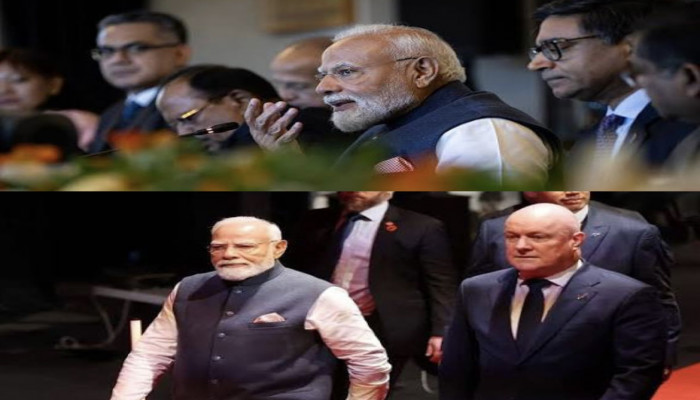
India and New Zealand have taken a major step to strengthen their relationship by signing several agreements and unveiling the "India-New Zealand Strategic Partnership: Roadmap to 2030." The roadmap sets a clear direction for closer cooperation over the next four years. It focuses on defence, security, trade, maritime cooperation, counter-terrorism, cyber defence, culture, sports, and disaster management. Prime Minister Narendra Modi and New Zealand Prime Minister Christopher Luxon endorsed the roadmap during their high-level meeting in Auckland on Saturday.
The new Strategic Partnership places a strong focus on maritime security, counter-terrorism, and cyber defence under its Pillar II framework. It aims to improve cooperation between the two countries in dealing with regional and global security challenges. The Ministry of External Affairs (MEA) also shared the outcomes of the visit on X.
One of the biggest announcements during the visit was the Free Trade Agreement (FTA). Under the agreement, India and New Zealand have set a target to double bilateral trade to 7 billion New Zealand dollars, which is around Rs 35,000 crore, by 2030. The agreement seeks to improve economic ties and provide better market access for businesses in both countries.
Prime Minister Narendra Modi highlighted the importance of the agreement in a post on X. He wrote, "This year has been a remarkable one for the India-New Zealand partnership. This year, the two countries completed a free trade agreement in record time, and we have now elevated our relationship to a strategic partnership. Our next goal is to double bilateral trade by 2030."
Along with the trade agreement, both countries officially unveiled the "India-New Zealand Strategic Partnership: Roadmap to 2030." The roadmap outlines future cooperation in defence and security. It also aims to strengthen coordination in maritime security, cyber defence, and efforts against terrorism. The agreement reflects the commitment of both governments to build a stronger and more secure partnership.
India and New Zealand also signed a Memorandum of Arrangement on maritime cooperation. Under this arrangement, the Ministry of External Affairs of India and New Zealand's Ministry of Foreign Affairs and Trade will hold an annual Maritime Security Dialogue. The two countries will work together to improve maritime domain awareness, conduct joint exercises, and build capacity. The agreement also supports security and stability across the wider Indo-Pacific region.
The two sides signed another important arrangement on Mutual Logistics Support between the Indian Navy and the New Zealand Defence Force. The agreement allows both forces to use each other's bases and facilities for refuelling, repairs, and replenishment during operations. It will improve operational reach, strengthen interoperability, and increase defence cooperation across the Indo-Pacific.
India and New Zealand have also agreed to establish a Joint Working Group on Counter-Terrorism. The new mechanism will create a regular platform for dialogue and intelligence sharing between the two countries. It will strengthen cooperation against terrorism, violent extremism, and transnational security threats. The initiative also reflects their shared commitment to addressing changing security challenges beyond military cooperation.
The visit also resulted in a Memorandum of Cooperation between India's National Disaster Management Authority and New Zealand's National Emergency Management Agency. The agreement aims to improve disaster preparedness, emergency response, and resilience. Both countries will share knowledge, strengthen capacity, and learn from each other's experience in handling natural disasters and emergencies.
Another important development came under the Indo-Pacific Oceans Initiative (IPOI). New Zealand nominated Maritime Security as its priority pillar under the initiative. India welcomed the decision. Both countries also agreed to establish an annual Maritime Security Dialogue to improve cooperation, coordination, and information sharing. The move will support efforts to tackle illegal, unreported, and unregulated fishing while promoting peace and stability across the Indo-Pacific region.
India and New Zealand also signed an Arrangement on Cultural Cooperation between India's Ministry of Culture and New Zealand's Ministry of Culture and Heritage. The agreement follows the theme "Vikas bhi, Virasat bhi" and aims to strengthen cultural ties through exchanges in arts, heritage, and other cultural activities. It also seeks to deepen mutual understanding and encourage stronger people-to-people connections.
The two countries further announced a Joint Action Plan on Sport. The initiative will expand cooperation in high-performance sports, sports science, and sports medicine. It includes exchanges in rugby, rowing, athletics, golf, and bowls. The plan will also encourage closer partnerships between sports institutions in both countries. Leaders from both sides see the initiative as another step to strengthen people-to-people ties.
The agreements signed during Prime Minister Modi's visit mark a significant expansion of India-New Zealand relations. The Strategic Partnership Roadmap to 2030 provides a long-term framework for cooperation across defence, trade, security, disaster management, culture, and sports. With an ambitious trade target and stronger collaboration in the Indo-Pacific, both countries have laid the foundation for a broader and more comprehensive partnership in the coming years.



 Loading...please wait
Comments