




India-New Zealand FTA takes effect, eliminating tariffs on 100% of Indian exports
- In Reports
- 06:48 PM, Oct 20, 2026
- Myind Staff
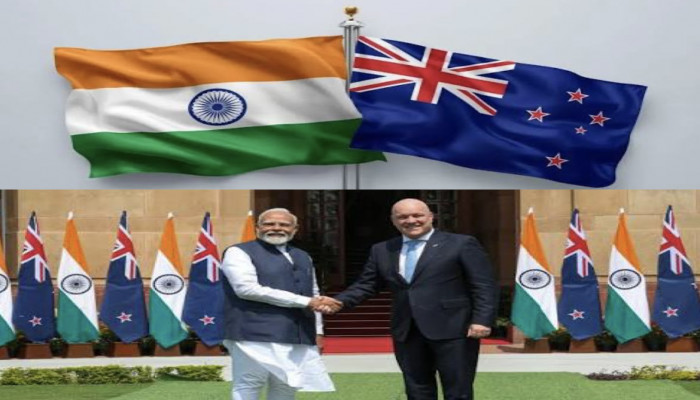
The India-New Zealand free trade agreement (FTA) will come into force on Tuesday, eliminating tariffs on 100% of Indian exports to New Zealand. Commerce Minister Piyush Goyal announced the development on Monday, marking the seventh FTA operationalised by India in the past five years.
“We will start tomorrow on the auspicious day of Dussehra,” Goyal said, referring to the Hindu festival that marks the end of Navratri.
New Zealand has also committed to investing $20 billion in India over the next 15 years. New Zealand Trade Minister Todd McClay, who joined the meeting virtually, said 57% of New Zealand’s exports to India would become tariff-free from day one.
New Zealand currently imposes peak tariffs of up to 10% on key Indian products, including ceramics, carpets, automobiles and auto components.
“This is the seventh FTA operationalised in the last five years,” Commerce Secretary Rajesh Agrawal said.
Goyal said both countries aim to double bilateral trade to NZ$7 billion, or around ₹35,000 crore, by 2030 under the agreement.
The agreement establishes a framework for economic cooperation on market access, agricultural productivity, investment, talent mobility, sports, tourism and people-to-people ties, a commerce ministry official said.
The pact is expected to boost India’s services exports by creating opportunities for skilled professionals in information technology, engineering, healthcare, education and construction. It also provides for cooperation involving AYUSH systems of medicine, yoga instructors, chefs and music teachers.
New Zealand investors will gain access to India’s manufacturing ecosystem and large consumer market. India is setting up dedicated investment facilitation desks to support investors from New Zealand.
McClay said the FTA would “level the playing field and unlock access for Kiwi businesses in one of the fastest-growing markets” in the world.
New Zealand exporters will receive preferential quota access for products such as apples, kiwifruit and albumin. More than 95% of its forestry and wood exports will also receive improved market access, alongside sheep meat, wool and coal.
Wine tariffs will decline from 150% to either 25% or 50% over 10 years, depending on the product’s value, the New Zealand government said.
Goyal said India had fully protected domestic farmers and the dairy sector while selectively adopting New Zealand’s efficient farming practices. India has excluded onions, chickpeas, peas, corn, almonds, artificial honey and sugar from the agreement.
He said Indian farmers could benefit from technology transfer, improved pollination methods and modern beekeeping systems, citing New Zealand’s kiwifruit cultivation and Manuka honey production.
McClay called the FTA a “high-quality agreement” that would give businesses in both countries confidence amid global economic uncertainty.
India and New Zealand signed the agreement on April 27 and completed ratification on September 21. Negotiations began on March 16, 2025, and concluded on December 22, 2025, after nine months.



 Loading...please wait
Comments