



India, New Zealand conclude historic Free Trade Agreement, zero-duty access for Indian exports
- In Reports
- 02:21 PM, Dec 22, 2025
- Myind Staff
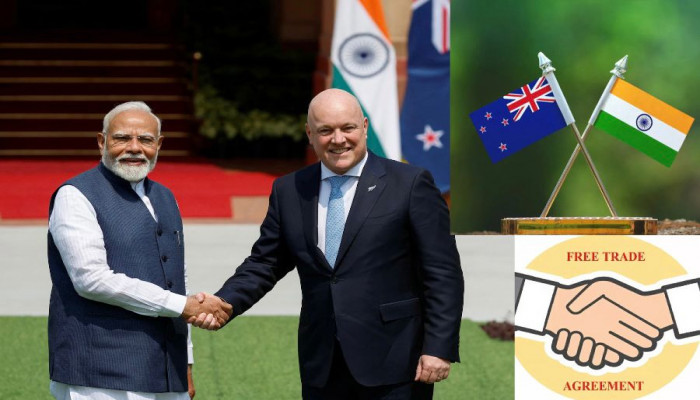
India and New Zealand have successfully concluded negotiations for a comprehensive Free Trade Agreement (FTA), marking a significant milestone in their bilateral economic relationship. After nine months of discussions, the agreement promises zero-duty market access for 100 per cent of India’s exports to New Zealand, offering a major boost to Indian businesses and exporters.
As part of the deal, India has agreed to tariff liberalisation across 70 per cent of tariff lines, which together account for nearly 95 per cent of the total bilateral trade between the two nations. This level of coverage reflects the depth and ambition of the agreement, positioning it among India’s most comprehensive trade pacts to date.
The successful conclusion of the negotiations was officially announced following a conversation between the leaders of both countries. According to an official statement from the Prime Minister’s Office, “Prime Minister Shri Narendra Modi held a telephone conversation with the Prime Minister of New Zealand, The Rt. Hon. Christopher Luxon today. The two leaders jointly announced the successful conclusion of the historic, ambitious and mutually beneficial India–New Zealand Free Trade Agreement (FTA).”
Once formally signed, the India–New Zealand FTA will become India’s seventh trade agreement since 2021. It also aligns with New Delhi’s broader strategy to diversify trade partnerships at a time when global trade rules and supply chains are undergoing major changes.
Officials said that the agreement is expected to be signed within the next two to three months, following a detailed legal review of the text. Since New Zealand will need parliamentary approval, the FTA is likely to come into force within six to seven months after signing.
The speed at which the negotiations were concluded has been highlighted by both sides. Officials described the agreement as one of the fastest-concluded bilateral trade deals in recent years for both India and New Zealand, attributing this progress to strong political commitment and close coordination between institutions.
A key feature of the agreement is New Zealand’s commitment to significantly increase foreign direct investment (FDI) into India. Under the FTA, New Zealand has pledged to invest $20 billion in India over the next 15 years.
Commerce department officials explained that this investment commitment will be supported by a “rebalancing mechanism.” This provision allows India to suspend certain FTA benefits if the investment targets are not achieved within the agreed timeline. Currently, New Zealand’s cumulative FDI into India stands at approximately $9 million for the period between 2000 and 2025, making the proposed increase particularly significant.
The elimination of tariffs is expected to substantially improve the competitiveness of several Indian labour-intensive sectors. These include textiles, apparel, leather, footwear, and marine products, all of which will gain duty-free access to the New Zealand market. This move is expected to create new export opportunities, support job creation, and strengthen India’s manufacturing base.
In the services sector, officials described the agreement as India’s “most ambitious” services offer in any FTA so far. One of the standout features is the introduction of new skilled employment pathways for Indian professionals. The deal includes a temporary entry visa for skilled Indian workers, with a quota of 5,000 visas available at any given time and a maximum stay of up to three years.
Government officials noted that the FTA will help Indian companies establish a stronger presence not only in New Zealand but also across the Pacific Island Countries. This regional access is seen as strategically important for Indian businesses looking to expand into new markets.
The agreement also addresses New Zealand’s future workforce needs. By 2045, New Zealand could face a shortage of at least 250,000 workers, posing challenges for pension systems and healthcare services. Officials said the FTA presents an opportunity for India to position itself as a reliable supplier of skilled and semi-skilled workers to meet these demands.
Despite its broad scope, certain sensitive items have been excluded from the agreement to address domestic concerns in India. These include dairy products and select agricultural items. For products such as wine, lamb, and wool, India has made tariff offers similar to those under its interim trade pact with Australia.
In addition, tariff rate quota-based market access has been extended to specific products, including Manuka honey, kiwifruit, apples, and albumins, including milk albumins. These measures aim to balance market access while safeguarding domestic producers.
Bilateral merchandise trade between India and New Zealand reached $1.3 billion in the financial year 2024–25. When services are included, total trade in goods and services stood at around $2.4 billion in 2024. Services trade alone accounted for $1.24 billion of this total, highlighting the growing importance of services in the bilateral relationship.
Both Prime Minister Modi and Prime Minister Luxon expressed confidence that the FTA would significantly expand trade volumes. Building on the strong foundation of the agreement, the two leaders said they aim to double bilateral trade within the next five years.
Officials emphasised that the swift finalisation of the FTA reflects several key factors:
- Strong political commitment
- Shared economic ambition
- Deepening strategic partnership
- High-level institutional coordination
According to officials, the agreement is designed to be mutually beneficial, inclusive, and future-ready. Sectors expected to benefit include agriculture and food processing, MSMEs and startups, education and skill development, technology and innovation, and services. Students, youth, and professionals are also likely to gain from improved mobility and employment opportunities.



 Loading...please wait
Comments