



India, Malaysia pledge to deepen comprehensive strategic partnership across trade, defence, technology
- In Reports
- 08:06 PM, Feb 09, 2026
- Myind Staff
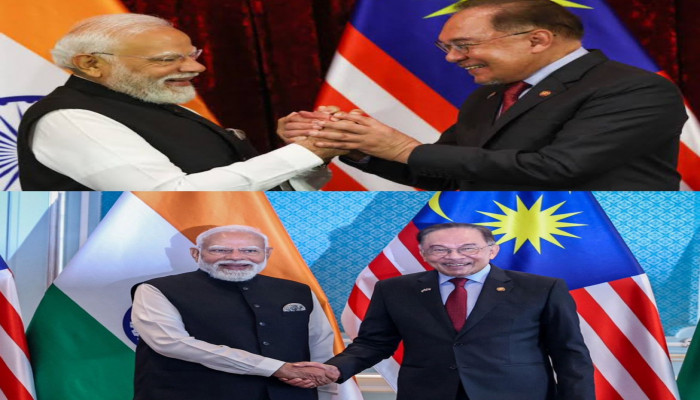
India and Malaysia have agreed to further strengthen their bilateral relationship by expanding cooperation in defence, security, trade, and technology. The commitment was announced on February 8, 2026, during Prime Minister Narendra Modi’s visit to Kuala Lumpur, where he met Malaysian Prime Minister Anwar Ibrahim.
During the joint interaction, both leaders agreed to bring “new speed and depth” to the India-Malaysia partnership. This visit marked Prime Minister Modi’s first overseas trip of the year, and it came as both nations look to build on their upgraded relationship, which was elevated to a Comprehensive Strategic Partnership in August 2024.
Prime Minister Modi praised Malaysian Prime Minister Anwar Ibrahim for playing an active role in strengthening ties between the two countries. He stated that Anwar Ibrahim has brought “fresh energy” into the relationship over the last few years. The leaders also reviewed the progress achieved so far, especially in sectors like energy, infrastructure, manufacturing, and technology.
A major highlight of the discussions was the focus on defence and security cooperation. Both India and Malaysia agreed that defence ties must be strengthened further to support stability in the region. Prime Minister Modi emphasised that the defence relationship between the two nations will become “more comprehensive” in the coming period. The leaders also decided to enhance coordination in counter-terrorism, intelligence sharing, and maritime security, keeping in view shared concerns in the Indo-Pacific region.
The talks also focused strongly on economic and technological cooperation. Both sides agreed to expand collaboration in important areas such as semiconductors, artificial intelligence, digital payments, health, and food security. Several new opportunities were discussed to deepen business engagement and support future growth.
A CEO Forum was also organised on the sidelines of the visit, which helped identify new trade and investment opportunities. The forum aimed to support the economic transformation of both nations through long-term trust and strategic cooperation. According to the leaders, economic engagement between India and Malaysia has been rising steadily, supported by investments in multiple sectors such as the digital economy, biotechnology, IT, tourism, and stronger people-to-people connections.
Prime Minister Modi highlighted the importance of Malaysia’s nearly three-million-strong Indian diaspora, calling it a “living bridge” between the two countries. He said the welfare measures taken for the community provide a humane base to strengthen bilateral ties and ensure closer cooperation.
Several practical steps were also announced to ensure that the partnership benefits reach ordinary citizens. These include the signing of a Social Security Agreement for Indian workers in Malaysia, the introduction of gratis e-visas for tourism, and the rollout of India’s UPI digital payment system in Malaysia. These initiatives are expected to make travel, work, and financial transactions easier for people in both countries.
Cultural cooperation also featured prominently in the discussions. Both leaders underlined the strong cultural bonds shared between India and Malaysia, especially through the Tamil language. The talks noted Malaysia’s deep connection with Tamil, which continues to be present in the country’s education system, media, and cultural life.
To further strengthen cultural unity, the leaders announced a new audio-visual agreement, which will promote cultural ties through films and music. Special emphasis was placed on the role of Tamil cinema in strengthening shared cultural understanding.
The leaders also stressed the need to build stronger engagement between young people from both countries. Plans were discussed to expand cooperation through university exchanges, start-up partnerships, and skill development programmes. To support this growing engagement, India also announced the opening of a new consulate in Malaysia, which is expected to further ease communication and provide better services for citizens.
At the regional level, Prime Minister Modi reiterated India’s commitment to ASEAN centrality. He congratulated Malaysia for its successful chairmanship and expressed support for ASEAN’s role in maintaining regional stability. Both sides also agreed to speed up the review of the ASEAN-India Trade in Goods Agreement (AITIGA). They described the Indo-Pacific region as a major engine of global growth and agreed to work closely to strengthen cooperation in the region.
Global challenges were also discussed during the meeting. The leaders spoke about the need for reforms in international institutions, and the talks included discussions on wider global issues affecting the international community.
Prime Minister Modi once again reiterated India’s firm position on terrorism. He stressed that there must be “no double standards” when dealing with terrorism and said there should be “no compromise” on the issue.
Before the joint press conference, delegation-level talks were also held between officials from both sides. These discussions led to several agreements, including key cooperation in the semiconductor sector.
At the conclusion of the visit, Prime Minister Modi invited Malaysian Prime Minister Anwar Ibrahim to visit India. He also expressed optimism about the future, stating confidence in a “prosperous Malaysia” and a “developed India.”
The visit reflected the growing importance of India-Malaysia relations and showed a shared commitment to expand cooperation across defence, technology, trade, culture, and people-to-people ties, while ensuring direct benefits for citizens of both nations.



 Loading...please wait
Comments