




‘India is a Hindu Nation, no constitutional approval needed’: RSS Chief Mohan Bhagwat
- In Reports
- 01:49 PM, Dec 22, 2025
- Myind Staff
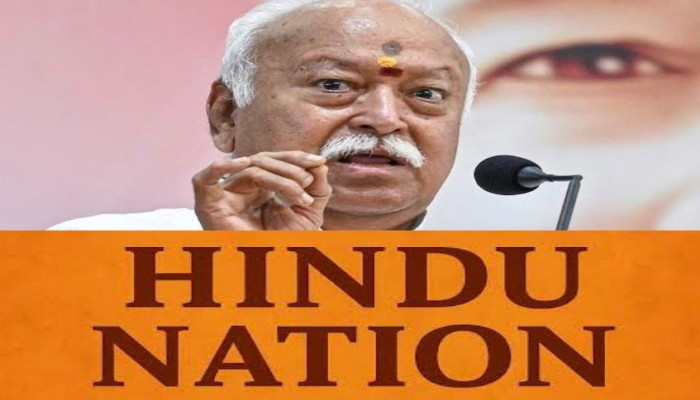
Rashtriya Swayamsevak Sangh (RSS) chief Mohan Bhagwat has stated that India is already a Hindu nation and does not require any constitutional approval to establish this identity. Speaking at a conference in Kolkata on Sunday, Bhagwat said that the idea of India being a Hindu Rashtra is a reality rooted in culture, history, and tradition, and not something that depends on legal recognition.
Addressing the gathering, Bhagwat compared the idea of constitutional approval to a natural phenomenon, saying, "The sun rises in the east; we don't know since when this has been happening. So, do we need constitutional approval for that too?" Through this analogy, he emphasised that certain truths exist regardless of official validation. According to him, India’s identity as a Hindu nation is one such truth.
Bhagwat explained that the concept of a Hindu nation is closely tied to cultural values rather than religious dominance. He said, "Hindustan is a Hindu nation. Whoever considers India their motherland appreciates Indian culture, as long as there is even one person alive on the land of Hindustan who believes in and cherishes the glory of Indian ancestors, India is a Hindu nation." He highlighted that cultural heritage and respect for ancestors form the foundation of this belief.
The RSS chief also made it clear that his organisation does not place importance on whether Parliament amends the Constitution to officially declare India a Hindu nation. He stated that such a move would not change the reality as perceived by the Sangh. "If Parliament ever decides to amend the Constitution and add that word, whether they do it or not, it's fine. We don't care about that word because we are Hindus, and our nation is a Hindu nation. That is the truth." He further clarified that "The caste system based on birth is not the hallmark of Hindutva," rejecting the idea that social discrimination defines Hindu ideology.
During his address, Bhagwat also encouraged people to take pride in their native languages. He stressed the importance of using Indian languages instead of foreign ones in daily life. Speaking directly to the audience in West Bengal, he said, "When you are Bengali-speaking people, write 'Swagatam' instead of 'Welcome' at the entrance of your residence." This, he explained, was a way to preserve cultural identity and promote linguistic pride.
Bhagwat also addressed what he described as widespread misconceptions about the RSS. According to him, these misunderstandings have been created by misleading campaigns aimed at portraying the organisation in a negative light. He asserted that the RSS is deeply nationalist and does not harbour any hostility towards Muslims or any other community.
Responding to allegations of anti-Muslim sentiment, Bhagwat said the RSS operates openly and transparently. He invited critics to observe the organisation’s work firsthand. "If there is a perception that we are anti-Muslim, then, as I said, the RSS work is transparent. You can come anytime and see for yourself, and if you see anything like that happening, then you keep your views, and if you don't see it, then you change your views." He added, "There is a lot to understand (about RSS), but if you don't want to understand, then no one can change your mind."
The RSS chief also dismissed claims that the organisation has political ambitions. He said the Sangh does not pursue any political agenda and instead focuses on social and cultural work. However, he claimed that propaganda against the RSS and India has increased in recent times. According to Bhagwat, this opposition comes from "bad people" who are uncomfortable with the growing influence of Hinduism.
He concluded by stating that people are free to form their own opinions about the RSS, but those opinions should be based on verified facts rather than narratives created by others. He urged individuals to rely on direct observation and understanding instead of "narratives and secondary source information", stressing the importance of informed judgment.



 Loading...please wait
Comments