




India holds firm in US trade talks, refuses to sign deal without clear benefits
- In Reports
- 07:49 PM, Jul 13, 2026
- Myind Staff
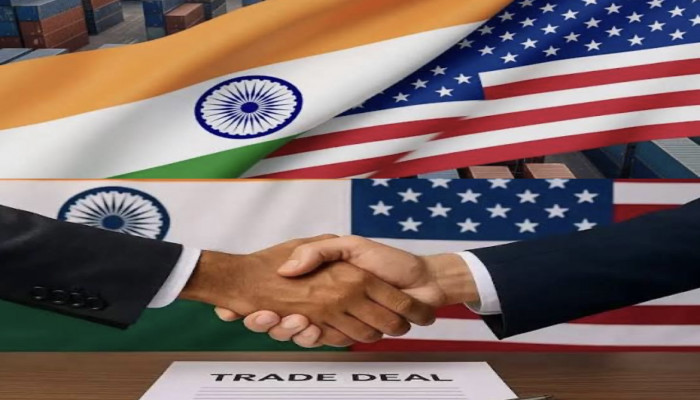
India has decided not to rush into a trade agreement with the United States and will instead wait for a deal that supports its long-term economic interests, according to a Reuters report. The government believes that a carefully negotiated agreement will serve the country better than a quick settlement that fails to address its key concerns.
The negotiations slowed after the United States did not provide assurances on several demands raised by India. These included a tariff advantage over competing countries such as China and protection from any additional US tariffs after the trade agreement comes into effect. Indian officials believe these issues are important before moving ahead with any final deal.
An Indian official told Reuters, “Our position is clear — we don’t intend to rush into a deal that is not on favourable terms or compromise on red lines like ceding ground on agriculture.”
The US has been pushing India to make faster trade concessions as President Donald Trump prepares to introduce new tariff measures later this month. India, however, has shown that it is ready to deal with short-term uncertainty instead of accepting an agreement that does not provide enough advantages.
Commerce and Industry Minister Piyush Goyal also signalled the government’s stand after holding talks with US Trade Representative Jamieson Greer. He said the trade agreement would move forward only if it offered clear benefits to India. His statement showed that New Delhi does not face immediate pressure to compromise during the negotiations.
India’s stronger economic position has also given the government greater confidence while dealing with the United States. Analysts told Reuters that the country now has more room to negotiate and can take a balanced approach instead of rushing to complete the agreement.
India’s exports have remained strong despite global challenges, including disruptions linked to the conflict in West Asia. Officials told Reuters that the country’s overall goods exports rose by around 15 per cent year-on-year during April to June. Higher petroleum exports supported this growth.
Trade with Gulf countries also recovered after shipping disruptions affected the region. Exports to these markets increased to $5.3 billion in May from $2.62 billion in March. At the same time, India’s exports to the United States also grew. Shipments reached $17.29 billion during April and May.
India has also strengthened trade ties with other major economies. The India-UK Free Trade Agreement is expected to come into effect this month. Meanwhile, negotiations for a trade agreement with the European Union are likely to conclude by early next year. These developments have strengthened India’s position during discussions with the United States.
Wendy Cutler, senior vice president at the Asia Society Policy Institute and a former US trade official, told Reuters, “Indian negotiators have gained some leverage in the talks, given its strong economy, diversification initiatives with other partners, and its strategic standing in the world.”
Economic conditions have also reduced the pressure on India to finalise a deal quickly. Goldman Sachs economist Santanu Sengupta told Reuters that easing oil prices after the interim US-Iran peace agreement have improved India’s economic outlook. The investment bank has raised its 2026 growth forecast for India to 6.8 per cent. It has also lowered its inflation and current account deficit estimates. These improvements have given the government greater flexibility during the trade negotiations.
A weaker rupee has also made Indian exports more competitive in global markets. Trade experts also believe India is considering the possibility that some proposed US tariff measures may face legal or political hurdles in the future.
The report noted that a group of 22 Democratic state attorneys general has already challenged the Trump administration’s proposed tariffs linked to forced-labour investigations. This has added another factor to India’s assessment of the ongoing trade talks.
Agriculture remains one of India’s biggest concerns during the negotiations. The Modi government has repeatedly stated that any trade agreement must protect farmers and small businesses. These groups remain important for the country’s economy and domestic politics.
India has traditionally remained cautious about opening its agriculture sector to foreign competition. The government has consistently highlighted the need to safeguard farmers’ livelihoods and ensure food security before accepting any commitments in this area.
Ajay Srivastava, founder of the Global Trade Research Initiative and a former trade negotiator, supported India’s cautious approach. He told Reuters, “India realises that delaying — or even abandoning — a rushed deal may be more prudent than locking into obligations whose costs could far exceed any temporary tariff relief.”
India and the United States continue to hold discussions on the proposed trade agreement. However, New Delhi has made its priorities clear. The government wants a deal that offers meaningful market access, protects sensitive sectors and strengthens India’s long-term position in global trade. It has chosen to focus on strategic gains instead of signing a quick agreement that may not serve the country’s larger interests.



 Loading...please wait
Comments