



India hits back after Pakistan blames neighbours for Islamabad Mosque blast, calls claims ‘baseless and pointless’
- In Reports
- 02:43 PM, Feb 07, 2026
- Myind Staff
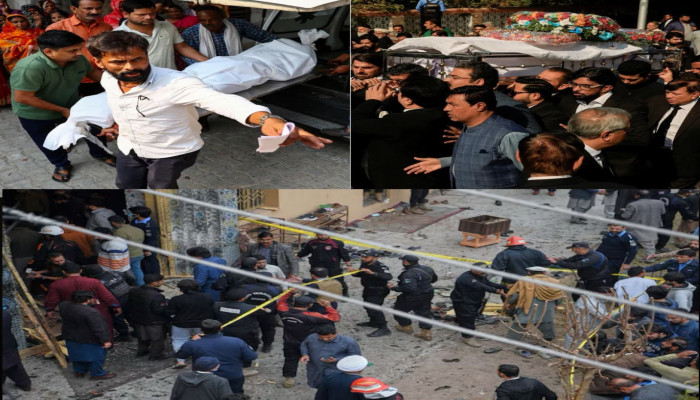
Islamabad was shaken on Friday after a deadly suicide bombing struck a crowded mosque in Pakistan’s capital, killing at least 69 people and injuring more than 170 others, in one of the worst attacks seen in recent years. The blast triggered shock and grief across the country, but soon turned into a sharp diplomatic exchange, as Pakistan accused neighbouring countries, while both India and Afghanistan strongly rejected the allegations.
Following the bombing, Pakistan’s Defence Minister Khawaja Muhammad Asif claimed that the suicide attacker had connections to Afghanistan. He also alleged that there was an emerging nexus between India and the Afghan Taliban. According to him, the attacker had been travelling between Afghanistan and Pakistan.
In a post on X, Asif accused India of carrying out a proxy campaign after what he described as a “humiliating defeat.” He further claimed that New Delhi “no longer had the courage for direct conflict.”
Soon after these accusations surfaced, India issued a strong response. In a statement from New Delhi, the Ministry of External Affairs (MEA) condemned the bombing and expressed condolences for the victims. However, India firmly rejected any suggestion of its involvement.
The MEA described Pakistan’s claims as “baseless and pointless.” The statement also said it was “unfortunate that, instead of seriously addressing the problems plaguing its social fabric, Pakistan chooses to delude itself by blaming others for its home-grown ills.”
India’s remarks directly pushed back against Pakistan’s attempt to link the attack to external forces and instead pointed towards Pakistan’s internal issues and security failures.
Meanwhile, Pakistan’s allegations were also rejected by Afghanistan’s Taliban-led government. Kabul responded sharply through a statement issued by the spokesperson of Afghanistan’s Ministry of National Defence. The Afghan side condemned the Islamabad mosque attack but accused Pakistani officials of making repeated accusations without evidence.
Afghanistan called the allegations “irresponsible” and said Pakistani leaders had a habit of blaming others immediately after such incidents. The statement said Pakistan had repeatedly blamed Afghanistan for attacks in Balochistan and other regions “without conducting the necessary investigations and without any scrutiny or verification.” It added that such claims had “any logic or basis” and were aimed at diverting attention from Pakistan’s internal security failures.
The Afghan defence ministry also raised serious questions over Pakistan’s handling of security. It asked why Pakistani authorities, if they were able to identify perpetrators so quickly after an attack, failed to stop the incident beforehand.
The Afghan statement said, “These hasty remarks cannot conceal the security failures nor resolve the existing problems.”
The Taliban-led government also reiterated its position that it follows Islamic principles and does not support violence against innocent people. It stated that it does not allow the killing of civilians for political purposes. The Afghan side stressed that it does not support or shelter those behind such attacks, and urged Pakistan to stop avoiding responsibility.
Instead of blaming neighbours, Kabul advised Islamabad to reassess its approach and improve internal stability. It also urged Pakistan to move towards “positive cooperation and constructive engagement” with neighbouring countries instead of promoting hostility.
Inside Pakistan, the suicide bombing has raised fresh concerns over the country’s security situation, especially in urban areas that were previously considered more secure. Officials said the suicide bomber detonated explosives inside the mosque after being challenged by security personnel. The explosion caused heavy casualties among worshippers who had gathered for prayers.
Hospitals in Islamabad remained overwhelmed overnight as doctors struggled to treat the large number of injured victims.
Analysts said the diplomatic exchange highlights Pakistan’s increasing isolation on the militancy issue. A regional security expert based in South Asia said, “Blaming neighbours has become a reflex, but it no longer carries weight internationally.” The expert added that both India and Afghanistan are now pushing back strongly, insisting Pakistan must deal with militant networks and ideological issues within its own territory.
As families mourn the dead and many injured continue to fight for survival, pressure is growing on Pakistan’s government to provide answers and accountability. The tragic attack has not only revealed major security gaps in Islamabad but has also worsened regional tensions, with India and Afghanistan jointly accusing Pakistan of failing to address the internal problems that continue to destabilise the country.



 Loading...please wait
Comments