



‘India has right to defend itself from neighbours backing terrorism’: EAM S Jaishankar
- In Reports
- 05:47 PM, Jan 02, 2026
- Myind Staff
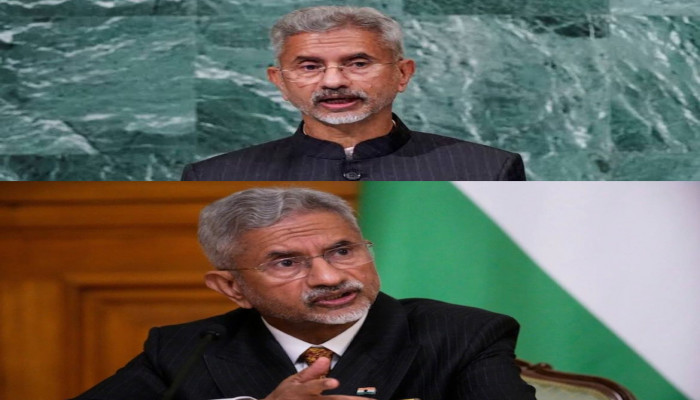
External Affairs Minister S Jaishankar on Friday strongly stated that India has every right to defend itself against a “bad neighbour” that continues to sponsor terrorism. Speaking at an event at the Indian Institute of Technology (IIT) Madras, he made it clear that India will take whatever action is necessary to protect its people and national security, and will not accept advice or pressure from outside on how to deal with terrorism.
Without naming Pakistan directly, Jaishankar referred to India’s western neighbour and said that New Delhi faces a unique and difficult situation because terrorism is being used deliberately and persistently as a state policy. He underlined that India’s response to such threats will be decided only by India.
“But when it comes to bad neighbours who persist with terrorism, India has every right to defend its people and will do whatever is necessary. You cannot request us to share our water with you and also spread terrorism in our country,” Jaishankar said.
He further stressed that no other country has the authority to dictate how India should protect itself. Emphasising India’s sovereign right to self-defence, he said, “How we exercise that right is up to us. Nobody can tell us what we should or should not do. We will do whatever we have to do to defend ourselves.”
The External Affairs Minister explained that while many countries in the world have difficult neighbours, India’s case is far more serious because of the long-term and intentional use of terrorism across the border. He said this kind of behaviour leaves India with no option but to act firmly to safeguard its citizens.
“If a country decides that it will deliberately, persistently and unrepentantly continue with terrorism, we have a right to defend our people against terrorism. We will exercise that right,” he said.
Jaishankar also linked the issue of cross-border terrorism with broader bilateral responsibilities, especially long-standing agreements between the two countries. Referring to water-sharing arrangements, he pointed out that such agreements are based on the idea of good neighbourly relations and mutual trust, which are completely undermined by continuous acts of terrorism.
“Many years ago, we agreed to a water-sharing arrangement, but if you have decades of terrorism, there is no good neighbourliness. If there is no good neighbourliness, you don’t get the benefits of that good neighbourliness,” he said.
He made it clear that it is unreasonable for a country to expect cooperation in one area while continuing hostile actions in another. Highlighting this contradiction, Jaishankar added, “You can’t say, ‘Please share water with me, but I will continue terrorism with you.’ That’s not reconcilable.”
The minister’s remarks come at a time when relations between India and Pakistan are already under severe strain. Tensions worsened further after a deadly terror attack in April 2025, when Pakistan-backed terrorists killed several tourists in Pahalgam in Jammu and Kashmir. The attack shocked the nation and led to widespread outrage.
Following the Pahalgam massacre, India announced a series of strong measures against Pakistan. One of the most significant steps was the suspension of the Indus Waters Treaty, a decades-old agreement governing water-sharing between the two countries. The move was seen as a clear signal from New Delhi that continued terrorism would have serious consequences for bilateral arrangements.
Jaishankar’s statements at IIT Madras reflected India’s firm position that national security and the safety of its people are non-negotiable. He reiterated that while India believes in cooperation and agreements, such understandings cannot exist in an environment where terrorism is actively supported.
By stressing India’s right to defend itself and decide its own course of action, the External Affairs Minister sent a strong message that New Delhi will respond to terrorism on its own terms. His remarks underlined that benefits arising from cooperation, including water-sharing, depend on responsible behaviour and good neighbourly relations, which cannot coexist with sustained acts of terror.
The speech reinforced India’s long-held stance that terrorism and dialogue cannot go together, and that any country backing terrorism must be prepared to face the consequences of its actions.



 Loading...please wait
Comments