




India-Germany $8 billion submarine collaboration to support indigenous defence manufacturing
- In Reports
- 06:41 PM, Apr 23, 2026
- Myind Staff
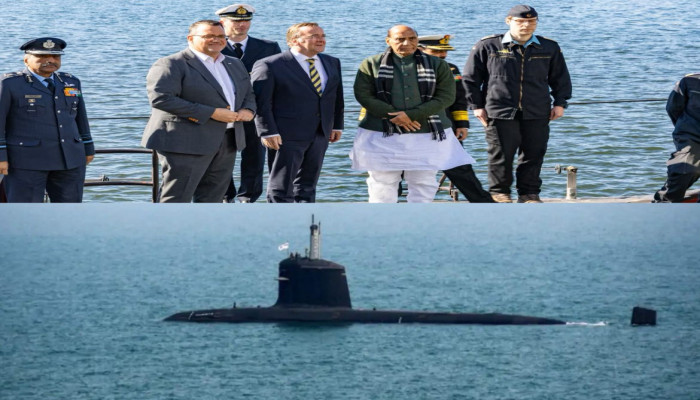
India’s defence partnership with Germany has reached a major milestone with a reported $8 billion agreement, marking one of the largest military-industrial collaborations between the two countries. While the size of the deal stands out, the deeper significance lies in its structure, its focus on technology sharing, and its long-term impact on India’s defence capabilities. The agreement reflects a clear shift in India’s approach, moving beyond simple procurement towards building domestic strength and self-reliance in defence production.
At the centre of this deal is India’s long-pending plan to build advanced conventional submarines for the Indian Navy under Project-75 India. As part of Project-75(I), Germany’s ThyssenKrupp Marine Systems will work closely with India’s Mazagon Dock Shipbuilders for local construction. This partnership is expected to play a key role in delivering next-generation diesel-electric submarines. The collaboration also strongly supports the “Make in India” initiative, as a significant portion of the manufacturing will take place within the country.
These submarines will be equipped with Air-Independent Propulsion systems, a major technological upgrade. This feature allows submarines to remain underwater for longer periods without surfacing. It significantly improves stealth capabilities, making detection much harder. It also enhances survivability, especially in high-risk or contested maritime regions. This becomes particularly important as India aims to strengthen its naval presence and respond to the increasing activity of China in the Indian Ocean region.
A defining feature of this agreement is its strong emphasis on Transfer of Technology. Unlike many earlier defence deals where India mainly imported finished equipment, this agreement focuses on sharing critical knowledge and expertise. German firms are expected to provide access to submarine design capabilities, propulsion systems, stealth technologies, and advanced combat management systems. This approach ensures that India does not remain dependent on foreign suppliers in the long run.
The importance of this technology transfer goes beyond immediate defence needs. It supports India’s broader goal of becoming self-reliant in defence manufacturing. By gaining access to advanced technologies, Indian engineers and shipbuilders can develop the expertise required to design and build similar systems in the future. This creates a foundation for long-term growth in the domestic defence sector and reduces reliance on imports.
The deal also gives a strong push to India’s “Make in India” initiative. A large part of the submarine construction will take place domestically, likely involving shipyards such as Mazagon Dock Shipbuilders Limited. This is expected to boost local manufacturing and create high-skilled jobs in sectors like shipbuilding and engineering. It also strengthens India’s industrial base, which is crucial for sustaining long-term defence capabilities.
Germany’s role in this partnership is significant due to its long-standing expertise in submarine construction. German firms have built a strong global reputation for engineering precision and reliability. Submarines designed by ThyssenKrupp Marine Systems are already used by several navies around the world. For India, this means access to proven and tested technology rather than experimental systems.
Another key advantage of working with Germany is the reliability of its supply chains. Compared to some traditional defence partners, Germany offers a relatively stable and predictable partnership. This reduces geopolitical risks and ensures smoother execution of long-term defence projects. Such stability is crucial for a project of this scale, which involves complex coordination and extended timelines.
Overall, this $8 billion agreement represents more than just the purchase of submarines. It signals a shift in India’s defence strategy. The focus is now on collaboration, capability building, and technological independence. By combining foreign expertise with domestic manufacturing, India is working towards a more sustainable and self-reliant defence ecosystem.
This partnership also strengthens India’s strategic position in the region. Enhanced naval capabilities improve maritime security and ensure better preparedness in the face of evolving challenges. At the same time, deeper ties with European partners like Germany diversify India’s defence relationships and reduce over-dependence on any single country.
In essence, the India-Germany defence deal brings together advanced technology, local manufacturing, and long-term strategic planning. It highlights a new direction in defence cooperation, where the goal is not just to acquire equipment but to build the capacity to produce and innovate within the country. This makes the deal a significant step forward in shaping India’s future defence landscape.



 Loading...please wait
Comments