



India, EU give each other Most Favoured Nation status for five years in FTA
- In Reports
- 03:37 PM, Feb 28, 2026
- Myind Staff
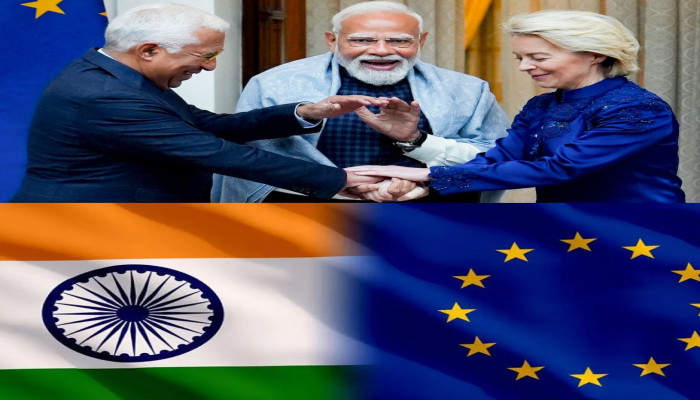
India and the European Union (EU) are on the brink of a historic trade deal that will mark a major step in global economic cooperation, with both sides agreeing to give each other Most Favoured Nation (MFN) status for five years once their free trade agreement (FTA) comes into force.
According to the draft text released by the Indian government’s trade ministry, this clause means that after the deal is formally ratified by lawmakers in India and the EU, neither side will be able to offer better tariff terms to other international partners without extending those same benefits to the other for at least five years, anchoring this mutual “MFN status” at the heart of their new commercial relationship.
The idea behind MFN status is to prevent discrimination in trade terms among countries, ensuring that if one party offers low tariffs or favourable treatment to another nation, it must do the same for its MFN partner. In the context of the India-EU pact, this provision effectively locks in a high level of market access and tariff stability for both sides, giving businesses and exporters greater confidence about future trade conditions.
Once the agreement is ratified, it is expected to remove or significantly reduce tariffs on a vast majority of goods traded between India and the EU, a move that could substantially reshape two-way commerce. By reducing or eliminating duties on 96.6% of traded goods by value, the deal is projected to double EU exports to India by 2032 and save European companies about €4 billion (roughly ₹40,000 crore) annually in duties. However, sensitive agricultural products such as soya, beef, sugar, rice and dairy have been kept outside the scope of tariff liberalisation, reflecting ongoing political and economic sensitivities in both markets.
To facilitate smoother trade beyond simple tariff cuts, the draft text envisages a range of procedural and regulatory improvements that would help goods move more efficiently across borders. India and the EU have agreed to align food safety and plant health measures with World Trade Organisation (WTO) standards, which should reduce delays and complexities in certification and audits, and enhance customs cooperation to speed up the clearance of goods. They have also committed to establishing non-discriminatory and accessible appeal procedures for customs decisions that affect imports, exports or goods in transit, making the trade environment more predictable and fair.
The agreement also goes beyond physical goods and tackles emerging areas of commerce. In terms of digital trade, both parties have pledged to work together to reduce unjustified barriers and promote a safe, open environment for online services. The draft recognises privacy as a fundamental right while preserving each side’s authority over how personal data is protected and how cross-border data transfers are managed. It also encourages paperless trade through the legal recognition of electronic contracts, signatures and authentication, a provision that could help reduce costs and delays for online commerce and international transactions.
In addition to trade terms and procedural reforms, the draft text highlights a commitment from the EU to mobilise finance and investment to support India’s efforts to reduce greenhouse gas emissions as part of the broader pact. This element reflects the growing importance of sustainability and climate action within major trade agreements, and points to deeper cooperation beyond traditional trade metrics.
Taken together, these provisions could make the India-EU trade deal one of the most consequential economic partnerships of recent years, covering not just tariff reductions but also cooperation in areas like digital commerce, customs modernisation and environmental investment. While the MFN status clause ensures that both parties will maintain competitive equality with one another, the broader FTA framework aims to unlock economic growth and expand opportunities for exporters, industries and consumers on both sides.
Despite these positive projections, the deal will only take effect after national legislative bodies in India and the EU complete ratification processes, a step that is expected to take several months to a year. Once that happens, the MFN provisions and other commitments will become legally binding, promising a new chapter in India-EU trade relations that could reshape markets, strengthen economic ties and influence global trade norms in an era of rising protectionism.



 Loading...please wait
Comments