




India develops Hydrogen Hub at Kandla to advance Green Energy Push
- In Reports
- 06:38 PM, Jan 30, 2026
- Myind Staff
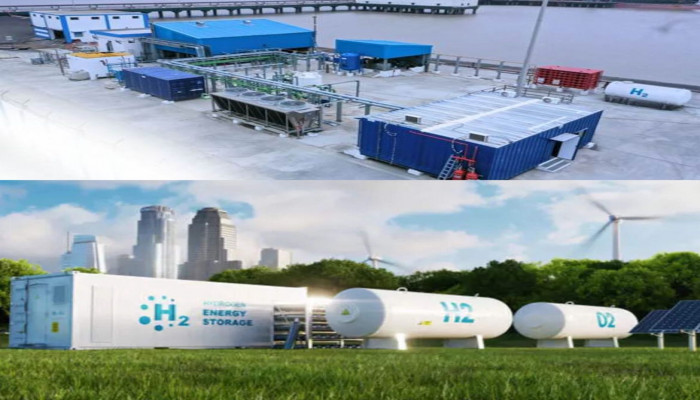
India is strengthening its green energy transition by developing a Hydrogen Hub under the National Green Hydrogen Mission. The mission aims to produce and export around 5 million tonnes of green hydrogen within the next five to six years. This initiative is an important part of India’s long-term plan to achieve net-zero carbon emissions by 2070, as announced by Prime Minister Narendra Modi.
Union Minister for Ports, Shipping and Waterways Sarbananda Sonowal said that India’s future energy system will be driven by clean and sustainable fuels. He stated, “Under the dynamic leadership of Prime Minister Narendra Modi, India’s energy transition will be driven by green molecules such as green hydrogen, green methanol, green ammonia and bio-energy, which will power our industries, transport systems and maritime sector in the coming decades.”
The proposed Hydrogen Hub is expected to bring major benefits to the maritime sector. Once it becomes operational, it is likely to attract more deep-sea vessels to Kandla Port. This will help increase cargo movement and strengthen trade across the hinterland and the country. Sonowal also highlighted the contribution of Assam Petro-Chemicals Limited (APL), one of India’s key methanol producers with decades of operational experience in the sector.
Speaking about Assam’s growing role in the clean energy ecosystem, Sonowal said that the collaboration shows how the North-Eastern region is becoming more integrated into national value chains. He said, “It will strengthen Assam’s role in India’s energy transition, support the Methanol Economy initiative and help reduce dependence on imported fossil fuels.” He further added that the project aligns with the government’s key initiatives such as Aatmanirbhar Bharat, Make in India and Make for the World, while also positioning India as a global leader in maritime decarbonisation.
Assam Petro-Chemicals Limited operates one of the largest methanol plants in the country at Namrup in Assam and has recently expanded its production capacity. Through its partnership with the Deendayal Port Authority (DPA), Kandla, the company is expected to move beyond conventional methanol production and focus on green and e-methanol manufacturing. This shift marks an important step in India’s clean energy journey.
Several prominent leaders and officials attended the Memorandum of Understanding (MoU) signing ceremony. Among those present were Assam ministers Bimal Borah and Prasanta Phukan, Rajya Sabha MP and former Union Minister Rameswar Teli, and MLA Taranga Gogoi. The MoU was signed by Bikul Deka, Chairman of Assam Petro-Chemicals Limited, and Sushil Kumar Singh, Chairman of Deendayal Port Authority, in the presence of Mandeep Singh Randhawa, Director, Ministry of Ports, Shipping and Waterways.
In line with the Prime Minister’s vision for sustainable development, the Ministry of Ports, Shipping and Waterways has launched multiple initiatives to promote green practices in the maritime sector. These include the Harit Sagar – Green Port Guidelines, the promotion of renewable energy at ports, encouragement of alternative marine fuels, and the development of ports as energy and industrial hubs.
Sonowal also underlined the critical role of shipping in India’s economy. He noted that nearly 90 per cent of India’s trade by volume is carried through ports. Therefore, he emphasised that decarbonising ports and shipping is essential for achieving India’s national climate targets. The Hydrogen Hub project, along with other green initiatives, reflects the government’s commitment to building a sustainable and self-reliant energy future for the country.
Overall, the Hydrogen Hub under the National Green Hydrogen Mission represents a significant step in India’s clean energy transition. It highlights the combined efforts of the central government, state institutions, and industry players to promote green fuels, strengthen the maritime sector, and reduce dependence on fossil fuels, while supporting India’s long-term environmental and economic goals.



 Loading...please wait
Comments