




India commissions three indigenous vessels in major push to naval modernisation
- In Reports
- 01:06 PM, Jun 22, 2026
- Myind Staff
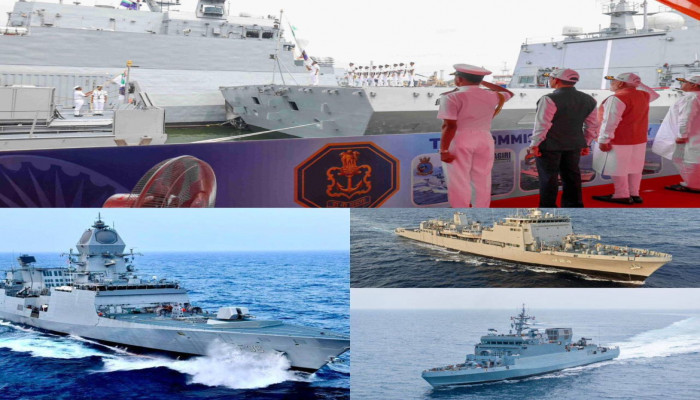
India’s naval capabilities have received a significant boost with the commissioning of three indigenously built naval platforms — INS Dunagiri, INS Sanshodhak and INS Agray. The commissioning ceremony took place in Kolkata and was presided over by Prime Minister Narendra Modi. The induction of these vessels marks an important milestone in India’s efforts to strengthen self-reliance in defence manufacturing and expand the operational strength of the Indian Navy.
The three newly commissioned platforms have been designed to perform different strategic roles. INS Dunagiri will strengthen the Navy’s combat capabilities, INS Sanshodhak will support hydrographic surveying and maritime research, while INS Agray will enhance coastal defence through anti-submarine operations. Together, these vessels add greater flexibility and operational readiness to India’s naval fleet.
All three ships were designed by the Navy’s Warship Design Bureau in collaboration with Garden Reach Shipbuilders and Engineers (GRSE), which was also responsible for their construction. Their successful development demonstrates India’s growing expertise in designing and building advanced naval platforms within the country. It also reflects the increasing strength of the domestic defence manufacturing sector and reduces dependence on foreign suppliers for critical military assets.
According to the Defence Ministry, the commissioning of these vessels highlights the Navy’s balanced approach towards capability development. The ships are expected to support blue-water operations, improve maritime domain awareness and strengthen coastal security. Their induction will expand India’s maritime reach and improve its ability to protect national interests across the Indian Ocean Region.
INS Dunagiri is the fifth vessel of the Project 17A stealth frigate class. The warship is equipped with advanced weapons and sensor systems that significantly enhance its combat capability. It carries the BrahMos surface-to-surface missile system and the Medium Range Surface-to-Air Missile system. The frigate is also fitted with modern radar systems, electronic warfare equipment and network-centric warfare capabilities. These features make INS Dunagiri one of the most capable warships to join the Indian Navy in recent years.
INS Sanshodhak has been developed as a large survey vessel for hydrographic operations. It is capable of conducting surveys in both coastal and deep-water regions. The vessel will play a key role in seabed mapping, underwater exploration and improving maritime domain awareness. It will support naval missions as well as civilian maritime activities. The induction of INS Sanshodhak strengthens India’s capability to conduct accurate hydrographic surveys, which are essential for safe navigation, infrastructure planning and strategic maritime operations.
INS Agray has been specifically designed for anti-submarine warfare in coastal areas. The vessel is equipped with torpedoes, sonar systems and rocket launchers that enable it to detect, track and neutralise hostile submarines operating in shallow waters. The induction of INS Agray strengthens India’s layered defence system against underwater threats and enhances the protection of important maritime routes and coastal regions.
The Defence Ministry stated that the three vessels contain more than 75 per cent indigenous content. Their construction involved contributions from over 200 micro, small and medium enterprises across the country. This achievement reflects the steady growth of India’s domestic shipbuilding ecosystem and highlights the success of the government’s “Make in India” initiative in the defence sector. It also demonstrates strong coordination between the Navy, shipyards, design agencies and industry partners involved in the development process.
The commissioning of INS Dunagiri, INS Sanshodhak and INS Agray forms part of the Indian Navy’s long-term plan to expand and modernise its fleet. The Navy aims to increase its strength to 200 warships and submarines by 2035. At present, the force operates approximately 130 to 140 vessels. The addition of these new platforms brings the Navy a step closer to achieving its future force structure goals.
The Navy has been inducting new platforms at a rapid pace. According to official figures, a new vessel is being added roughly every 40 days. This accelerated modernisation reflects the growing need to strengthen maritime capabilities in response to changing regional security challenges and evolving threats in the Indo-Pacific region.
The commissioning ceremony in Kolkata served as a demonstration of India’s progress in indigenous defence production and naval development. It also reinforced the country’s commitment to safeguarding its maritime interests and maintaining a strong presence across the Indo-Pacific. As the Chinese Navy continues to expand its activities in the Indian Ocean, India is focusing on indigenous shipbuilding and fleet expansion to maintain strategic balance and ensure maritime security in the region.
With the induction of INS Dunagiri, INS Sanshodhak and INS Agray, India has added advanced combat, survey and anti-submarine capabilities to its naval force. The development not only strengthens the operational effectiveness of the Navy but also showcases the country’s growing confidence and capability in building sophisticated defence platforms at home.



 Loading...please wait
Comments