




India clears ₹70,000 crore proposal to build six conventional submarines indigenously
- In Reports
- 01:27 PM, May 29, 2026
- Myind Staff
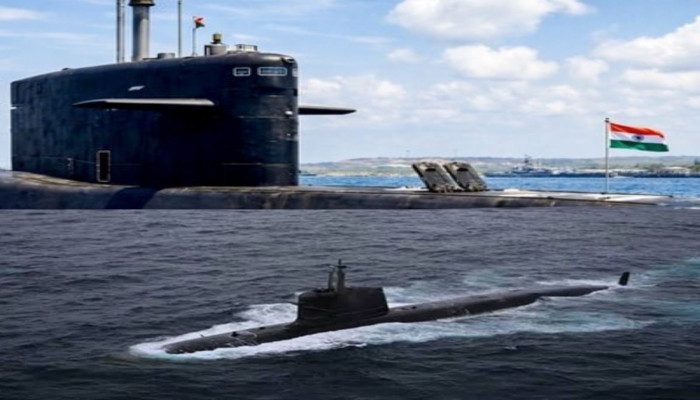
The Union finance ministry has cleared a massive ₹70,000-crore proposal to build six next-generation conventional submarines in India, significantly strengthening the Indian Navy’s underwater combat capabilities. The proposal under Project-75I is now expected to go before the Prime Minister-led Cabinet Committee on Security (CCS) for final approval, according to senior officials familiar with the matter.
The CCS is likely to take up the proposal soon before the contract is formally signed. The agreement will be signed under the leadership of the Navy’s next chief, Admiral Krishna Swaminathan, who will take charge on May 31. He will replace Admiral Dinesh K Tripathi, who retires after serving for four decades. Strengthening the Navy’s operational capabilities and speeding up modernisation are expected to be among Swaminathan’s top priorities.
The submarines will be jointly built in Mumbai by Mazagon Dock Shipbuilders Limited (MDL) and German shipbuilding company thyssenkrupp Marine Systems (tkMS). The project marks another major push for indigenous defence production and technology transfer.
Under the agreement, the first submarine is expected to be delivered seven years after the contract is signed. The remaining five submarines will be delivered at the rate of one every year. These submarines will be based on the HDW Class 214 design and will be equipped with air-independent propulsion (AIP) systems.
The AIP system is considered a major technological advantage because it allows submarines to stay underwater for longer periods without surfacing. This increases their endurance and reduces the chances of being detected during operations. As part of the deal, tkMS will also transfer submarine design and technology to India, supporting the country’s self-reliance goals in defence manufacturing.
MDL and tkMS secured the project after beating the only competing bid submitted by the Larsen & Toubro and Navantia partnership.
The Indian Navy has also set clear targets for local manufacturing under the project. The first submarine must include at least 45% indigenous content. This percentage will gradually rise to 60% by the time the sixth submarine is built. The Navy is aiming to become fully self-reliant by 2047, when India marks 100 years of independence. At present, nearly 60 warships are being constructed at different Indian shipyards.
Project-75I is also emerging as a key symbol of growing defence cooperation between India and Germany. In April, both countries signed a defence industrial cooperation roadmap during talks held in Berlin between Defence Minister Rajnath Singh and German Defence Minister Boris Pistorius. The roadmap focuses on joint development, co-production of defence systems, and expanding military cooperation between the two nations.
MDL has already played a major role in India’s submarine-building programme. Under the earlier ₹23,562-crore Project-75, the company built six Kalvari-class Scorpene diesel-electric attack submarines with technology support from French defence company Naval Group. The Navy commissioned the sixth and final submarine of that project, INS Vaghsheer, in January 2025.
India has also continued strengthening its nuclear submarine fleet. In April, the Navy quietly commissioned its third nuclear-powered ballistic missile submarine, INS Aridhaman, during a confidential ceremony in Visakhapatnam. The submarine was developed under a classified programme designed to strengthen the sea-based arm of India’s nuclear triad, which refers to the ability to launch strategic weapons from land, air, and sea.
With this capability, India joined a select group of countries that can deploy nuclear warheads from submarines. The other nations with this capability are the United States, Russia, the United Kingdom, France, and China.
India’s fourth SSBN, codenamed S-4*, is expected to enter service in 2027, as HT previously reported. SSBN stands for ship submersible ballistic nuclear or nuclear-powered ballistic missile submarine. India’s first indigenous SSBN, INS Arihant, was commissioned a decade ago and completed its first deterrence patrol in 2018. At that time, Prime Minister Narendra Modi had said the submarine’s success “gives a fitting response to those who indulge in nuclear blackmail.”
The Navy inducted its second indigenous SSBN, INS Arighaat, in Visakhapatnam in August 2024. INS Aridhaman is larger than both earlier submarines and is capable of launching longer-range missiles. These submarines are expected to remain on continuous deterrence patrols and can launch nuclear missiles if New Delhi gives the order.



 Loading...please wait
Comments